TL;DR
Listen free for 30 days with Audible
Thousands of audiobooks and originals — cancel anytime.
Start your free trialAs an affiliate, we earn on qualifying purchases.
LED light therapy, especially blue and red wavelengths, can reduce inflammatory acne lesions by about 50-75% over several weeks. While FDA-cleared and generally safe, its effects are modest and best as an adjunct to standard treatments.
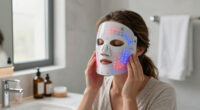
Imagine a gentle blue glow healing your skin, not with magic, but with science. LED light therapy has gained popularity for treating acne, but what does the evidence actually say? If you’ve seen the ads promising clear skin in days, it’s worth understanding what’s real — and what’s hype.
Here’s a straightforward guide to how LED therapy works, what the science shows, and how you can decide if it’s worth trying. No fluff, just facts grounded in research, with a focus on safety and realistic expectations.
Blue light (~405–420 nm) activates endogenous porphyrins in *C. acnes*, producing reactive oxygen species that kill bacteria.
Most studies show LED therapy can cut inflammatory acne lesions by about 50–75% over 8–12 weeks, but effects are modest.
Safety is generally good; watch for skin irritation, especially in darker skin tones, and always use eye protection.
Professional devices are more effective than at-home masks, but both require consistent use for results.
LED therapy supports skin healing but doesn’t replace medications for severe or cystic acne.
The Science Behind LED Light Therapy for Acne
Blue and red wavelengths can cut inflammatory acne lesions by roughly 50–75% over 8–12 weeks — real, but modest. FDA-cleared and generally safe, LED therapy works best as an adjunct to standard treatments, not a replacement. Here’s what the evidence actually shows — no fluff, no hype.
How Light Fights a Pimple — The Simple Science
Cutibacterium acnes naturally produces porphyrins (coproporphyrin III and protoporphyrin IX). Blue light photoactivates them, generating reactive oxygen species that destroy the bacteria from the inside — a non-antibiotic attack on the bacterial root of inflammation.
Blue light hits skin (~405–420 nm)
Wavelength penetrates the skin surface and reaches porphyrin-producing C. acnes colonies in the follicle.
Porphyrins photoactivate
Endogenous porphyrins absorb the light energy and generate reactive oxygen species (singlet oxygen).
Bacteria are destroyed
Oxidative damage kills C. acnes, reducing bacterial load and the inflammation it drives.
Targets the infection
Photoactivates porphyrins in C. acnes, producing reactive oxygen species that kill bacteria on the skin’s surface. Works on the bacterial/inflammatory component only — it does not address comedones, hormones, or excess sebum.
Targets the inflammation
Penetrates deeper into skin, acting via photobiomodulation of mitochondria (cytochrome c oxidase) to calm inflammation and promote wound healing. Effects on sebaceous gland activity are possible, but evidence is weaker.
What the Research Really Says
Multiple clinical trials support LED therapy for inflammatory acne — but the 2016 Cochrane review rated the overall evidence low quality: small samples, inconsistent wavelengths and dosing, short follow-up, and frequent industry involvement. Promising, yes. A cure-all, no.
Read with caution: effects are real but modest, and individual responses vary widely — some see significant improvement, others little or none. LED therapy does not touch hormonal drivers, excess oil production, or established scars. Guidelines (e.g., American Academy of Dermatology) still position topical retinoids, benzoyl peroxide, and antibiotics as first-line; light therapy is an adjunct.
In-Office vs. At-Home — What’s the Difference?
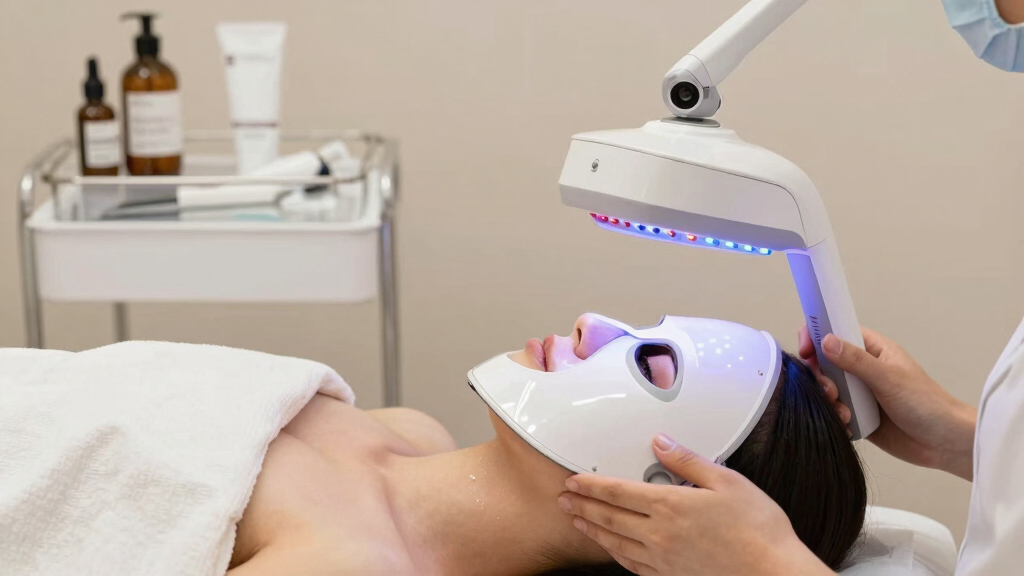
Professional devices deliver higher irradiance — deeper penetration, faster and more consistent results. At-home masks and wands are more affordable and convenient, but lower powered: expect slower, more variable outcomes that hinge entirely on disciplined, near-daily use.
| Feature | Professional Devices | At-Home Devices |
|---|---|---|
| Power Level | ✓ Higher irradiance, more effective per session | ~ Lower irradiance, slower results |
| Cost | $150–$500 per session or package | $50–$300 for personal masks or wands |
| Ease of Use | Performed by trained professionals with guidance | Self-administered at home — convenient but on you |
| Results | ✓ Faster, more consistent; better for stubborn cases | ~ Slower, variable; requires discipline over months |
| Best For | Moderate or stubborn inflammatory acne; faster timelines | Mild–moderate acne; budget-conscious, patient users |
Generally Safe — With Real Caveats
Unlike some laser treatments, LED therapy doesn’t cause burns or long-term skin damage. Short-term safety is well established; long-term data remain limited. Stick with FDA-cleared devices and follow instructions carefully.
Common & Temporary
Transient redness, dryness, and mild irritation are the most frequent side effects. They typically resolve quickly and are manageable with adjusted session length.
Risk · LowDarker Skin Tones (Fitzpatrick IV–VI)
Post-inflammatory hyperpigmentation can occur if treatments are too aggressive or prolonged. Start at lower settings and increase gradually as tolerated.
Risk · Moderate cautionEyes & Medications
Always wear eye protection, especially with blue light. On photosensitizing drugs — isotretinoin, doxycycline, tretinoin — consult a dermatologist first.
Risk · ManageableA supporting player, not the main act
LED therapy offers a non-invasive, antibiotic-free way to reduce bacterial load and inflammation, with a favorable safety profile. But it’s best viewed as a gentle nudge to your skin’s healing process: expect gradual, cumulative improvement over 8–12 weeks — not overnight miracles. For severe or cystic acne, prescription medications remain essential. A related but more aggressive option, photodynamic therapy (PDT) with ALA/MAL, exists for moderate-to-severe cases — with more downtime.
LED Therapy in the Treatment Hierarchy
Light therapy sits alongside — not ahead of — first-line care. It’s a sensible adjunct for mild-to-moderate inflammatory acne, or an alternative for those who can’t tolerate standard treatments.
First-Line Standard Care
Topical retinoids, benzoyl peroxide, antibiotics — per AAD guidelines
+ LED as Adjunct
Blue/red light adds antibacterial & anti-inflammatory support
8–12 Weeks Consistency
Daily or near-daily sessions; gradual, cumulative improvement
~50–75% Fewer Lesions
Realistic ceiling for inflammatory acne; modest, variable, meaningful
Blue light kills bacteria. It photoactivates porphyrins in C. acnes, generating reactive oxygen species — an antibiotic-free antibacterial mechanism.
Effects are real but modest. Most studies show 50–75% fewer inflammatory lesions over 8–12 weeks; comedonal and cystic acne respond poorly.
Safety is good — with conditions. Watch for irritation and hyperpigmentation in darker skin tones, and always use eye protection.
Consistency is everything. Professional devices outperform at-home masks, but both demand regular use over weeks to months for visible results.
How LED Light Therapy Targets Acne — The Simple Science
LED therapy uses specific wavelengths — mainly blue (~405–420 nm) and red (~630–660 nm) — to influence your skin. Blue light activates naturally occurring porphyrins produced by *Cutibacterium acnes*, the bacteria behind inflammatory acne. When blue light hits these porphyrins, it generates reactive oxygen species that damage and kill the bacteria.
Red light, on the other hand, penetrates deeper, calming inflammation and promoting healing by stimulating mitochondrial activity in skin cells. Think of blue light as your bacterial fighter and red as your inflammation soother.
This dual approach explains why many devices combine both wavelengths, aiming to reduce pimples and soothe redness simultaneously. The significance of this mechanism is that it targets the root bacterial cause of inflammation, which is crucial because it offers a non-invasive way to reduce bacterial load without antibiotics. However, it doesn’t eliminate other factors like excess oil production or hormonal influences, which are often at play in acne. The tradeoff here is that while targeting bacteria can reduce flare-ups, it may not fully resolve all types of acne or prevent new ones if underlying causes persist.
As an affiliate, we earn on qualifying purchases.
What the Research Really Says About LED Therapy for Acne
Multiple clinical trials support LED therapy’s role in reducing inflammatory acne lesions. On average, studies report a 50–75% decrease in pimples over 4–12 weeks of consistent treatment. For example, a 2019 trial with 50 participants using a combined blue/red device saw a 60% reduction in inflammatory lesions after just 8 weeks.
However, the evidence isn’t perfect. A 2016 Cochrane review pointed out that many studies are small, short, and industry-influenced, which lowers the overall quality. While results are promising, they’re modest — LED therapy isn’t a cure-all.
The implications of these findings are that LED therapy can be a helpful adjunct, especially for mild to moderate inflammation, but it’s unlikely to completely clear severe or cystic acne on its own. The limitations in research quality mean we should interpret the results with caution, understanding that individual responses vary. The tradeoff is that while some see significant improvement, others may experience only slight benefits or none at all, emphasizing the importance of managing expectations and combining treatments for best results.
As an affiliate, we earn on qualifying purchases.
How Effective Is It — What You Can Expect in Real Life
If you’re considering LED therapy, expect gradual results. Most people see noticeable improvements after 8–12 weeks of daily or near-daily sessions. It’s not an instant fix — think of it as a gentle nudge to your skin’s healing process.
For example, someone with mild to moderate inflammatory acne might experience a 50% reduction in pimples after two months. But don’t expect it to clear cystic nodules or deep scars. It’s best as a supporting player, not the main act.
The tradeoff here is that at-home devices are less powerful than professional ones, which means results take longer and may be less dramatic. This lower efficacy is balanced by convenience and lower cost, but it requires patience and consistent use over several weeks or months. Understanding this helps set realistic expectations: you’re not going to see overnight miracles, but steady, cumulative improvements are possible with persistence.
As an affiliate, we earn on qualifying purchases.
Safety First: What You Need to Know Before Trying LED Therapy
LED therapy is generally safe when used properly. Common side effects include temporary redness, dryness, and mild irritation. People with darker skin tones should be cautious about post-inflammatory hyperpigmentation, which can sometimes occur if treatments are too aggressive.
Always wear eye protection during treatments, especially with blue light, to protect your vision. If you’re on photosensitizing medications like doxycycline or tretinoin, consult your dermatologist first — photosensitivity can increase risks.
Unlike some laser treatments, LED therapy doesn’t cause burns or long-term skin damage. Still, it’s wise to stick with FDA-cleared devices and follow instructions carefully. The tradeoff is that while the risk of adverse effects is low, improper use can lead to skin irritation or hyperpigmentation, particularly in sensitive or darker skin types. Being cautious with settings and duration minimizes these risks, making it a safe option for most people.
As an affiliate, we earn on qualifying purchases.
In-Office vs. At-Home Devices — What’s the Difference?
| Feature | Professional Devices | At-Home Devices |
|---|---|---|
| Power Level | Higher irradiance, more effective | Lower irradiance, slower results |
| Cost | $150–$500 per session or package | $50–$300 for personal masks or wands |
| Ease of Use | Performed by trained professionals | Self-administered at home |
| Results | Faster, more consistent | Slower, variable, requires discipline |
In-office treatments deliver more energy, often leading to quicker improvements. The higher power allows for deeper penetration and more effective bacterial reduction, which can be particularly beneficial for stubborn or severe cases. Conversely, at-home devices, while more affordable and convenient, typically emit less energy, meaning results are slower and sometimes less pronounced.
The tradeoff is that professional treatments, though costlier, can be more reliable due to their higher power and professional guidance. At-home devices require consistent use over months, and user adherence becomes a critical factor. Understanding these differences helps you choose based on your severity, budget, and patience for gradual improvement.
What About Long-Term Safety and Ongoing Use?
Most evidence suggests LED therapy is safe when used as directed. Common side effects are temporary, like redness or dryness. Regular use over several months appears safe, but long-term data are limited. The significance of this is that while short-term safety is well-established, ongoing use should be monitored, especially in sensitive skin types, to avoid cumulative irritation or hyperpigmentation.
Some skin types, especially darker Fitzpatrick types IV–VI, may experience post-inflammatory hyperpigmentation if treatments are too aggressive or prolonged. This underscores the importance of starting with lower settings and gradually increasing as tolerated. The tradeoff here is that while the therapy is safe in the short term, neglecting proper precautions or overusing it can lead to adverse effects, so moderation and professional guidance are recommended.
Once you see improvements, maintenance sessions every few weeks can help sustain results. Skipping treatments usually means benefits fade, so consistency remains key. The long-term safety profile is promising but warrants cautious, informed use to prevent potential skin changes.
The Bottom Line: Is LED Light Therapy Worth It?
LED therapy offers a safe, non-invasive way to support skin’s healing and reduce inflammation. It’s especially useful for mild to moderate inflammatory acne and for people seeking drug-free options. But it’s not a miracle — results are modest and require patience.
Think of it as a gentle tool in your skincare toolbox, best paired with other treatments and good skincare habits. If you’re looking for a low-risk way to complement your routine, it’s worth considering.
Frequently Asked Questions
Does LED light therapy really work for acne, or is it just a gimmick?
It has scientific backing for mild-to-moderate inflammatory acne, with studies showing significant reductions over weeks. But it’s not a cure-all — results are modest and best as part of a broader skincare routine.
Blue or red light — which one do I need?
Blue light targets acne-causing bacteria, while red light reduces inflammation and speeds healing. Most devices combine both for a balanced approach.
How long does it take to see results?
Expect to wait 4–12 weeks of regular sessions. Consistency is key, and results build gradually.
Are at-home devices as effective as dermatologist treatments?
Typically not. They are lower powered and require more patience, but they can be a good supplement if used diligently.
Is LED therapy safe for darker skin tones?
Generally yes, but there’s a small risk of post-inflammatory hyperpigmentation. Use conservative settings and start with shorter sessions.
Conclusion
LED light therapy isn’t a magic wand, but a scientifically supported tool with proven, if modest, benefits. It’s best used as an adjunct — especially for mild to moderate inflammation — with patience and realistic expectations.
Imagine your skin responding gradually, like a garden blossoming after steady care. When combined with good skincare habits, LED therapy can be a gentle, supportive part of your acne management plan.
Fall yard work Picks
leaf blowers
As an affiliate, we earn on qualifying purchases.