
TL;DR
Prime for Young Adults — start your free trial
Fast free delivery, streaming and member deals for eligible 18–24 year olds.
Try it freeAs an affiliate, we earn on qualifying purchases.
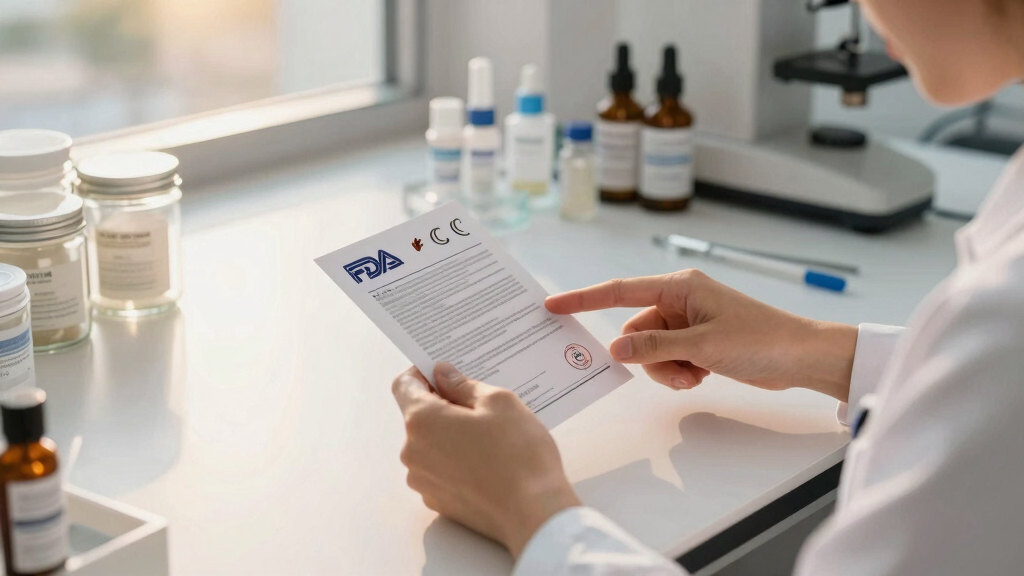
FDA clearance means a device is substantially equivalent to a legal predecessor, while certification is rare and often misused. Most products are either registered or listed, which isn’t the same as approval. Understanding these terms helps you see true safety signals versus marketing noise.
When you see a product boasting ‘FDA certified’ or ‘FDA approved,’ do you really understand what that means? Chances are, the phrase is more marketing than regulation. The FDA has a precise language for its oversight—terms like ‘cleared,’ ‘approved,’ and ‘registered’ carry very different meanings. Knowing the difference can save you from being misled and help you make smarter choices about safety and compliance.
In this guide, you’ll discover exactly what each FDA term signifies, why most products aren’t actually certified, and how to decode the claims companies make. Whether you’re a consumer or a professional in the industry, understanding this vocabulary will sharpen your ability to spot real safety signals from marketing tricks.
Most products claiming ‘FDA certified’ are misusing the term; the FDA rarely certifies products and mostly clears, approves, or registers them.
FDA clearance (510(k)) shows that a device is similar to a predecessor, not that it’s proven effective—just safe and comparable.
FDA approval (PMA) is rigorous, involving clinical data; it’s reserved for high-risk devices like implants or life-support systems.
Registration and listing are administrative steps, not endorsements of safety or effectiveness.
Always verify claims via FDA’s public databases before trusting marketing hype.
Understanding FDA Clearance vs. Certification
When a product boasts “FDA certified” or “FDA approved,” the phrase is usually more marketing than regulation. The FDA speaks a precise vocabulary — cleared, approved, authorized, registered — and each word carries a legally distinct meaning. Learning the difference separates true safety signals from marketing noise.
“Almost all products marketed as ‘FDA certified’ are misusing the term. The FDA rarely certifies products — most are cleared, approved, or simply registered with no review at all.”
Five Words That Actually Mean Something
“Certified” is not one of them. Each real FDA term signals a specific pathway, a specific evidence bar, and a specific level of scrutiny — from a paperwork filing to a full clinical trial review.
Cleared
The workhorse pathway for Class II (moderate-risk) devices. The maker shows the product is “substantially equivalent” to a legal predecessor — a review of safety and similarity, not proof of clinical effectiveness.
Approved
Reserved for Class III (high-risk, life-sustaining) devices — implants, defibrillators, heart valves. Requires valid scientific evidence, often clinical trials, proving safety and effectiveness.
Authorized
De Novo covers novel low-to-moderate-risk devices with no predecessor. Emergency Use Authorization applies during public-health crises. Real review — but a distinct legal category.
Registered / Listed
Purely administrative. A facility registers, a device gets listed. It implies no review and no endorsement whatsoever — like registering a business with local government.
Granted
Tobacco products receive marketing authorization, a term deliberately chosen because it is not an approval nor any statement of safety.
Approved, Never Cleared
Drugs and biologics are approved (NDA / ANDA / BLA) — never “cleared.” Mixing up drug and device terminology is a red flag of sloppy sourcing.
What Each Status Actually Proves
The substantive legal difference is substantial equivalence vs. proof of safety and effectiveness — the most misunderstood distinction in health marketing.
| Dimension | Cleared · 510(k) | Approved · PMA | Registered / Listed |
|---|---|---|---|
| Device Class | Class II — moderate risk (powered wheelchairs, laser hair-removal devices) | Class III — high risk (implants, defibrillators, heart valves) | Any class — applies to the facility and product listing itself |
| Legal Standard | Substantial equivalence to a legally marketed predicate device | Reasonable assurance of safety and effectiveness from valid scientific evidence | None — an administrative directory entry |
| Clinical Trials | ~ Usually not required; technical and bench data suffice | ✓ Required — often peer-reviewed, multi-stage studies | ✗ Never reviewed at all |
| Typical Timeline | 3–6 months from submission to decision | 12+ months, frequently longer with advisory panels | Days — a filing, not a review |
| Cost to Maker | ~ Moderate — technical documentation and testing | ✗ Hundreds of thousands of dollars, sometimes millions | ✓ Minimal administrative fee |
| What It Proves | Safe & comparable to a predecessor — not proven effective | Proven benefit backed by substantial clinical evidence | Nothing about safety, quality, or effectiveness |
Why “FDA Certified” Is Mostly a Marketing Myth
In the United States, the phrase is essentially meaningless — the FDA’s official vocabulary doesn’t include “certified” as a regulatory status. Misuse fuels confusion; the enforcement risk is real.
Claims That Should Raise an Eyebrow
A skincare device labeled “FDA certified” at a beauty expo is not a real designation. A registration number is not a credential — the FDA explicitly states it does not issue registration certificates.
- “FDA certified” — not an official status for devices, drugs, supplements, or cosmetics
- “FDA registered” — a directory filing, not an endorsement; third-party “registration certificates” are not affiliated with FDA
- FDA logo on packaging — using it to imply endorsement is illegal under FD&C Act §301(r)
- “FDA approved” supplements or cosmetics — these categories are generally not pre-approved at all
Language That Reflects Actual Review
Look for precise terminology — it indicates a defined pathway, documented evidence, and a verifiable record in a free public FDA database.
- “510(k) cleared” — searchable in the 510(k) Premarket Notification database
- “PMA approved” — searchable in the Premarket Approval database
- “De Novo authorized” — novel device classification on record
- Cross-checked claims — if “approved” isn’t in the approval database, the claim is false or misleading
Genuine FDA certification exists in exactly two niches: mammography facilities, certified under the Mammography Quality Standards Act (MQSA), and certain color additives, which are batch-certified. Everything else marketed as “FDA certified” is stretching the truth. By contrast, the EU’s CE marking genuinely is a certification system via Notified Bodies — one reason the language feels natural to non-US audiences. And note the neighbors: NIOSH certifies N95 respirators, UL/ETL handle electrical safety — not the FDA.
Risk Class Drives the Pathway
The FDA’s oversight is risk-based: the higher the potential harm, the higher the evidence bar. Most Class I devices are even exempt from 510(k) — yet still must register, list, and follow quality-system rules.
Register & List
Bandages, tongue depressors. Administrative filing; most are 510(k)-exempt but still regulated post-market.
510(k) Clearance
Prove substantial equivalence to a predicate. Technical data, 3–6 months, no new clinical trials in most cases.
De Novo Authorization
New low-to-moderate-risk device types with no predecessor get classified through this route.
PMA Approval
Life-sustaining implants need full clinical evidence, manufacturing review, and often advisory-panel scrutiny.
The 60-Second Claim Check
Why ‘FDA Certified’ Is Mostly a Marketing Myth
In the US, the phrase ‘FDA certified’ is essentially meaningless. The FDA’s official vocabulary doesn’t include ‘certified’ as a regulatory status. Instead, it uses specific terms like ‘cleared,’ ‘approved,’ ‘authorized,’ and ‘registered.’
Most companies that claim ‘FDA certification’ are stretching the truth. The FDA rarely certifies products outside of a few niches like mammography facilities or batch-certified color additives. For everything else, the term is a marketing ploy or a misunderstanding.
Imagine a skincare device labeled ‘FDA certified’ at a beauty expo. That’s not a real FDA designation. It’s like calling a car ‘certified’ because it was inspected—except, in reality, the FDA simply does not do certification like that.
This misuse fuels confusion, which is why understanding the actual terms is crucial.
As an affiliate, we earn on qualifying purchases.
What Does ‘FDA Clearance’ Really Mean?
FDA clearance is a formal process for most medical devices—specifically, those classified as Class II. When a device is ‘510(k) cleared,’ it means the manufacturer has demonstrated that the product is ‘substantially equivalent’ to a legally marketed predecessor.
For example, a laser hair removal device like the Silk’n Infinity (retail price around $300–$500) is FDA 510(k) cleared. The company shows that this device performs similarly to earlier approved models, without needing new clinical trials.
This process typically takes 3 to 6 months, involves submission of technical data, and does not require proof of clinical effectiveness—just safety and similarity.
Understanding the significance of clearance is vital because it indicates that the device has undergone a review focused on safety and equivalence, not necessarily on proven effectiveness. This means a device can be safe and fit for purpose without having demonstrated clinical efficacy, which is a critical distinction for consumers and professionals. Relying solely on clearance status might lead to overestimating a device’s proven benefits; hence, further research or evidence is often needed for assessing true effectiveness.
As an affiliate, we earn on qualifying purchases.
What Does ‘FDA Approval’ Mean? It’s Not the Same as Clearance.
FDA approval is a much tougher process—reserved for high-risk, life-sustaining devices. When a device is ‘PMA approved,’ it means the manufacturer submitted extensive scientific evidence, often including clinical trials, to demonstrate safety and effectiveness.
Think of the Transcatheter Heart Valve (costs upward of $30,000 per device) or implantable defibrillators. These require FDA approval before they hit the market. This approval process involves a comprehensive review of clinical data, manufacturing processes, and safety protocols, often peer-reviewed and scrutinized thoroughly.
This process can take over a year and costs hundreds of thousands of dollars. It’s akin to passing a rigorous safety and efficacy exam, with the FDA acting as a gatekeeper to ensure that only devices with solid evidence of benefit and safety reach the market. For healthcare providers and patients, this status offers a higher level of assurance that the device has been evaluated for real-world effectiveness, not just safety.
Understanding the difference between clearance and approval is crucial because it reflects the level of evidence behind a device. While clearance indicates safety and similarity, approval signifies a proven benefit based on substantial scientific data—making it a key factor in clinical decision-making and patient safety.
As an affiliate, we earn on qualifying purchases.
The Confusing World of Registration, Listing, and Certification
Most products and establishments aren’t ‘approved’ or ‘certified’—they’re simply registered or listed. When a company registers a facility or lists a device with the FDA, it’s an administrative step, not an endorsement of safety or efficacy. This distinction is critical because many consumers assume registration implies quality or safety, which is not the case.
For example, a cosmetic company might register their facility with the FDA, but this doesn’t mean their products have been evaluated or approved. It’s comparable to registering a business with a local government—necessary for operation but not a mark of quality or safety.
Similarly, a device listed in the FDA database indicates the manufacturer has informed the agency about the product, but it doesn’t mean the device has been reviewed for safety or effectiveness. It’s more akin to a directory listing—useful for regulatory compliance and traceability, but not a stamp of approval.
This is a fundamental difference because registration and listing are about compliance and record-keeping, not about rigorous evaluation or endorsement. Recognizing this helps avoid misinterpreting administrative steps as endorsements of product quality or safety, which can be misleading and dangerous.
As an affiliate, we earn on qualifying purchases.
How to Spot Real Safety Signals vs. Marketing Tricks
Knowing the right terms helps you see through marketing hype. Look for ‘510(k) cleared,’ ‘PMA approved,’ or ‘De Novo authorized’—these are real regulatory statuses that indicate a certain level of review and scrutiny. Recognizing these terms means you can assess whether a product has undergone meaningful evaluation.
Be wary of labels or claims like ‘FDA certified,’ ‘FDA approved,’ or ‘FDA registered’ without further explanation. They often serve as marketing noise designed to create an impression of credibility without substantive backing. This can lead consumers to overestimate the safety or efficacy of a product.
Use free FDA databases to verify claims: search the 510(k) database for clearance, the PMA database for approvals, and the registration database for facilities. Cross-checking claims against official records is the best way to avoid being misled.
For example, if a company claims their device is ‘FDA approved,’ but it’s not listed in the FDA’s approval database, that claim is false or misleading. This verification process is crucial because it empowers consumers and professionals to make informed decisions based on verified facts rather than marketing claims.
By developing this habit, you can filter out marketing noise and focus on products that truly meet safety and efficacy standards—protecting yourself and others from false assurances.
Comparing FDA and CE Marking: Certification in Europe
The European Union’s CE marking is a real certification, issued by notified bodies under MDR and IVDR regulations. It signals that a product meets strict standards, unlike the US’s vague ‘certified’ claims.
For example, a laser device with CE marking has been tested and certified by an independent notified body. In contrast, the US market rarely uses ‘certification’—most devices are simply cleared or approved without a third-party certification.
This difference explains why ‘certification’ sounds more concrete in Europe. In the US, most safety standards are embedded in the clearance or approval process, not a separate certification.
Understanding this contrast helps clarify why marketing claims differ across regions and why European certifications often carry more weight in global markets. Recognizing the distinction also helps prevent misinterpretations of what a certification or marking signifies in different regulatory environments.
Frequently Asked Questions
Is ‘FDA cleared’ the same as ‘FDA approved’?
No. ‘FDA cleared’ usually refers to devices that went through the 510(k) process, demonstrating substantial equivalence. ‘FDA approved’ applies to high-risk devices with a more rigorous review, like PMA. They imply different levels of scrutiny.Does the FDA certify medical devices or anything?
Rarely. The FDA does not certify most products. It clears, approves, or registers them. Certification, as a formal process, is limited to specific niches like mammography or batch-certified additives.What does ‘FDA registered’ or ‘FDA listed’ really mean?
These are administrative steps. Registration means a company has informed the FDA about its establishment or products. It’s not a review or endorsement—just a way to keep records.If a product is 510(k) cleared, can the company claim it’s ‘FDA approved’?
No. Using ‘FDA approved’ for a 510(k) cleared device is misleading and can prompt enforcement. Always check the official FDA database to verify the actual status.Are dietary supplements or cosmetics FDA approved before sale?
No. Most supplements and cosmetics do not require pre-market approval. They are regulated post-market, and claims must meet specific standards, but approval isn’t part of that process.Conclusion
Understanding the real meaning behind FDA terminology arms you against marketing spin. When companies tout ‘FDA approval,’ ask yourself: is it clearance, approval, or just registration? The distinctions matter. They tell you whether a product has undergone serious scrutiny or is simply compliant with basic rules.
Next time you see an eye-catching label, take a moment. Verify it. Knowing the language makes you a smarter, safer consumer—no hype, just facts. And remember, true safety often comes from transparency, not slick marketing.
Flea & tick season Picks
flea and tick prevention
As an affiliate, we earn on qualifying purchases.