
TL;DR
Play games included with Prime
Start a Prime free trial and play with Amazon Luna on your devices.
Start playingAs an affiliate, we earn on qualifying purchases.
Choosing the right LED wavelength depends on your skin concern—red for aging, blue for acne, green for redness. Recent tech developments make personalized, effective home treatments possible, but safety and device quality matter. Consistent use over weeks shows real results.
Imagine a gentle, pulsing glow that smooths wrinkles, calms redness, or zaps acne—without creams or needles. LED masks bring this science-fiction feeling into real life, but not all lights are created equal. Picking the right wavelength turns your device from a mere gadget into a targeted skincare tool, supporting your skin’s natural renewal processes.
In this guide, you’ll learn how to match LED wavelengths with your specific skin concerns. We’ll explore recent tech trends, scientific findings, and practical tips to help you choose a device that fits your goals—and your budget.
Match your skin concern with the appropriate wavelength: red for aging, blue for acne, green for redness.
Always verify your device emits exact wavelengths and has safety certifications.
Recent tech enables customizable, multi-wavelength devices for at-home use, making treatments more accessible.
Consistency over several weeks is essential to see real improvements.
Consult a professional if you have sensitive skin or underlying conditions before starting LED therapy.
How to Choose the Right LED Wavelength for Your Skin Concerns
The useful part of an LED mask is not the glow—it is the specific wavelength delivered to your skin. Match the nanometers to your goal, verify the device, and use it consistently enough to judge the result.
What each wavelength is designed to do
Different wavelengths interact with skin at different depths. The most useful device is the one whose documented output aligns with your primary concern.
Blue
Targets acne-associated bacteria and may help control oil and active breakouts.
Best match · AcneGreen
Used to calm visible redness, support a more even tone, and address pigmentation.
Best match · RednessAmber
Supports radiance and circulation while offering a gentler redness-focused option.
Best match · Dull toneRed
Supports collagen production, visible fine-line reduction, healing, and inflammation control.
Best match · AgingNIR
Penetrates more deeply to support tissue repair, scar recovery, and rejuvenation.
Best match · RepairDepth is not the only measure of effectiveness. The biological target, dose, device output, and consistency all matter.
Start with one primary skin goal
Multi-wavelength devices can be versatile, but more colors do not automatically mean better treatment. Begin with the wavelength most relevant to the outcome you want.
| Skin concern | Best first choice | Useful partner | Why it fits | Watch for |
|---|---|---|---|---|
| Aging & wrinkles | ✓Red | NIR | Supports collagen and deeper repair | Expect gradual, not instant, change |
| Active acne | ✓Blue | Green or amber | Targets bacteria; partner light may soothe | Overuse may increase dryness or irritation |
| Redness & rosacea-prone skin | ✓Green | Amber | Focuses on visible calm and tone | Seek professional advice for persistent symptoms |
| Pigmentation & uneven tone | ✓Green | Amber | Supports a more even-looking complexion | LED is not a cure for underlying conditions |
| Scars & deep repair | ✓NIR | Red | Combines deeper repair with surface support | Get guidance for new, painful, or changing scars |
| General radiance | ~Amber | Red | Supports circulation and refreshed appearance | Benefits may be subtler than targeted therapy |
✓ Primary match ~ Supportive or secondary option Individual responses vary.
Choose a device by evidence, not color names
A mask labeled “red” is not enough. The listing should disclose exact wavelengths, output, treatment protocol, safety information, and who stands behind the product.
Exact nanometers
Look for documented values such as 630–635 nm or 660 nm—not merely “red light technology.”
Independent wavelength control
For multi-color devices, confirm that individual modes can be selected rather than emitted in an uncontrolled blend.
Measured power output
Irradiance in mW/cm² helps describe dose. More power can shorten sessions, but excessive intensity may increase discomfort.
Safety and clinical support
Check appropriate regulatory status, eye-safety guidance, warranty terms, credible studies, and transparent brand information.
From concern to consistent results
Home LED works best as a measured routine. Change one variable at a time, track your response, and resist increasing the dose simply because progress feels slow.
Photograph skin in the same lighting and record sensitivity, breakouts, or visible redness.
Follow the device protocol and watch for temporary redness, dryness, heat, or irritation.
Look for trends rather than day-to-day fluctuations. Keep frequency and duration stable.
Compare with baseline. Continue only when the routine is comfortable and benefits are meaningful.
Effective treatment has limits
LED therapy is non-invasive, painless for most users, and generally considered safe when used correctly. It still requires appropriate dosing, device quality, and attention to your skin’s response.
Protect your eyes
Use the supplied eye protection or follow the device’s eye-safety instructions precisely.
Do not chase intensity
Higher irradiance is not automatically better. Excessive exposure may cause irritation or overheating.
Pause if skin reacts
Stop and reassess if redness, discomfort, dryness, or irritation persists beyond a brief response.
Check photosensitivity
Ask a clinician about medications, products, or conditions that may increase light sensitivity.
Seek tailored guidance
Consult a dermatologist for sensitive skin, underlying conditions, severe acne, rosacea, or unusual lesions.
Keep expectations realistic
LED can complement skincare, but it is not a standalone cure for serious skin conditions.
Choose the wavelength for the concern, verify the nanometers and safety credentials, then use the device consistently for several weeks before deciding whether it works for you.
What Does Each LED Wavelength Do? A Clear Breakdown
Understanding LED wavelengths is like knowing the ingredients in a recipe—each plays a unique role. Here’s a quick rundown:
| Wavelength | Color | Primary Effects |
|---|---|---|
| 620–750 nm | Red | Boosts collagen, reduces fine lines, accelerates healing |
| 405–470 nm | Blue | Targets acne bacteria, controls oil, reduces breakouts |
| 750–1200 nm | Near-Infrared (NIR) | Penetrates deep, supports tissue repair, reduces inflammation |
| 520–560 nm | Green | Calms redness, fades pigmentation, evens skin tone |
| 590–620 nm | Yellow/Amber | Enhances radiance, reduces redness, boosts circulation |
Each wavelength interacts with skin at different depths and targets. Think of red light as a gentle gardener encouraging collagen growth; blue as a vigilant pest controller; green as a calming breeze for irritated skin. Recognizing these effects helps you understand why certain wavelengths are more effective for specific concerns, and why combining them can offer comprehensive skin support. For example, using red and NIR together can promote both surface and deep tissue healing, but overuse or improper combination might lead to overstimulation or irritation. Understanding these nuances allows you to optimize your treatments and avoid potential tradeoffs, such as increased sensitivity or diminished returns if wavelengths are misapplied.
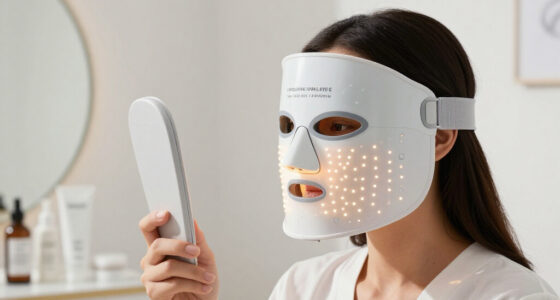
LED light therapy mask for anti-aging
As an affiliate, we earn on qualifying purchases.
As an affiliate, we earn on qualifying purchases.
Match Your Skin Concerns with the Perfect LED Color
Matching your skin concern with the right wavelength is like tuning a musical instrument—it ensures your skin receives targeted, effective treatment. But understanding why certain wavelengths are suited for specific issues deepens your ability to choose wisely. For instance, red and NIR wavelengths stimulate collagen production, which is critical for skin elasticity and youthful appearance. This means they don’t just temporarily mask aging signs—they actively promote the skin’s structural rebuilding. Conversely, blue light’s ability to eradicate acne-causing bacteria addresses the root of breakouts, but overuse may dry or irritate sensitive skin if not balanced with calming treatments. Green light’s calming properties can help reduce redness and pigmentation, but if used excessively, it might diminish skin’s natural response or cause imbalance. Recognizing these tradeoffs helps you tailor your routine—using the right wavelength at the right frequency to maximize benefits while minimizing risks.
For example, if your main concern is fine lines, a device offering both red and NIR wavelengths can provide comprehensive support—addressing surface and deeper tissue health. If acne is your focus, blue light can clear outbreaks, but combining it with anti-inflammatory wavelengths like green or yellow can help soothe irritation and prevent over-drying. This nuanced approach ensures your treatments are not only targeted but also safe, avoiding the pitfalls of overexposure or ineffective application.
As an affiliate, we earn on qualifying purchases.
How to Pick a Device That Delivers the Right Wavelengths
Not all LED masks highlight the wavelengths they emit. When choosing, look for:
- Precise Wavelengths: Check that the device states exact nm ranges—e.g., 630–635 nm for red. Knowing the precise wavelength allows you to target your specific skin concern more effectively and avoid generic or misaligned treatments that might not produce the desired results.
- Multiple Wavelengths: Devices combining red, blue, and green offer versatility, enabling you to switch between concerns or combine effects. However, consider whether the device’s settings truly allow for independent control of each wavelength; overlapping emissions can dilute effectiveness or cause unintended reactions if not properly managed.
- Power Output: Higher irradiance (measured in mW/cm²) can mean quicker results, but excessive power may cause overheating or irritation. Balancing power with safety features ensures you get effective treatment without risking damage or discomfort.
- Safety Certifications: FDA clearance or reputable brand guarantees safety standards, but also check for user reviews and clinical backing. A certified device is more likely to have undergone rigorous testing, minimizing risks like burns or adverse reactions.
For example, a device that offers 660 nm red light, 415 nm blue, and 520 nm green, with a reputable safety record, gives you flexibility to target multiple concerns without swapping gadgets. Understanding these specifications helps you weigh the tradeoffs—more wavelengths mean greater versatility but potentially higher complexity or cost. Prioritizing quality and safety ensures your investment delivers consistent, reliable results over time.
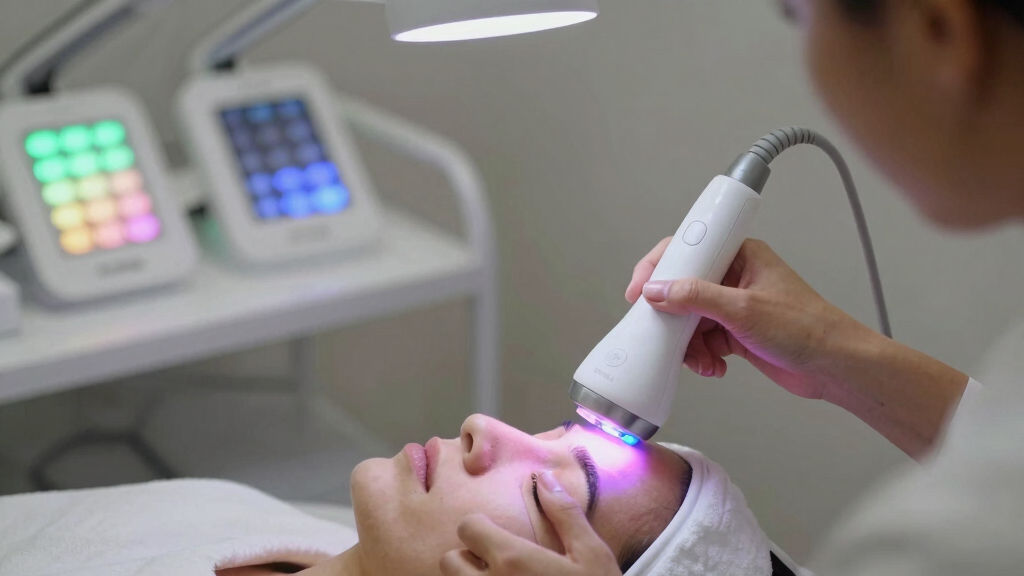
green light skin redness therapy device
As an affiliate, we earn on qualifying purchases.
As an affiliate, we earn on qualifying purchases.
Technological Advances Making Home LED Treatments Smarter
Recent tech leaps have turned LED masks from clinical tools into at-home essentials. Devices now often feature customizable settings, multiple wavelengths in one unit, and even apps for personalized protocols. Imagine a sleek mask that adapts treatment intensity and duration based on your skin’s response—almost like a tailored skincare chef. These innovations mean treatments can be tailored more precisely to your skin’s evolving needs, reducing trial-and-error and enhancing results. They also facilitate better adherence, as users are more likely to stick with routines that feel personalized and easy to manage. Moreover, advances in LED technology have improved energy efficiency and device longevity, making it more cost-effective in the long run. But be wary: always verify device safety and authenticity. Not all devices claiming multi-wavelengths are equal, and quality varies. Choosing reputable brands with proven technology ensures your investment is both safe and effective, maximizing the benefits of these technological breakthroughs.
In essence, these innovations are democratizing professional-grade treatments, allowing you to harness advanced science at home. However, understanding the underlying tech helps you distinguish between genuine progress and hype, ensuring your routine remains effective and safe.
As an affiliate, we earn on qualifying purchases.
Safety First: Tips for Using LED Masks Responsibly
Using LED therapy correctly is key to safe, effective results. Always follow the manufacturer’s instructions—treatments generally last 10–20 minutes, 2–3 times a week. Proper timing prevents overstimulation, which can lead to redness or irritation, especially for sensitive skin types. For example, exceeding recommended durations or frequency can cause unnecessary stress on skin cells, potentially leading to increased sensitivity or even damage. For example, if you notice redness or irritation, reduce frequency or duration, and give your skin time to recover. It’s wise to perform a patch test before full use, especially if your skin is sensitive or prone to reactions, to gauge how your skin responds to specific wavelengths. Consulting a dermatologist is advisable if you have pre-existing skin conditions, or if you’re pregnant, as certain wavelengths may be more suitable or require caution. Remember, LED therapy supports skin health but isn’t a cure-all or substitute for professional advice. Responsible use ensures you enjoy all the benefits without risking adverse effects or setbacks in your skincare journey.
Frequently Asked Questions
Which LED wavelength is best for aging skin?
Red light (620–750 nm) and near-infrared wavelengths are most effective for stimulating collagen and reducing fine lines. They support skin elasticity and firmness over time.
Can LED therapy help with acne?
Yes, blue light (405–470 nm) effectively targets acne-causing bacteria and reduces inflammation, helping prevent and treat breakouts.
Are LED treatments safe for sensitive skin?
Generally, yes. However, it’s wise to consult a dermatologist first, perform patch tests, and start with shorter sessions to monitor your skin’s response.
How long before I see results?
Most people notice improvements after 4–8 weeks of consistent treatments, especially with dedicated routines.
Can I do LED therapy at home?
Absolutely. Many devices are designed for home use, but ensure they emit the correct wavelengths, follow safety protocols, and buy from reputable brands.
Conclusion
Choosing the right LED wavelength isn’t just about picking a pretty light—it’s about targeting your skin’s needs with precision. Think of it as giving your skin the right kind of nourishment, at the right depth, for real results.
Remember, safety and consistency are your best allies. A well-chosen device, used correctly, can support your skin’s natural vitality—turning a simple glow into a genuine glow-up.
Fall yard work Picks
leaf blowers
As an affiliate, we earn on qualifying purchases.