TL;DR

Get beauty and skincare favorites delivered free with Prime
- Fast, free delivery on millions of items
- Prime Video, Amazon Music and more included
- Member-only deals all year
During Milan Beauty Week 2026, Dermaself and OVS tested selfie-based AI skin analysis in a five-day, multi-brand retail activation. The event recorded more than 2,600 completed analyses, but the figures do not establish whether the recommendations led to purchases or better product outcomes.
Dermaself brought selfie-based AI skin analysis into a multi-brand beauty retail setting during Milan Beauty Week 2026, where an activation with OVS recorded more than 2,600 completed analyses over five days. The trial connected visible skin characteristics identified from visitors’ selfies with skincare recommendations featuring products available through OVS, offering a live test of how retailers might use AI to guide shoppers through large assortments.
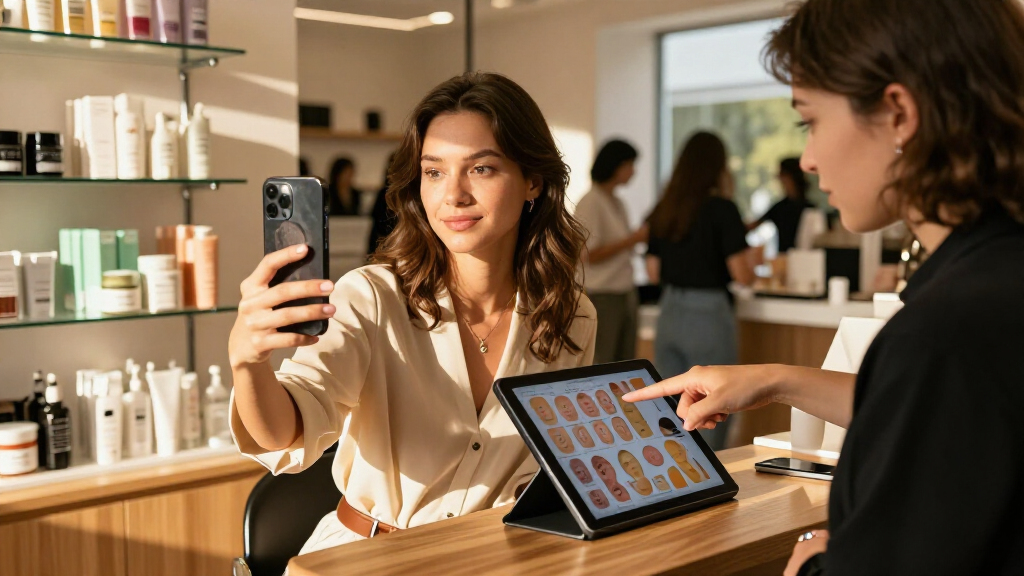
The experience, called the Shaka Beauty Hotel × OVS activation, took place at Garden Senato in Milan and featured 37 beauty brands. Visitors took a selfie for an AI analysis of visible parameters including blemishes, dark spots, wrinkles, pores, redness, hydration and skin laxity. The resulting recommendations were linked to products available through OVS.
Visitors could receive their suggested routine by email, along with a 20% discount on recommended products redeemable at selected OVS stores in Milan. According to the report, the activation recorded a 75% completion rate and averaged one completed analysis every 55 seconds. The report does not specify how the completion rate was calculated or how many visitors went on to redeem the offer.
Dermaself’s approach combines selfie-based analysis with ingredient-first product matching. It connects analysis results to product INCI information—the ingredient lists on skincare products—to identify formulations within a retailer’s catalogue. The company presents this as a way to make recommendations across brands rather than directing shoppers toward a single predefined label.
From Skin Scan to Store Purchase
For retailers, the proposition is that personalised guidance can help shoppers navigate crowded skincare ranges. A multi-brand catalogue may include products with different ingredients, claims and uses; linking a skin analysis to product information could give shoppers a more focused starting point than browsing by brand alone. The Milan activation also tied a digital interaction to a retail offer, providing a route from online recommendation to selected physical stores.
The reported activity figures show that visitors completed the tool during a live retail event. They do not, by themselves, show that the recommendations were accurate, increased sales, improved customer satisfaction or produced better skincare choices. Those outcomes would require separate evidence, such as purchase and redemption data, customer feedback and a clear explanation of how the analysis performs.
The distinction matters because engagement is not the same as commercial or skin-care effectiveness. Retailers considering the technology would need to weigh the experience it offers against its reliability, data practices and ability to make useful recommendations across their actual product ranges.
As an affiliate, we earn on qualifying purchases.
How the Retail Model Works
The source report describes a broader retail model in which a customer takes a selfie, receives an AI analysis of visible skin characteristics, and is matched with products using ingredient information. In principle, retailers could place this journey on an e-commerce site or offer it in stores through QR codes, tablets or smart mirrors. Beauty advisers might also use the results to support an in-person consultation.
That model addresses a specific challenge for multi-brand sellers: adding more specialised products can make a catalogue harder to navigate. Dermaself’s stated method starts with visible skin characteristics and product INCI data, rather than a customer choosing a brand first. The Milan event put that proposal into a temporary, in-person setting; the report discusses e-commerce and other store formats as possible uses, not as deployments confirmed by this activation.
personalized skincare product recommendations
As an affiliate, we earn on qualifying purchases.
As an affiliate, we earn on qualifying purchases.
Sales, Accuracy and Data Still Open
The reported totals do not reveal how many recommendations resulted in purchases or discount redemptions, nor whether customers found the routines useful. The source gives no comparison with shoppers who did not use the tool, so the event figures cannot establish that AI analysis changed buying behaviour.
Further details are also absent about the system’s validation, its performance across different skin tones and conditions, and how selfie images or analysis results are stored, used or deleted. The analysis is described as identifying visible parameters; the available material does not establish that it can diagnose skin conditions or assess health. Those questions would matter to retailers and customers before wider use.
As an affiliate, we earn on qualifying purchases.
Evidence Needed Beyond the Event
The report identifies no announced follow-up date or next trial. A useful next step would be for Dermaself and retail partners to publish further information on the technology’s validation and data handling, alongside results on recommendation use, store visits and sales. That would help distinguish a high-engagement event experience from a tool that consistently supports product discovery across channels.
For now, the Milan activation is a reported test of selfie analysis connected to a multi-brand catalogue and store discount. Whether retailers adopt the approach more widely—and whether it improves shopping outcomes—remains to be shown.
ingredient-based skincare products
As an affiliate, we earn on qualifying purchases.
As an affiliate, we earn on qualifying purchases.
Key Questions
What happened during the Milan Beauty Week activation?
Dermaself and OVS ran a five-day experience at Garden Senato in Milan. Visitors could receive an AI analysis of visible skin characteristics and product recommendations linked to OVS, with a 20% discount on recommended products redeemable at selected Milan stores.
How many people completed an AI skin analysis?
The source report says the activation recorded more than 2,600 completed analyses, a 75% completion rate and an average of one completed analysis every 55 seconds. It does not give the calculation basis for the completion rate.
How does Dermaself match analysis results to products?
Dermaself says it connects visible skin analysis results with product INCI information to identify relevant formulations in a retailer’s catalogue. The approach is described as ingredient-first and can include products from multiple brands.
Does the event show that AI recommendations increase sales?
No. The reported figures measure completed analyses and engagement. The source does not provide purchase or discount-redemption totals, or a comparison that would show whether the tool increased sales.
Can the system diagnose a skin condition?
The source describes analysis of visible characteristics such as redness, pores and dark spots. It does not establish that the tool can diagnose medical conditions or assess skin health.
Source: rss
Halloween Picks
halloween
As an affiliate, we earn on qualifying purchases.