
TL;DR

Get beauty and skincare favorites delivered free — and shop member deals
- Fast, free delivery on millions of items
- Access to Prime Big Deal Days deals on October 6–7
- Prime Video, Amazon Music and more included
Luxury skincare gadgets range from LED masks and microcurrent tools to cleansing brushes and cooling massagers, and each serves a different cosmetic purpose. Judge an exact model by its specifications, evidence, safety guidance, ongoing costs, and how often you will realistically use it; a high price or polished app does not prove better results.
A glowing LED mask can cost more than a weekend away, yet the word “luxury” tells you very little about what it will do for your skin. Luxury skincare gadgets can make a routine feel polished and spa-like, but their technologies, evidence, and upkeep vary sharply.
This guide explains what you may reasonably expect from LED, microcurrent, radiofrequency, cleansing, and heated or cooling devices. You’ll learn how to compare their purpose, practical limits, safety notes, and costs beyond the checkout price, so you can choose a tool that fits your routine rather than your bathroom shelf.
Think of a gadget as one instrument in a skincare orchestra. A beautiful instrument can add something, but it cannot play every part—and it only earns its place if you use it.
Choose a device by its intended cosmetic purpose: LED, microcurrent, radiofrequency, cleansing brushes, and cooling tools do different jobs.
Check evidence and specifications for the exact model; research on a technology does not validate every product in that category.
Rehearse the treatment schedule against an ordinary week before buying, including setup, cleanup, charging, and accessories.
Add replacement parts, gels, protective items, warranty terms, and maintenance to the sticker price.
Follow model-specific safety instructions and stop if use causes pain, a burn, persistent redness, or irritation.
Match the gadget to the skin goal you actually have
Luxury skincare gadgets work best as goal-specific tools: LED devices are marketed for acne or visible signs of aging, microcurrent aims to temporarily improve the appearance of facial tone, radiofrequency uses heat to target firmness, and cleansing brushes remove surface debris. Those jobs overlap in a glossy advert, but the technologies are not interchangeable.
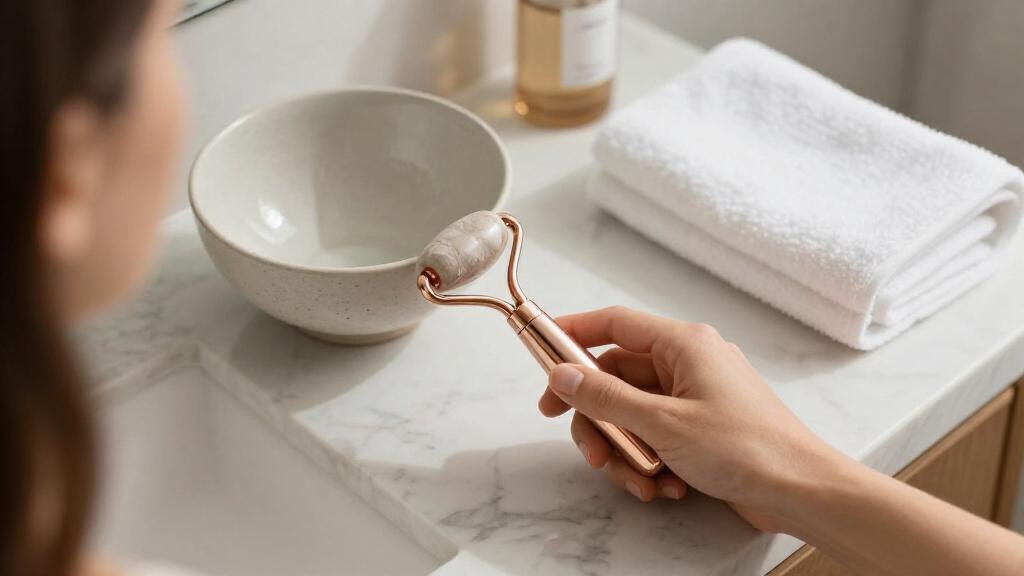
For instance, if your main complaint is that sunscreen and makeup leave a stubborn film at night, a cleansing tool may be more relevant than a microcurrent wand. If you want a cooling sensation after a warm commute, a chilled massager may make your evening routine feel soothing; that sensation alone does not establish a lasting cosmetic change.
Start with one concrete goal and one realistic outcome. “I want my routine to feel more relaxing” points toward a different purchase than “I want a gradual improvement in the look of fine lines.” This distinction matters because the wrong tool can be expensive clutter, even when the device itself is well made.
A compact comparison can help you sort marketing language from intended use:
| Technology | Commonly marketed purpose | Practical question |
|---|---|---|
| LED light | Acne or signs of aging | Are wavelength, schedule, and eye guidance clear? |
| Microcurrent | Temporary appearance of facial tone | Does the routine and any required gel suit you? |
| Radiofrequency | Appearance of firmness | Are heat settings and exclusions explained? |
| Cleansing brush | Surface debris removal | Can you use and clean it gently? |
| Heated or cooling massager | Comfort and massage | Are you buying a sensation, a cosmetic claim, or both? |
The table is a starting point, not a promise of results. A device’s exact intended use and instructions matter more than a category label.
As an affiliate, we earn on qualifying purchases.
Read the specifications before trusting a promising claim
A technology’s evidence does not prove every device using it works equally well. Results depend on details such as wavelength, energy level, treatment schedule, design, and the quality of evidence for the exact product. This is why a confident phrase on a box is less useful than clear model-specific information.
Suppose two LED masks both say they target signs of aging. One may publish its wavelengths, recommended treatment time, and use instructions in plain language; the other may lean on a celebrity image and vague “advanced light” wording. The first gives you more to evaluate, though specifications by themselves still do not prove an outcome.
At-home devices may use lower power than professional equipment, which can mean subtler changes. A gadget that asks for regular sessions may also demand more time than you expect. Before purchase, look for the exact model name, intended use, available supporting evidence, independent testing where available, and a realistic schedule you can follow.
Regulatory claims need the same exactness. Clearance or authorization depends on the specific product and jurisdiction, so a brand’s status cannot be casually applied to every model it sells. FDA-cleared applies only to the exact model when that status has been verified; marketing terms such as “clinically proven” need context about what was studied and how.
Useful rule: Ask what was tested, on which exact device, for which stated purpose, and under what schedule. A broad claim about a technology is not a guarantee for the gadget in your cart.
For a real-world check, compare the manufacturer’s instructions with the claims in its advert. If the ad promises dramatic results but the use guide describes gradual cosmetic support, trust the more modest account.
As an affiliate, we earn on qualifying purchases.
Choose a routine you can repeat without turning skincare into homework
The best gadget for your routine is the one you can use as directed, consistently and comfortably. Many at-home tools call for repeat sessions, so an appealing first week does not tell you whether the habit will last. A complicated ritual can turn a sleek device into a drawer resident.
Try a practical test before buying: picture an ordinary Tuesday, not a quiet Sunday. If an LED mask needs a set treatment window, would you sit still while listening to a podcast? If a microcurrent tool requires conductive gel and careful passes, will you make room for it after cleansing? A routine that fits a busy evening has a better chance than one built around your most optimistic self.
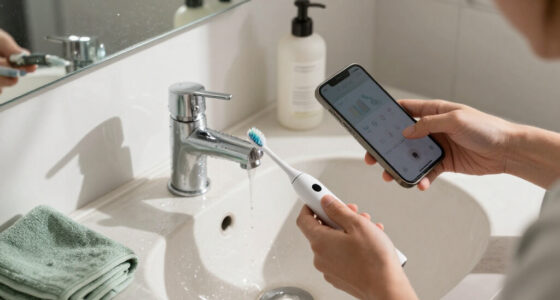
Write down the steps, time, and extras the product requires. For instance, a gadget that takes ten minutes but needs gel, cleanup, and charging may feel less convenient than its headline treatment time suggests. App reminders and guided routines can help you remember sessions, but a connected interface does not itself show that skin results will improve.
- Name your goal in plain language, such as “make cleansing feel easier” or “support the look of facial tone.”
- Read the exact model’s directions for areas, session length, frequency, and any required accessories.
- Try the schedule on paper for two ordinary weeks and see whether it fits your calendar.
- Check the full cost of consumables, replacement parts, and maintenance before deciding.
This small rehearsal helps distinguish a genuinely useful tool from a beautiful promise that needs an unrealistic amount of attention.
radiofrequency skin tightening device
As an affiliate, we earn on qualifying purchases.
As an affiliate, we earn on qualifying purchases.
Budget for the parts and upkeep hiding beyond the price tag
The box price is only one part of a skincare gadget’s cost. Replacement heads, conductive gels, protective eyewear, charging accessories, and maintenance can add to the total. Before buying, compare the full cost over the period you expect to use the device, not just the launch price.
Imagine a microcurrent tool advertised at a premium price that needs a compatible gel for each session. Its real cost depends on how often you use it and how quickly you finish the gel. A cleansing brush may need replacement heads, while another tool may have fewer recurring purchases but still require careful cleaning or charging.
Warranty and return terms deserve a close read, too. Check what the warranty covers, for how long, how returns work after opening, and whether accessories count as consumables. A polished product page may put these details in smaller print, but they affect whether a costly device is a low-friction purchase or a long-term commitment.
Compare like with like: the exact model’s included accessories, ongoing supplies, warranty, and cleaning instructions. If two devices make similar cosmetic claims, a clear care routine and reasonable upkeep may be more valuable to you than a premium finish or a companion app. Expensive does not automatically mean more effective.
- Recurring supplies: gel, replacement heads, or other model-specific items.
- Care needs: cleaning, storage, charging, and any required protective accessories.
- Purchase terms: warranty length, exclusions, and return window.
For example, if a device will sit unused whenever you run out of gel, the recurring purchase is part of its convenience as well as its cost.
As an affiliate, we earn on qualifying purchases.
Use the safety guidance as part of the buying decision
Read a device’s safety instructions before you use it, because suitability depends on both the technology and your circumstances. Follow the manufacturer’s directions and use the tool only on the intended areas. Some people with certain medical conditions, implanted electronic devices, photosensitivity, active skin problems, or pregnancy may need to avoid a particular technology or ask a clinician first.
For example, an LED device may require eye protection or specific instructions about the eye area. A heat-based tool needs clear guidance on where and how long to use it. A cooling massager might feel pleasant, but comfort does not make every use pattern suitable for every person or every skin concern.
Don’t stack devices and potent skincare actives just because both fit into your evening routine. Check the device instructions and product directions before combining use with retinoids, exfoliating acids, or other active ingredients. If you have a persistent skin concern or a history of irritation, a qualified clinician can help you decide what is appropriate.
Stop using a device if you experience pain, a burn, persistent redness, or irritation. Follow the model’s guidance and seek professional advice when a reaction does not settle or a skin concern persists.
A simple patch of redness that fades quickly may be different from ongoing irritation, but the device’s own directions should guide use. Careful reading is not a dull extra; it is part of choosing a tool you can use with confidence.
Let the gadget support your routine, not replace good judgment
A skincare gadget can support a routine, but it should not be treated as a shortcut to dramatic or permanent change. At-home tools may produce modest, gradual cosmetic effects, and improvements can fade when regular use stops. Their best role may be making a routine feel more deliberate or adding a specific, limited function.
Say you already enjoy a calm evening routine: cleansing, moisturizer, and a few quiet minutes. A cooling massager could add a pleasant ritual, while an app-connected tool might help you keep track of sessions. Those features can make a device easier to use, but a tailored app or a skin analyzer is not a medical diagnosis and does not prove the product will deliver a stronger cosmetic result.
Multi-function devices are increasingly common, combining LED light, microcurrent, warming, cooling, or massage. More modes can sound like better value, yet every function should earn its place. If you only want a relaxing massage, paying for several technologies and their extra instructions may not make sense.
Try matching the tool to an existing habit rather than redesigning your whole bathroom counter around it. For instance, if you rarely keep up with long evening steps, choose a simpler routine or skip the gadget. A device that feels like a small pleasure has a better chance of becoming a steady part of your week than one that feels like an assignment.
Luxury is most useful when it improves the experience you actually have. The finish, weight, and ritual may matter to you; just keep those pleasures separate from evidence about skin results.
Frequently Asked Questions
Are expensive skincare gadgets more effective?
Price alone does not show effectiveness. Compare the exact model’s specifications, intended use, evidence, instructions, warranty, and ongoing costs. Premium materials or an app may improve the experience without proving stronger cosmetic results.
Do LED masks work for acne or wrinkles?
LED masks are marketed for acne or signs of aging, but results depend on the exact device and its parameters, schedule, design, and supporting evidence. Check the model’s directions and claims; do not assume that research on one light device validates another.
Is at-home microcurrent the same as a professional treatment?
Do not assume at-home microcurrent is equivalent to professional equipment. At-home tools may operate at lower power and aim for a temporary improvement in the appearance of facial tone. Review the exact model’s use instructions and any gel requirements.
Can I combine a skincare gadget with retinoids or exfoliating acids?
Check both sets of directions before combining them. Device instructions and skincare product guidance should determine timing and use, especially if your skin is prone to irritation. Ask a qualified clinician for guidance if you have persistent concerns or a relevant medical condition.
Who should avoid at-home LED, microcurrent, or radiofrequency devices?
Suitability depends on the technology and your circumstances. People with some medical conditions, implanted electronic devices, photosensitivity, active skin problems, or pregnancy may need to avoid specific tools or consult a clinician first. Follow exact model guidance, including any eye protection requirements.
When should I stop using a skincare gadget?
Stop if you experience pain, a burn, persistent redness, or irritation. Follow the manufacturer’s instructions and seek professional advice if symptoms persist or a skin concern continues. A pleasant sensation during use does not replace safety guidance.
Conclusion
Buy the gadget that fits one clear goal, one realistic schedule, and a full cost you are comfortable paying. Check the exact model’s claims and directions, then decide whether its daily ritual sounds inviting or like another task.
A luxury tool earns its place when it feels good to use and makes sense on paper. Let the glow come from a routine you can actually keep.
Halloween Picks
halloween
As an affiliate, we earn on qualifying purchases.