TL;DR
Listen free for 30 days with Audible
Thousands of audiobooks and originals — cancel anytime.
Start your free trialAs an affiliate, we earn on qualifying purchases.
Rigid LED masks are made from hard materials offering precise placement but less comfort, while flexible masks contour to your face for better comfort and adaptability. Both can provide effective skin benefits, but choosing depends on your priorities around fit, durability, and treatment goals.
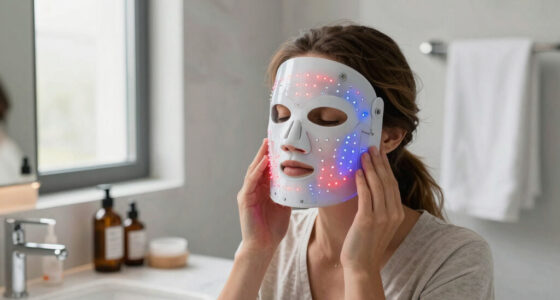
Imagine a mask that molds perfectly to your face, hugging every curve like a second skin. Now picture one that’s stiff, rigid, and unmoving—like a plastic faceplate. The choice between these two styles of LED masks isn’t just about comfort; it impacts how effectively you treat your skin, how you use the device daily, and how long it will last.
In this guide, you’ll learn exactly what sets rigid and flexible LED masks apart, recent innovations shaping their design, and which type might serve your skincare goals best. Understanding these differences helps you make a smarter investment, whether for professional treatments or at-home routines.
Flexible LED masks contour to your face, offering superior comfort and coverage on uneven surfaces.
Rigid masks provide precise LED placement and tend to be more durable over time, ideal for targeted treatments.
Recent materials science breakthroughs make flexible masks more durable and lightweight, suitable for regular home use.
Both mask styles now feature multi-wavelength LEDs, enabling comprehensive skin treatment options.
Your choice depends on whether comfort, precision, or durability matters most to your skincare routine.
Understanding the Difference Between Rigid and Flexible LED Masks
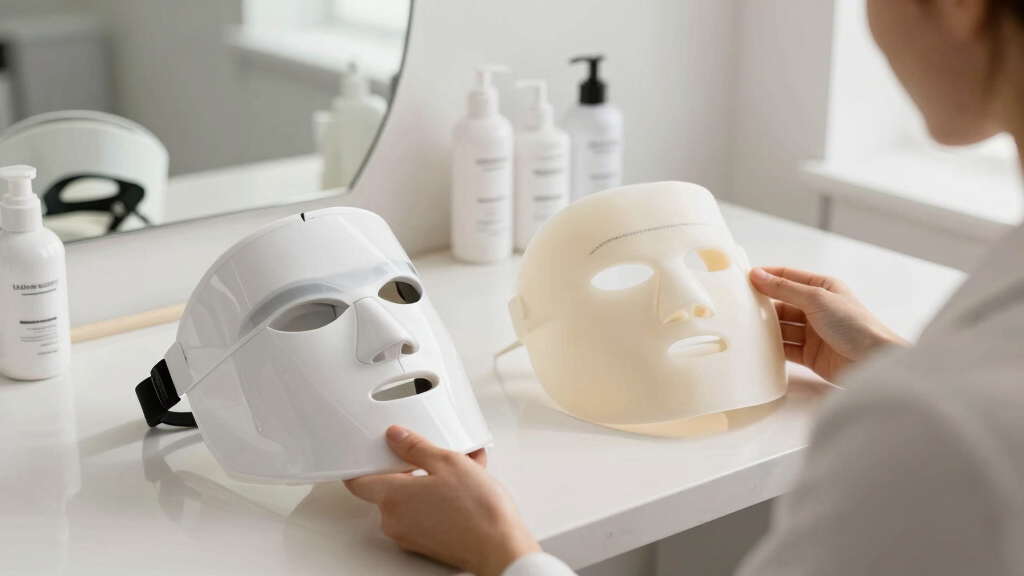
Rigid masks prioritize fixed, precise LED placement. Flexible masks contour like a second skin for comfort and adaptable coverage. Both can deliver effective treatments; the better choice depends on fit, durability, consistency, and your skin goals.
Hard shell meets soft contour
The construction material shapes almost every part of the experience: how the mask sits, where light lands, how it stores, and whether you want to use it again tomorrow.
Rigid LED masks
Hard plastic or acrylic forms a stable faceplate. Its shape cannot bend to accommodate individual cheekbones, noses, or jawlines.
Flexible LED masks
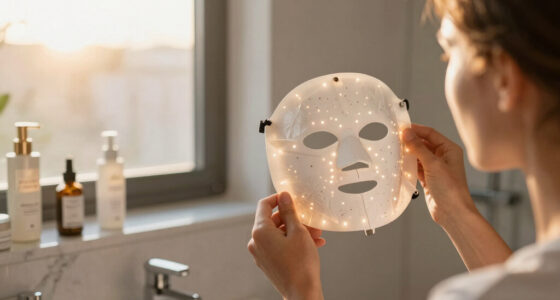
Silicone or bendable plastic follows facial curves, improving contact across areas that a fixed shell may bridge or miss.
| Feature | Rigid mask | Flexible mask |
|---|---|---|
| Shape & fit | ~Fixed geometry; a poor match may leave gaps | ✓Molds around individual facial contours |
| LED placement | ✓Stable, precise, and highly repeatable | ~Adaptive placement depends on mask design and fit |
| Coverage | ~Uniform when the face matches the shell well | ✓Better contact on uneven or complex surfaces |
| Comfort | ×May create pressure during longer sessions | ✓Reduces pinching and localized pressure |
| Durability | ✓Generally resists wear and deformation | ~Quality silicone lasts well but can fatigue |
| Portability | ×Bulkier and needs protected storage | ✓Lightweight, pliable, and travel-friendly |
Comfort affects consistency
A technically capable device cannot help if discomfort causes skipped sessions. Fit influences both light coverage and the likelihood that treatment becomes a sustainable routine.
Pressure changes behavior
Flexible materials distribute pressure and reduce pinching, which can make frequent use easier for sensitive users.
Contact closes gaps
Conforming surfaces can keep LEDs closer to high cheekbones, curved jaws, and other irregular areas.
Geometry stays fixed
Rigid masks preserve LED alignment, useful when repeatable positioning matters for localized treatment goals.
Relative strengths by design
How design shapes the routine
Mask construction does not create results by itself. The practical pathway runs through fit, coverage, tolerability, and repeatable use.
Choose the form
Fixed shell for stability or flexible material for contouring.
Check the fit
Look for minimal gaps, secure straps, and no painful pressure points.
Build consistency
Comfortable, manageable sessions make regular use more realistic.
Match the goal
Select wavelengths and schedules suited to the intended concern.
Recent biocompatible flexible materials have improved comfort, weight, and longevity—narrowing the historic durability gap without sacrificing adaptable coverage.
Smarter materials, broader treatments
Innovation is softening the old divide. Flexible masks are becoming tougher, while rigid masks are becoming lighter and more ergonomic.
Better flexibility
Biocompatible silicone and lighter flexible plastics improve wearability while increasing resistance to repeated bending.
Closer fit
Adjustable straps, facial mapping, and adaptable panels help align LEDs with individual features and concern areas.
Guided routines
App controls, adjustable wavelengths, timers, and scheduled programs are appearing in both mask formats.
Common LED treatment spectrum
The decision chain
Before you choose
Compare devices by verified specifications and fit—not format alone. Material quality, LED configuration, instructions, and safety features vary by manufacturer.
Which style is better?
Flexible generally wins on contouring and comfort. Rigid generally wins on fixed placement and structural durability. Your face shape, sensitivity, and treatment goal decide the better fit.
Are flexible masks less durable?
Often, but not automatically. High-grade silicone can be resilient, while low-quality flexible materials may crack or fatigue. Rigid shells resist deformation but may crack if dropped.
Can either type be used at home?
Yes. Many flexible and some rigid masks are designed for home routines. Follow the device-specific session length, frequency, eye-protection, cleaning, and storage instructions.
How often should a mask be used?
A common guideline is 3–5 sessions per week, often lasting 10–30 minutes. The manufacturer’s directions take priority because output and dosing differ.
What Are Rigid vs. Flexible LED Masks? Here’s the Clear Difference
Rigid LED masks are crafted from hard plastics or acrylics—think of them as a sturdy shell that covers your face. They stay in a fixed shape, which can sometimes feel like wearing a mask made from a stiff, unyielding surface. Conversely, flexible LED masks use bendable materials such as silicone or soft plastics, allowing them to contour seamlessly to your face’s unique shape.
Picture a rigid mask as a custom-fit helmet—precise but unbending. A flexible mask? Like a soft glove that molds to your hand—more adaptable, more comfortable. This fundamental difference influences how they fit, how comfortable they are, and how they deliver light therapy. The rigidity or flexibility can also affect the uniformity of light delivery: rigid masks often provide more consistent light exposure across the face due to their unchanging shape, which can be crucial for targeted treatments. However, if the mask doesn’t fit well, it might lead to uneven treatment or discomfort, reducing overall efficacy. Flexible masks, by conforming better to facial contours, can enhance contact and coverage, potentially improving treatment results, especially on irregular or sensitive skin areas. The tradeoff is that flexible materials might degrade faster or require more careful maintenance, influencing long-term durability and cost.
As an affiliate, we earn on qualifying purchases.
Why Comfort and Fit Matter: Flexibility vs. Rigidity
Comfort isn’t just a luxury when it comes to LED masks—it directly influences how consistently you use your device and, consequently, how effective the treatment will be. A mask that fits well and feels comfortable encourages regular use, which is essential for seeing meaningful skin improvements. Flexible masks, by gently hugging facial contours, reduce pressure points and prevent pinching or slipping during use. This consistent contact ensures that the light penetrates evenly, maximizing benefits such as collagen stimulation or acne reduction.
On the other hand, rigid masks, while offering a snug fit initially, can cause discomfort over extended sessions. The pressure from a stiff shell may lead to skin irritation or even pain, discouraging daily or frequent use. This discomfort can result in skipped treatments, diminishing the long-term results. However, some users prefer the stability of a rigid mask because it allows for precise LED placement, targeting specific skin issues like fine lines or localized scars with greater accuracy. The choice between comfort and precision involves considering your skin sensitivity, treatment goals, and how often you plan to use the device. Ultimately, a comfortable fit promotes consistent application, which is a key determinant of success in any skincare regimen.
As an affiliate, we earn on qualifying purchases.
How Do They Cover Your Face? Comparing LED Placement and Coverage
| Feature | Rigid LED Masks | Flexible LED Masks |
|---|---|---|
| Shape & Fit | Fixed shape, conforms to face but can’t adjust; may leave gaps if face shape varies | Contoured to face, adjustable fit, better contact on irregular surfaces |
| LED Placement | Precise, fixed LED positioning that may not adapt to facial contours | More customizable, molds around facial features for even coverage |
| Coverage | Uniform in ideal conditions; gaps can occur with complex facial structures, reducing treatment uniformity | Enhanced coverage on uneven or complex surfaces, ensuring consistent light exposure |
Imagine trying to fit a rigid plastic shell over a face with high cheekbones and a rounded jaw—some areas may not make full contact, leading to uneven treatment. This can compromise the effectiveness of the therapy, especially when targeting specific concerns. Flexible masks, by pressing evenly against all facial areas, improve contact and ensure that light reaches every intended spot, which is crucial for consistent results. This adaptability allows for more precise focus on problem zones, such as fine lines or acne scars, enhancing overall treatment efficacy. The tradeoff is that flexible masks, while offering better coverage, may sometimes be less precise in delivering light to very specific points if not properly designed. Nevertheless, their ability to conform makes them especially advantageous for irregular or sensitive skin, where uniform contact is vital for safe and effective therapy.
As an affiliate, we earn on qualifying purchases.
Frequently Asked Questions
Which is better: rigid or flexible LED masks?
It depends on your priorities. Flexible masks excel in comfort and contouring, making daily use easier. Rigid masks offer precise LED placement and durability, suited for targeted treatments. Consider your face shape, skin concerns, and lifestyle when choosing.
Are flexible LED masks more durable than rigid ones?
Not necessarily. Rigid masks are typically more resistant to deformation and wear, lasting many years with proper care. Flexible masks, while softer and easier to clean, may need replacement sooner if the material wears or cracks over time. The durability also depends on the quality of materials used and how well you maintain the device. For example, flexible silicone masks can be quite resilient if made with high-grade materials, but lower-quality options may degrade faster. Conversely, rigid masks made from impact-resistant plastics can withstand daily handling but might crack if dropped or exposed to extreme temperatures. Therefore, durability is a balance between material quality and usage habits, influencing long-term investment decisions.
Can I use LED masks at home safely?
Yes, many flexible and some rigid masks are designed for home use. Proper safety measures include following the manufacturer’s instructions carefully, avoiding overuse (typically limiting sessions to 3-5 times per week), and consulting with a skincare professional if you have pre-existing skin conditions or sensitivities. It’s important to start with shorter sessions to assess your skin’s response and gradually increase duration as tolerated. Additionally, ensure the device is approved or certified by relevant health authorities, and always avoid looking directly into the LEDs during treatment to prevent eye irritation. When used responsibly, LED masks can be a safe and effective addition to your skincare routine.
How often should I treat my skin with an LED mask?
Most users find that 3-5 sessions per week provide noticeable improvements, with each session lasting between 10 to 30 minutes depending on the device and skin concern. Consistency is key; regular treatments build upon each other to stimulate collagen, reduce inflammation, or target bacteria. However, individual responses vary, so it’s advisable to monitor your skin’s reaction and adjust frequency accordingly. Some devices come with specific guidelines based on wavelength and power, so following manufacturer recommendations maximizes safety and benefits. Overuse can lead to skin irritation or fatigue, so balancing frequency with your skin’s tolerance is essential for optimal results.
Are there risks or side effects?
When used correctly, LED masks are generally safe. However, overexposure or improper use can cause skin irritation, redness, or discomfort. People with photosensitive skin, certain medications, or skin conditions should consult a healthcare professional before starting treatments. To minimize risks, start with shorter sessions, avoid using devices on broken or irritated skin, and follow all safety instructions provided by the manufacturer. If any adverse reactions occur, discontinue use and seek medical advice. Overall, with proper precautions, LED therapy is a non-invasive, low-risk treatment option for many skin concerns.
As an affiliate, we earn on qualifying purchases.
Conclusion
Choosing between rigid and flexible LED masks isn’t just about preference—it’s about what your skin needs and how you want to treat it. Flexibility offers comfort and better contouring, while rigidity delivers stability and pinpoint accuracy.
Imagine a device that feels like a second skin, gently delivering light to your face—this could be your next skincare investment. Remember, understanding these differences helps you pick the perfect match for your skin’s unique story.
Fall yard work Picks
leaf blowers
As an affiliate, we earn on qualifying purchases.