
TL;DR
Prime for Young Adults — start your free trial
Fast free delivery, streaming and member deals for eligible 18–24 year olds.
Try it freeAs an affiliate, we earn on qualifying purchases.
FDA clearance applies to moderate- and low-risk devices via a process demonstrating substantial equivalence. Approval is a more rigorous process for high-risk devices and drugs, requiring proof of safety and effectiveness. Knowing the distinction helps navigate medical device regulations confidently.
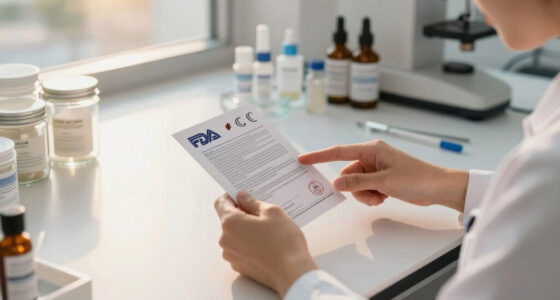
When you see a device labeled “FDA-cleared” or “FDA-approved,” it’s easy to assume both mean the product is equally vetted. But in reality, these terms carry very different weight and implications. Knowing the difference isn’t just technical—it affects your safety, choices, and trust in the products you use.
In this guide, you’ll learn exactly what each term means, how the FDA approaches these processes, and why understanding them matters—whether you’re a consumer, a healthcare provider, or a manufacturer trying to get a product to market.
FDA clearance allows marketing after demonstrating substantial equivalence, not clinical proof of safety or effectiveness.
Approval involves a thorough review of clinical data, suitable for high-risk devices like implants and certain drugs.
Most medical devices are cleared via 510(k), which can take just a few months—much faster than approval.
Always verify a device’s FDA status through official databases before trust or purchase.
Regulatory pathways continue to evolve, balancing innovation with safety, especially during health emergencies.
What Is the Difference Between FDA Clearance and Approval?
Clearance generally lets a lower- or moderate-risk device reach the U.S. market by demonstrating substantial equivalence to an existing device. Approval requires stronger evidence of safety and effectiveness and is typically reserved for high-risk devices and new drugs.
Similarity versus proof
The device’s risk classification and novelty help determine the regulatory pathway. Class II devices commonly use 510(k), while Class III devices generally require PMA. Many Class I devices are exempt from premarket notification.
A bridge to a predicate
The manufacturer compares its device with a legally marketed predicate and shows that the new product has the same intended use and sufficiently similar technological characteristics.
Evidence on its own merits
The manufacturer supplies scientific and clinical evidence supporting a reasonable assurance that the product is safe and effective for its intended use.
Inside the 510(k) pathway
Clearance is not simply a registration step. The submission must describe the device, its intended use, technological characteristics, performance testing and comparison with the selected predicate.
Classify the device
Identify risk class, product code and applicable regulatory controls.
Choose a predicate
Find a legally marketed device with the same intended use.
Build the comparison
Document similarities, differences and relevant performance testing.
FDA review
Reviewers assess whether differences raise new safety or effectiveness questions.
Marketing clearance
A substantially equivalent finding permits lawful U.S. marketing.
Two standards, different burdens
Approval generally provides greater assurance because it evaluates extensive evidence directly. Clearance can enable faster market access because it relies on comparison with an established device.
| Feature | FDA clearance | FDA approval |
|---|---|---|
| Primary process | C510(k) premarket notification | APremarket Approval application |
| Typical risk level | Most commonly Class II, moderate risk | Class III, high risk; also separate approval frameworks for drugs |
| Decision basis | Substantial equivalence to a predicate | Reasonable assurance of safety and effectiveness |
| Clinical evidence | Not automatically required; evidence depends on the device and questions raised | Typically substantial scientific and clinical evidence |
| Typical pace | Often measured in months | Often involves years of development, testing and review |
| Illustrative examples | Diagnostic scanners, surgical tools and certain medical software | Implantable pacemakers and other high-risk life-supporting devices |
| Practical implication | Faster route based on an existing regulatory benchmark | Higher evidentiary burden for products with greater potential risk |
Why the pathways move differently
The visual scale below is conceptual: exact evidence requirements and timelines vary with product complexity, submission quality, testing needs and FDA questions.
Relative review burden
A directional comparison of the central evidence and review demands.
Indicative time horizon
Clearance is usually faster; approval commonly follows lengthy clinical development.
often 3–6 months
often 1–3+ years
Illustrative ranges, not guaranteed FDA decision deadlines. Total time can include product development, testing and multiple review cycles.
Not every product fits the binary
Clearance and approval are the headline terms, but additional pathways help the FDA address novel technology, digital health and urgent public-health needs.
A new device type
A classification route for novel low- to moderate-risk devices that lack a suitable predicate. A granted De Novo request can establish a new device classification.
Software needs context
Software as a medical device may require clearance, De Novo classification or approval depending on intended use, novelty and patient risk.
Authorization is distinct
An Emergency Use Authorization can permit temporary use during a declared emergency. It is not the same as ordinary clearance or full approval.
Verify the exact status
Marketing language can blur important distinctions. Confirm the product name, manufacturer, intended use and regulatory decision rather than relying on a logo or vague “FDA registered” claim.
Read the wording carefully
“FDA cleared,” “FDA approved,” “authorized” and “registered” do not mean the same thing.
Search official FDA records
Match the manufacturer and model with the relevant 510(k), PMA, De Novo or authorization record.
Check the intended use
A regulatory decision applies to defined indications. It does not validate every promotional claim about the product.
Consider the health stakes
For implants, critical treatments or uncertain claims, discuss benefits, limitations and alternatives with a qualified clinician.
Clearance asks whether a device is sufficiently comparable. Approval asks whether the evidence supports safety and effectiveness. The right pathway follows the product’s risk, novelty and intended use.
What is FDA Clearance and How Does It Work?
FDA clearance is a process that allows certain medical devices to be marketed in the U.S. after demonstrating that they are substantially equivalent to a device already legally on the market. Think of it as a “green light” based on similarity, not new clinical data.
For example, a new diagnostic scanner might be cleared if it’s similar to a previous model that’s been safely used for years. The process involves submitting a 510(k) notification, which compares the new device to its predicate, showing it’s just as safe and effective for the intended use.
It’s like upgrading a smartphone model—your new phone needs to be similar enough to the previous one to be approved for sale without starting from scratch.
Why does this matter? Because it allows manufacturers to bring new products to market more quickly and at lower costs, but it also means the device might not have undergone extensive testing for safety and effectiveness. This tradeoff is crucial—while many devices are safe, the lack of clinical testing can sometimes lead to safety concerns if the device’s similarity doesn’t fully account for differences in design or use.
As an affiliate, we earn on qualifying purchases.
What is FDA Approval and When Is It Needed?
FDA approval is a more intense process reserved for high-risk medical devices or new drugs. It involves rigorous review of clinical data to prove safety and effectiveness before the product hits the market.
For instance, a new implantable heart device like a pacemaker requires approval. The manufacturer must submit detailed clinical trial results showing it works reliably and won’t harm users. This process ensures that the device has been thoroughly tested in real-world scenarios, with data backing its safety and performance claims.
This rigorous review often means longer development times and higher costs, but it provides a higher level of confidence for healthcare providers and patients. The tradeoff is that approval can delay access to potentially life-saving innovations but offers more assurance of safety and efficacy—especially important for devices that are implanted or used in critical health situations.
As an affiliate, we earn on qualifying purchases.
Comparison Table: FDA Clearance vs. Approval
| Feature | FDA Clearance | FDA Approval |
|---|---|---|
| Legal process | 510(k) premarket notification | Premarket Approval (PMA) |
| Risk level | Moderate/low risk (Class II) or some low-risk Class I | High risk (Class III) or new drugs |
| Data requirements | Substantial equivalence to predicate device | Clinical data proving safety and effectiveness |
| Timeframe | Few months (often 3-6) | Several years (can be 1-3 years or more) |
| Implications | Faster market entry, less clinical data, but potential safety tradeoffs | Thorough evaluation, higher assurance of safety and efficacy, but longer process |
| Examples | Diagnostic scanners, surgical tools | Pacemakers, artificial joints |
medical device approval vs clearance
As an affiliate, we earn on qualifying purchases.
As an affiliate, we earn on qualifying purchases.
Why the Distinction Matters in Real Life
Understanding whether a device is cleared or approved impacts your confidence in its safety. Clearance means the device is similar enough to existing ones, but doesn’t require new clinical proof. Approval signals a higher level of scrutiny, often involving extensive trials and data.
Imagine buying a new blood pressure cuff labeled “FDA-cleared”—it’s probably similar to a trusted model, but without new safety data. If it’s “FDA-approved,” it has undergone comprehensive testing and review, giving you more assurance of its safety and effectiveness. This distinction influences your trust and decision-making, especially when it comes to devices that directly impact health.
For manufacturers, this difference affects how they develop, test, and communicate about their products. It also influences insurance coverage and reimbursement decisions, as payers often prefer approved devices for high-cost or high-risk treatments. Knowing the difference helps consumers and providers make informed choices and advocate for safer, more effective products.
As an affiliate, we earn on qualifying purchases.
Latest Regulatory Moves and What They Mean
The FDA is continuously refining its processes. Recently, it’s been working to make the 510(k) pathway more transparent and rigorous, with updates to safety standards. The De Novo pathway now offers a middle route for innovative devices that don’t fit existing categories, balancing safety with innovation.
During emergencies like COVID-19, the FDA introduced Emergency Use Authorizations (EUAs), allowing faster access to critical devices without full approval. This demonstrates how regulation adapts to real-world needs, prioritizing rapid access in crises while maintaining safety standards.
For example, rapid approval of masks and ventilators during the pandemic showcased how the FDA balances safety with the urgent need for medical supplies. These moves reflect an evolving regulatory landscape that seeks to foster innovation without compromising public health.
What You Should Know About FDA Status Before Buying
Always check if a device is FDA cleared or approved before making a purchase or trusting its claims. The FDA’s database is publicly accessible, listing the approval and clearance status for thousands of devices. This transparency allows you to verify whether a product has undergone sufficient review, which is especially important for devices that directly impact health or safety.
Look for labels or packaging that specify “FDA cleared” or “FDA approved.” Remember, clearance indicates similarity to existing devices, while approval signifies rigorous testing and evidence backing. Understanding these distinctions helps you assess the level of scrutiny the product has undergone and whether it aligns with your safety expectations.
If in doubt, consult your healthcare provider or read reviews from trustworthy sources to gauge safety and effectiveness. These steps empower you to make informed decisions and advocate for quality standards in the products you use.
Conclusion
Grasping the difference between FDA clearance and approval arms you with sharper insight into how medical devices enter the market. Clearance often means a device is similar to what’s already out there—safe enough to sell with minimal new data. Approval, however, signals a deeper commitment to proven safety and effectiveness, especially for high-stakes tools.
Next time you see a device labeled “FDA cleared” or “FDA approved,” ask yourself what process it went through. That understanding can foster smarter choices—whether you’re buying a skincare device or considering a medical tool for your practice. In a landscape of rapid innovation, knowing the rules keeps you a step ahead.
Fall Picks
fall essentials
As an affiliate, we earn on qualifying purchases.