
TL;DR
Play games included with Prime
Start a Prime free trial and play with Amazon Luna on your devices.
Start playingAs an affiliate, we earn on qualifying purchases.
Choosing a microcurrent device depends on factors like adjustable settings, electrode quality, safety features, and ease of use. Recent tech advances enable personalized, effective treatments, whether professional or at home.
Microcurrent devices promise a gentle boost—think of them as tiny, precise batteries for your skin and muscles. But not all gadgets are created equal. Picking one that truly supports your goals requires understanding the features that matter most.
In this guide, you’ll learn what to look for in terms of power, safety, versatility, and innovation. Whether you’re a professional or a curious at-home user, knowing these essentials helps you make smarter choices—and get better results.
Adjustable wattage, waveform, and intensity settings enable personalized, effective treatments.
High-quality electrodes improve current delivery and comfort, making treatments more consistent.
User-friendly interfaces and preset modes encourage regular use and better results.
Safety features like automatic shut-off and contact sensors are vital for at-home use.
Portability and lasting batteries make microcurrent devices convenient for daily routines or travel.
Essential Features to Consider in Microcurrent Devices
Think of microcurrent devices as tiny, precise batteries for skin and muscle. The best choice is not simply the strongest device—it is the one that balances adjustable power, reliable current delivery, intuitive controls, and safeguards suited to your routine.
The nine features that matter
A capable device should let you personalize the electrical signal, deliver it evenly, and repeat treatments comfortably. Treat these nine areas as a complete system: strength without control is not an advantage, and good specifications mean little if the device is difficult to use consistently.
Wattage & output
Look for stable, low-level output and a usable adjustment range. The goal is effective stimulation without discomfort.
Waveform & frequency
Sine, square, pulsed, and biphasic patterns can interact differently with skin and muscle targets.
Intensity & pulse
Fine increments help beginners start gently and allow experienced users to tune sessions more precisely.
Electrode quality
Conductive, skin-friendly materials improve consistency, reduce hot spots, and support comfortable contact.
Controls & presets
Clear displays, guided modes, and quick-start programs reduce setup friction and encourage regular use.
Safety features
Automatic shut-off, contact detection, output limits, and recognized compliance are essential safeguards.
Portable design
Compact dimensions, low weight, comfortable grip, and secure storage make routine use easier.
Treatment modes
Goal-based programs for appearance, muscle activation, or comfort make one device useful in more contexts.
Battery & power
Long battery life, clear charge indicators, and dependable adapters prevent interrupted sessions.
Low wattage, high precision
Microcurrent devices generally operate below one watt. A broader number is not automatically better: adjustable output, consistent delivery, and appropriate limits are more meaningful than a high maximum specification.
Where devices commonly sit
The illustrated range places typical home devices around 0.2–0.8 watts and a representative professional output near 0.5 watts.
Control value
A practical ranking of the controls most likely to influence comfort, repeatability, and personalization.
Waveform changes the experience
Waveform and frequency influence how stimulation feels and which treatment goal it supports. Devices with several well-explained options offer more versatility than products with a single undocumented setting.
Sine wave
A smooth signal often associated with gentler stimulation, relaxation-oriented use, and circulation support.
Square wave
Abrupt, targeted pulses may suit muscle activation, toning, or applications requiring a more distinct sensation.
Pulsed / biphasic
Newer modulation patterns aim to optimize tissue response while supporting controlled, balanced current delivery.
Home convenience vs. professional control
Neither category is universally superior. Home devices emphasize guidance, portability, and conservative operation; professional systems emphasize precision, protocol depth, durable components, and practitioner control.
| Feature | Basic home device | Advanced home device | Professional system |
|---|---|---|---|
| Adjustable intensity | ~Few levels | ✓Fine steps | ✓Wide control |
| Multiple waveforms | ✕Often fixed | ~Selected modes | ✓Protocol-led |
| Contact sensing | ~Varies | ✓Preferred | ✓Expected |
| Preset programs | ~Simple | ✓Goal-based | ✓Customizable |
| Replaceable electrodes | ✕Not always | ~Model-specific | ✓Serviceable |
| App tracking | ✕Uncommon | ✓Increasingly common | ~Platform-dependent |
| Portable format | ✓Strong | ✓Strong | ~Often stationary |
✓ commonly expected · ~ varies by model · ✕ commonly limited
Electrodes make specifications real
Electrodes are the physical conduit between device and body. Material, size, flexibility, and shape affect current distribution, comfort, targeting, and the likelihood of maintaining consistent contact.
Broad contact
Larger rounded electrodes distribute current across a wider area and can simplify general facial or muscle applications.
Flexible pads
Silicone or hydrogel formats can improve skin conformity and comfort, especially during longer hands-free sessions.
Precision probes
Smaller electrodes focus current on specific contours or muscle points and reward careful placement technique.
From setup to repeatable results
A good interface turns technical parameters into a clear sequence. Guided setup, contact confirmation, controlled adjustment, and session tracking reduce misuse and make a routine easier to repeat.
Choose goal
Select a documented mode such as appearance care, muscle toning, or comfort support.
Prepare contact
Clean the area and apply the compatible conductive medium specified by the manufacturer.
Start low
Begin at a conservative intensity and confirm stable, comfortable electrode contact.
Adjust gently
Increase only within instructions, using display feedback and your comfort as boundaries.
Track response
Record duration, setting, comfort, and visible response to guide later sessions.
The new generation of microcurrent
Recent developments focus on smarter modulation, more comfortable materials, guided personalization, and multi-function platforms. Novelty is useful only when the underlying safety, output control, and evidence remain clear.
Advanced modulation
Pulsed and biphasic waveforms offer more sophisticated control over how current is delivered.
Smart apps
Mobile guidance can track sessions, explain placement, save settings, and improve routine consistency.
Better electrodes
Hypoallergenic, flexible, durable, and highly conductive materials aim to improve comfort and reliability.
Adaptive protocols
Some systems use feedback and algorithmic recommendations to tailor intensity or treatment progression.
Multi-function devices
Microcurrent may be combined with LED, radiofrequency, or ultrasound in a single treatment platform.
Regulatory scrutiny
More oversight and indication-specific clearances make claims, instructions, and device classification important.
Non-negotiables for home use
Microcurrent is generally considered safe when used according to manufacturer instructions. The device should actively help prevent poor contact, excessive duration, unintended activation, and unsuitable output.
Five buying priorities
When two devices look similar, prioritize the model that gives you better control, better contact, clearer safeguards, and a routine you can realistically maintain.
Why Wattage and Power Output Matter for Your Results
Microcurrent devices typically operate at very low wattages—usually under 1 watt. This might sound insignificant, but the power level influences both safety and effectiveness. A device with insufficient power may not stimulate your skin or muscles enough to see benefits.
For example, a professional-grade device might operate at around 0.5 watts, providing consistent, effective stimulation without risking discomfort or harm. At-home devices often hover between 0.2 and 0.8 watts, balancing safety with performance. Choosing a device with adjustable wattage allows you to tailor treatments—starting gentle and increasing as your skin adapts.
Understanding the importance of wattage helps you avoid underperforming devices that won’t deliver noticeable results, or overly powerful ones that could cause discomfort or adverse reactions. The right wattage range, combined with adjustable settings, ensures you can optimize treatment intensity for your specific needs, making your sessions both safe and effective.
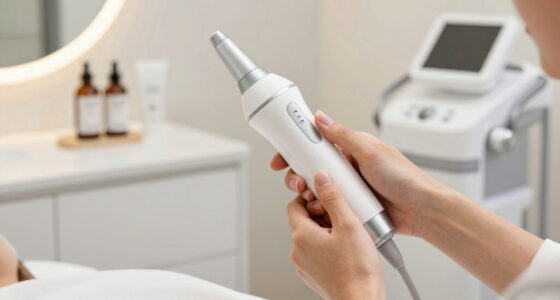
microcurrent facial device with adjustable settings
As an affiliate, we earn on qualifying purchases.
As an affiliate, we earn on qualifying purchases.
How Waveform and Frequency Settings Shape Treatment Outcomes
Devices may offer various waveforms—like sine or square waves—and adjustable frequency ranges. These settings are not just technical details; they fundamentally influence how the current interacts with your body tissues. For instance, sine waves mimic natural biological signals, promoting gentle stimulation that can relax muscles and enhance blood flow, which is beneficial for soothing and anti-aging treatments. Square waves, on the other hand, deliver more abrupt, targeted pulses that can lift muscles or stimulate deeper tissues, making them suitable for toning or firming.
Adjustable frequencies—say, from 1 Hz to 100 Hz—further customize the treatment. Lower frequencies tend to promote collagen synthesis and skin rejuvenation, while higher frequencies stimulate circulation and muscle activation. Having multiple waveforms and frequency options allows you to switch modes based on your goals, whether it’s reducing fine lines, alleviating pain, or building muscle tone. This versatility ensures treatments are not one-size-fits-all but tailored to your unique skin and muscle needs, enhancing outcomes and user satisfaction.
Understanding the implications of waveform and frequency choices is essential because different settings activate different biological responses. For example, a sine wave at a low frequency might promote collagen production, which is ideal for anti-aging, while a square wave at higher frequencies could be better for muscle stimulation. Knowing these tradeoffs helps you select the right combination for your goals and avoid ineffective or uncomfortable treatments.
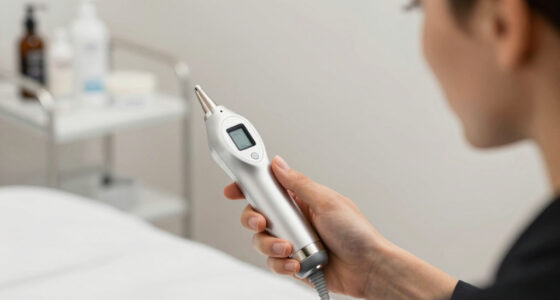
professional microcurrent skin therapy device
As an affiliate, we earn on qualifying purchases.
As an affiliate, we earn on qualifying purchases.
Why Intensity and Pulse Control Make or Break Your Comfort
Adjustable intensity levels are crucial because they directly impact your comfort and safety during treatments. Sensitive skin or initial sessions require lower intensities to prevent discomfort or adverse reactions, while more experienced users or targeted treatments might benefit from higher settings for deeper stimulation. Precise pulse control adds another layer of customization, allowing you to deliver consistent, controlled stimulation tailored to your tolerance and goals.
For example, starting at a low intensity during your first session can help you gauge your skin’s response, reducing the risk of irritation. As you become accustomed to the sensation, gradually increasing the intensity can enhance results without causing discomfort. Devices with digital readouts or tactile controls provide immediate feedback, making it easier to fine-tune settings. This combination of adjustable pulse and intensity not only improves comfort but also ensures that each session is optimized for your specific needs, leading to better long-term outcomes.
Choosing a device with fine-tuned control over pulse duration and intensity is essential because it allows you to balance effectiveness with comfort. Overly aggressive settings can cause skin irritation or muscle fatigue, while too gentle a setting might yield no noticeable results. The ability to adjust these parameters ensures you can find the optimal balance for your individual response, which is critical for consistent progress and avoiding setbacks.
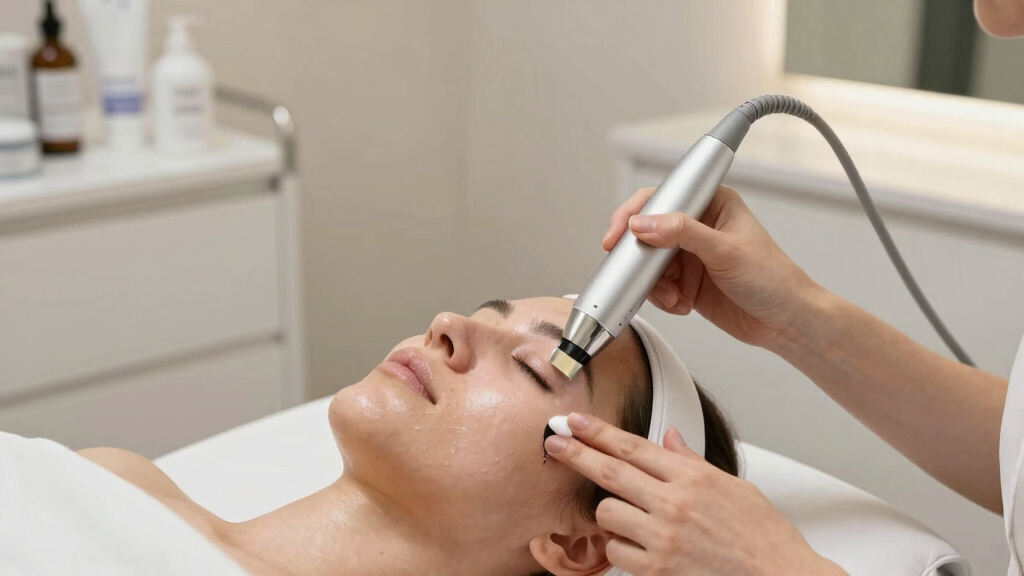
at-home microcurrent muscle stimulator
As an affiliate, we earn on qualifying purchases.
As an affiliate, we earn on qualifying purchases.
Electrode Quality and Design That Really Make a Difference
High-quality electrodes are the conduits of current. They need to be conductive, skin-friendly, and durable. For example, silicone or hydrogel electrodes provide gentle contact and prevent irritation during longer sessions. Poor-quality electrodes might cause uneven current delivery or discomfort.
Look for electrodes that fit comfortably and stay in place. Some devices come with reusable, replaceable electrodes, which can save costs over time. A well-designed electrode set enhances treatment consistency and comfort—key for both professional clinics and at-home routines.
Beyond materials, the design of electrodes—such as their size, shape, and flexibility—affects how evenly the current is distributed across your skin. Well-designed electrodes reduce skin irritation, prevent hot spots, and improve overall treatment efficacy. Investing in quality electrodes ensures your device performs reliably and comfortably, which is crucial for sustained use and achieving desired results.
Electrode design also influences the depth and focus of the current. Smaller, more precise electrodes can target specific areas, while larger ones distribute current more broadly. Tradeoffs exist: smaller electrodes may require more skill to use effectively but offer precision, whereas larger electrodes simplify application but may be less targeted. Choosing electrodes that balance these factors according to your needs can significantly impact your treatment outcomes and comfort.
microcurrent device with safety features
As an affiliate, we earn on qualifying purchases.
As an affiliate, we earn on qualifying purchases.
Making Ease of Use a Priority: Controls, Presets, and Interfaces
Intuitive interfaces and clear controls turn a complex device into a user-friendly tool. Devices with preset programs—like ‘Anti-Aging’ or ‘Muscle Toning’—simplify treatment choices by providing optimized parameters based on clinical data or expert recommendations. For example, a device with a touchscreen and quick-start buttons makes setup fast and straightforward, reducing the learning curve for new users.
For at-home users, a device that guides you through each step—via voice prompts, visual cues, or guided modes—reduces the chance of misuse and maximizes safety. Professionals benefit from customizable settings that can be saved for different clients, streamlining workflow and ensuring consistency. Overall, easy-to-navigate controls and preset modes encourage regular use, which is essential for achieving and maintaining your desired results.
Designing with user experience in mind involves minimizing complexity while maximizing control. Features like simple menus, clear labeling, and tactile feedback help users quickly understand and adjust settings. When users feel confident in operating the device, they are more likely to use it regularly and correctly, which directly correlates with better results. Investing in thoughtful interface design reduces errors, enhances satisfaction, and promotes consistent treatment routines.
Safety Features That Protect and Empower You
Safety isn’t just a bonus; it’s a necessity. Features like automatic shut-off prevent accidental overstimulation, which can cause discomfort or skin irritation. Skin contact sensors ensure the device only operates when properly in contact, reducing risks of misuse or unintended stimulation. These sensors also help prevent accidental activation when not in use, protecting both the user and the device’s longevity.
Some devices include compliance indicators—like CE or FDA markings—that confirm adherence to safety standards, giving users confidence in their purchase. For example, a device with a skin contact sensor will automatically pause if contact is lost, safeguarding your skin from unnecessary stimulation. Incorporating multiple safety protocols—such as overload protection or emergency stop buttons—further enhances user control and peace of mind, especially critical for at-home treatments where professional supervision isn’t present.
Beyond basic safety features, understanding the implications of these mechanisms helps users operate devices more responsibly. For instance, knowing that a device will automatically shut off prevents overuse and potential skin damage. Safety features also serve as a confidence booster, encouraging consistent use without fear of adverse effects. This psychological reassurance can significantly improve treatment adherence and long-term satisfaction.
Portable, Ergonomic Design for Effortless Treatments
Portability and comfort matter for consistent use. Compact, lightweight devices—like a sleek, palm-sized unit—fit easily into your hand, making treatments less of a chore. An ergonomic design with textured grips or flexible electrodes enhances comfort during use, encouraging regular sessions. For example, a device with a curved body and soft silicone surface feels good against your skin, making treatments more enjoyable and less fatiguing.
Long-lasting batteries—say, over 8 hours of use per charge—mean fewer interruptions, whether at home or on the go. The convenience of quick recharge times and durable power sources ensures you can incorporate microcurrent therapy seamlessly into your daily routine without concern about power loss or cumbersome equipment.
Choosing a device with a thoughtfully designed form factor can reduce fatigue and improve adherence. Devices that fit naturally in your hand or contour to your body allow for more precise application, especially in hard-to-reach areas. The overall ergonomic design influences how often and how comfortably you use the device, which directly impacts the consistency and effectiveness of your treatments.
Treatment Modes and Protocols That Expand Your Options
Multiple treatment modes—like anti-aging, pain relief, or muscle toning—expand what you can achieve with a single device. Devices with pre-set protocols simplify your routine, guiding you through optimal parameters for each goal and reducing guesswork. For instance, a device might offer a ‘Facial Rejuvenation’ mode with a 20-minute protocol that combines microcurrent with gentle heat, enhancing collagen production and skin tightening.
Having these options allows users to tailor treatments to their evolving needs, increasing engagement and satisfaction. It also enables professionals to customize protocols for different clients, improving outcomes. The availability of varied modes turns a basic device into a versatile tool capable of addressing multiple concerns, making it more valuable and efficient in both personal and clinical settings.
Furthermore, the ability to switch between modes without complicated adjustments helps maintain consistency and encourages regular use. This flexibility is especially important as skin and muscle conditions change over time, requiring different approaches. The more adaptable a device is, the more likely users are to stick with their routines and see sustained improvements.
Battery Life and Power Sources That Keep You Moving
Long-lasting batteries—like those that last 10+ hours on a single charge—are game-changers for busy routines. Reliable power sources reduce treatment interruptions, especially when traveling or during busy days. Rechargeable lithium-ion batteries offer convenience and sustainability, allowing you to top up easily and use the device multiple times without concern for replacing batteries.
Some devices use AC adapters, providing continuous power for extended sessions, which is especially useful in professional settings. For portable use, quick-charging features and indicators showing remaining battery life help you plan treatments without surprises. The choice of power source directly impacts how seamlessly you can incorporate microcurrent therapy into your daily life, making consistent use more achievable and less frustrating.
Understanding the tradeoffs between power options helps you select a device that fits your lifestyle. For example, rechargeable batteries promote sustainability and convenience but require regular charging, while direct AC power ensures uninterrupted sessions but limits portability. Weighing these factors helps you choose a device that aligns with your routines and preferences, maximizing treatment consistency and effectiveness.
Frequently Asked Questions
Are microcurrent devices safe for all skin types?
Generally, yes. They are considered safe for most skin types, but individuals with skin conditions, pacemakers, or metal implants should consult a healthcare professional before use to avoid complications.How long does a typical treatment last?
Most treatments take between 15 and 30 minutes. The exact duration depends on your device and treatment goals, with some protocols recommending longer or shorter sessions.How often should I use a microcurrent device?
Initially, 3-5 sessions per week can build momentum. Afterward, maintenance might involve weekly or bi-weekly treatments, depending on your skin’s response and goals.Can I use microcurrent devices at home?
Yes, many devices are designed for safe at-home use. However, following instructions carefully and starting with lower settings helps prevent misuse and ensures safe, effective results.What results can I expect, and how soon?
You might notice a more lifted appearance, smoother skin, or reduced fine lines after several sessions. Consistent use over weeks usually yields the best, lasting results.Conclusion
Choosing a microcurrent device isn’t about chasing the latest gadget—it’s about understanding which features support your goals safely and comfortably. Focus on adjustable settings, electrode quality, and safety mechanisms to get the most from your treatments.
Imagine a device that adapts to your skin’s needs, fits effortlessly into your routine, and delivers consistent, satisfying results. That’s the power of knowing what features truly matter. Invest wisely, and your skin—and muscles—will thank you.
Fall yard work Picks
leaf blowers
As an affiliate, we earn on qualifying purchases.