TL;DR

Get beauty and skincare favorites delivered free — and shop member deals
- Fast, free delivery on millions of items
- Access to Prime Big Deal Days deals on October 6–7
- Prime Video, Amazon Music and more included
The best multi-styler depends on your hair’s density, texture, and styling goals. Focus on adjustable airflow, heat control, and attachment versatility to get the most from your tool. Proper selection enhances style quality while protecting hair health.
Choosing a multi-styler isn’t just about flashy features or the latest marketing claims. It’s about understanding what your hair truly needs—whether it’s fine, delicate strands or thick, coarse locks. A tool that works wonders on one person might fall flat on another.
Imagine trying to style your fine hair with a device designed for dense, coarse strands. The result? Flat, weighed-down hair or worse—damage. Conversely, using a lightweight styler meant for fine hair on thick, curly textures can leave you frustrated with lackluster curls or uneven results. This guide helps you decode what features truly matter so you can make an informed choice that supports your hair’s health and your styling ambitions.
Always match airflow and heat control to your hair’s thickness and condition.
Choose smaller barrels and soft brushes for fine, delicate hair to prevent flattening and damage.
Opt for larger, power-packed attachments like diffusers and wide concentrators for thick, coarse hair.
Test multi-stylers at home using consistent sections and note longevity, ease, and comfort.
Versatile tools with multiple attachments and adjustable settings suit a broader range of hair types, reducing the need for multiple devices.
How to Choose the Best Multi-Styler for Fine or Thick Hair
The right tool is determined by your hair—not its marketing. Match airflow, heat, attachment scale and handling to your strand diameter, density, texture and styling goal for better results with less unnecessary exposure.
“Fine” and “thick” describe different parts of the picture
Fine hair refers to the diameter of an individual strand. Density describes how much hair grows across the scalp. A person can have fine strands and high density, so assess all three variables before comparing models.
Fine, medium or coarse?
This determines how readily each strand tolerates heat, airflow and brush tension.
Low, medium or high?
This affects required airflow, drying time, attachment width and section size.
Straight, curly, porous?
Pattern, damage and porosity influence frizz control, hold and heat sensitivity.
Fine or delicate hairPrioritize finesse
- Low and medium heat with precise airflow control
- Small barrels for curl definition and longevity
- Soft or flexible bristles for gentler tension
- Cool shot and heat sensors to limit exposure
- Lightweight balance for controlled, slow passes
Thick, coarse or dense hairPrioritize sustained power
- Strong, consistent airflow for efficient rough-drying
- Medium-to-high heat options with responsive control
- Wide concentrators and large brushes for coverage
- Firm bristles and tension for smoothing resistant hair
- Durable motor and filter for longer sessions
The feature match that matters
The best model is not universally gentle or powerful. It gives you enough range to match the setting and attachment to the section in front of you.
| Feature | Fine hair | Thick or coarse hair |
|---|---|---|
| Airflow + heat | ✓Multiple low-to-medium settings with independent control | ✓Strong airflow with moderate-to-higher heat capacity |
| Attachment size | ✓Small barrels, root lifters and compact round brushes | ✓Wide concentrators, paddle brushes and large round brushes |
| Bristle design | ✓Soft, flexible and widely spaced | ✓Firm bristles that create controlled tension |
| Body + balance | ✓Lightweight and easy to maneuver precisely | ~Robust but balanced for longer styling sessions |
| Motor | ~Moderate power with stable low settings | ✓Durable motor with sustained high-velocity airflow |
| Useful extras | ✓Cool shot, sensors and gentle smoothing tools | ✓Diffuser, wide dryer and accessible filter |
| Avoid | ✕Single high-heat mode or oversized heavy brushes | ✕Weak airflow, narrow-only tools or unstable motors |
Use power to shorten exposure—not to overwhelm the hair
According to BellaPiu, independently adjustable airflow and temperature can significantly reduce heat-damage risk, especially for delicate or damaged hair. Less heat still requires good technique: repeated passes, tension and prolonged airflow can also affect hair.
The control hierarchy
Look for distinct controls that let you alter one variable without automatically pushing up the other.
Relative demand by styling task
These bars show a practical selection spectrum, not fixed temperatures or universal safety thresholds.
Strand thickness is only one axis
Pattern, porosity, condition and length change how attachments behave. Match the tool to the combination—not a single label on the box.
Fine + straightLift without flattening
Choose gentle airflow, a small barrel and a compact round brush. Root-lifting tools may offer more value than maximum motor power.
Curly + coilyPreserve pattern
Use a diffuser and flexible brushes to support curl formation while limiting disturbance, frizz and unnecessary tension.
Dense + straightDry efficiently
Prioritize sustained airflow and wider attachments to reduce drying time before detailed shaping begins.
Coarse + resistantAdd controlled tension
Firm brushes, careful sectioning and adequate heat help smooth the cuticle and improve the durability of the result.
A repeatable home test reveals the real winner
Use the same preparation, section size and product for each model. A short journal turns subjective impressions into a useful comparison.
Prep consistently
Start with clean, evenly damp hair and the same styling product.
Control the section
Use an identical section size and begin at the lowest effective heat.
Time the process
Record drying speed, number of passes and attachment changes.
Inspect the finish
Compare smoothness, shine, curl definition, frizz and root lift.
Check longevity
Note hold, comfort, fatigue and how the hair feels later.
Buy the combinations you will actually use
Versatility comes from the interaction between attachment and setting. A drawer full of unused parts adds cost, while a small, well-matched kit can replace several separate devices.
The decision in one minute
Choose the tool that gives your hair enough control, power and useful versatility while remaining comfortable to operate and practical to maintain.
Best overall rule
For fine or damaged hair, prioritize low heat, gentle attachments and precision. For thick, coarse or dense hair, prioritize sustained airflow, firm control and efficient coverage.
The strongest all-round option provides independently adjustable settings, several genuinely useful attachments and a balanced body.
Quick answers before checkout
Can a multi-styler safely style fine hair?
Yes—with appropriate controls and technique. Choose low heat, gentle airflow, soft attachments and a cool shot. Avoid repeated passes over the same section.
Does thick hair always need maximum heat?
No. Thick or dense hair often benefits most from strong airflow and efficient sectioning. Use only enough heat to shape the hair reliably.
Are larger barrels always better for long hair?
They create loose waves and cover more hair, but smaller barrels can deliver better longevity when long hair resists holding a curl.
Can a plug adapter make any styler travel-safe?
No. Many multi-stylers are not dual-voltage. A plug adapter changes the connection—not the appliance’s electrical compatibility.
How to Pick a Multi-Styler That Won’t Damage Fine Hair
Fine hair is fragile—think of it like a delicate silk thread. It needs gentle handling, especially when heat is involved. The importance of adjustable settings cannot be overstated because they allow you to tailor the heat and airflow to your hair’s specific needs. Using high heat on fine strands can cause immediate damage like breakage, but also cumulative harm that weakens hair over time. Low and medium heat options, combined with sensors that monitor temperature, act as safeguards, reducing the risk of overheating. Additionally, attachments such as soft-bristle brushes and smaller barrels are designed to add volume without flattening or stressing the hair. The tradeoff is that lower heat might require longer styling time or more passes, but this is a worthwhile compromise to preserve your hair’s integrity. Working slowly and gradually builds style while minimizing damage, emphasizing that patience and precision often trump brute power in fine hair styling.
As an affiliate, we earn on qualifying purchases.
Must-Have Features for Thick or Coarse Hair to Get Long-Lasting Style
Thick, coarse hair is inherently more resistant to styling because of its density and resilience, but this also means it requires more power and durability from your styling tools. Higher airflow and heat capacity are essential because they enable the heat to penetrate the dense cuticle layer effectively, reducing the time needed to dry or style and preventing excessive heat exposure from prolonged use. Larger attachments like wide concentrators and big round brushes are effective, but their effectiveness depends on the motor’s ability to sustain consistent power without overheating. The tradeoff here is that more powerful tools tend to be heavier, which can cause fatigue during longer sessions. Therefore, choosing a device with a robust motor that balances power and ergonomic design is key to achieving long-lasting styles without compromising comfort or risking equipment failure. This ensures you can work efficiently and achieve durable results, especially for complex styles or multiple sections.
As an affiliate, we earn on qualifying purchases.
Matching Your Hair Texture and Density to the Right Multi-Styler
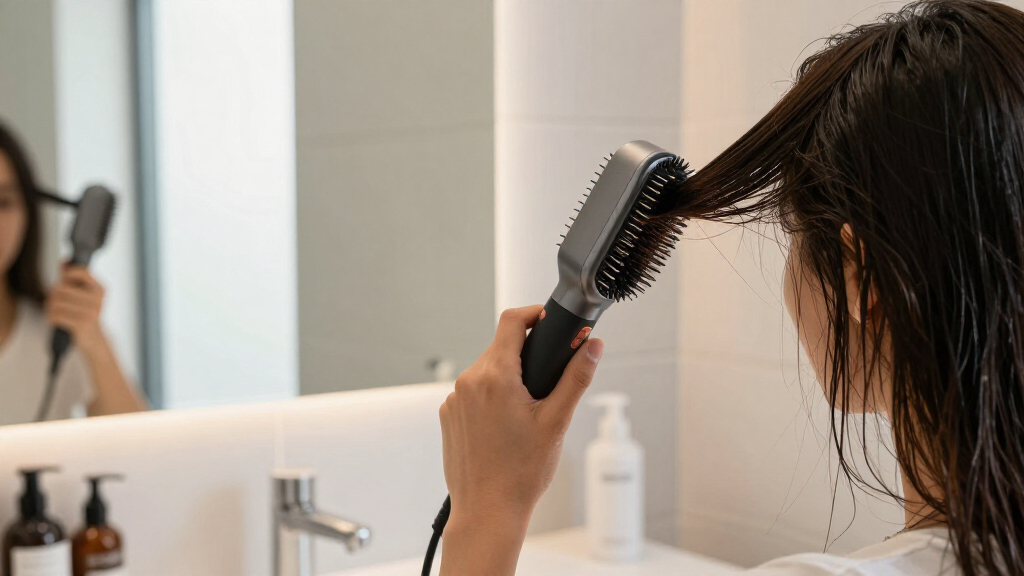
Hair texture encompasses more than just thickness; it includes pattern, porosity, and condition, all of which influence how your hair responds to styling. Fine, straight hair, which tends to be more delicate, responds well to gentle airflow and smaller barrels because these prevent excessive volume or flattening, reducing stress on fragile strands. Curly or coily textures benefit from diffusers and flexible brushes that enhance natural curl formation while minimizing frizz and damage. Dense, straight hair often needs higher airflow and larger attachments to speed up drying and prevent prolonged heat exposure, which can lead to damage over time. Coarse hair, with its thicker cuticle, requires tension—firm brushes, higher heat, and regular sectioning—to achieve smoothness and hold styles longer. Matching your tools to your hair’s specific traits isn’t just about convenience—it’s about reducing damage, achieving better results, and avoiding frustration caused by incompatible equipment. Tailoring your choice ultimately means more efficient styling and healthier hair over the long term.
As an affiliate, we earn on qualifying purchases.
Comparison Table: Features That Matter for Fine vs. Thick Hair
| Feature | Fine Hair | Thick Hair |
|---|---|---|
| Airflow & Heat Control | Multiple, adjustable, low airflow & temperature | Powerful airflow, higher heat settings, rapid drying |
| Attachment Size | Small barrels, soft brushes | Large barrels, firm brushes, diffusers |
| Weight & Balance | Lightweight, ergonomic | Sturdy, balanced for longer sessions |
| Power & Motor | Moderate wattage, gentle but effective | High wattage, robust motor |
| Additional Features | Cool shot, sensors, gentle bristles | Wide concentrators, diffusers, strong tension |
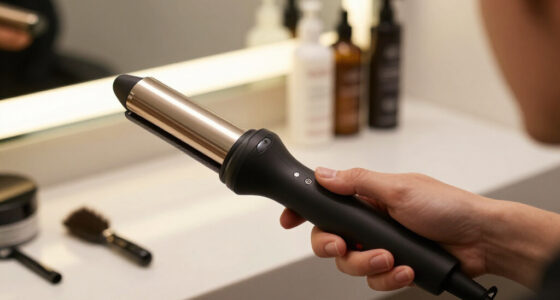
hair diffuser attachment for multi-styler
As an affiliate, we earn on qualifying purchases.
As an affiliate, we earn on qualifying purchases.
How to Test and Compare Multi-Stylers at Home
Testing your multi-styler at home involves a simple process to see how well it suits your hair. First, start with clean, damp hair. Use the same section size and styling products for each test. Style a small section, then note how long the curl or wave lasts, how smooth the finish looks, and how much effort it takes.
Pay attention to heat control responsiveness, noise level, and comfort. If a model feels heavy or awkward, it might cause fatigue. Keeping a small journal of your impressions — including how your hair responds and how long the style lasts — helps you compare different models more objectively. This process reveals not just which tool performs best, but also how your hair reacts over time, highlighting any potential damage or issues with heat sensitivity. The tradeoff here is that thorough testing may take time, but it ultimately leads to a more confident, informed purchase, ensuring your styling routine is both effective and gentle on your hair.
Why Proper Attachments and Settings Make All the Difference
Choosing the right attachments transforms a multi-styler from a basic device into a versatile tool capable of a wide range of styles. Smaller barrels provide tighter curls or waves, but their effectiveness depends on heat and airflow settings—using too high a temperature can damage delicate hair, while too low may not hold the style. Soft brushes are ideal for gentle volume and smoothing, especially for fine hair, whereas firm brushes and diffusers add tension and texture for thicker or curlier hair. The key is understanding that the right combination of attachments and settings enables you to achieve your desired look while minimizing damage and reducing styling time. For example, switching between a small curling barrel and a diffuser allows you to create both defined curls and voluminous, natural-looking waves without needing multiple devices. This versatility is crucial because it saves time, reduces clutter, and ensures your hair is styled with tools optimized for your specific needs.
Frequently Asked Questions
Can a multi-styler safely style fine hair without damage?
Yes, if you choose a model with adjustable temperature and airflow, and use it on the lowest effective settings. Always apply a heat protectant and avoid overusing heat to keep fine hair healthy.
What attachment is best for creating volume in fine hair?
A small, soft-bristle round brush or root-volumizing attachment works best. Keep the heat low and lift the roots while styling to avoid flattening your strands.
Is a high-wattage multi-styler better for thick hair?
Not necessarily. It’s more important that the device offers strong airflow, larger attachments, and higher heat options. A well-designed, mid-wattage model can perform just as well if it has the right features.
Can one multi-styler replace both a curling iron and a blow-dryer?
In many cases, yes. A versatile multi-styler can handle drying, curling, and smoothing, especially if it includes a range of attachments. However, for ultra-precise, long-lasting curls or super-straight styles, dedicated tools might still be preferable.
How often should I clean my multi-styler?
Regular cleaning is key to maintaining performance. Check and clean filters and air vents every few uses, especially if you notice reduced airflow or increased noise. Follow the manufacturer’s instructions for best results.
Conclusion
Your perfect styling partner isn’t just about bells and whistles. It’s about understanding your hair’s unique story—its texture, density, and condition—and choosing a multi-styler that adapts. A thoughtfully selected tool not only elevates your style but also cares for your hair’s health.
Imagine a lightweight device that effortlessly creates volume on fine hair, or a robust one that handles thick, curly strands without breaking a sweat. The right choice transforms styling from a chore into a pleasure—every day. Trust your hair’s voice and pick what genuinely works for you.
Fall Picks
fall essentials
As an affiliate, we earn on qualifying purchases.