
TL;DR
Luxury facial cleansing brushes are handheld or powered tools that add features such as soft bristles or silicone surfaces, intensity settings, and travel accessories to a face-washing routine. They can make cleansing feel pleasant, but clean hands and a suitable cleanser can also wash effectively; choose for comfort, upkeep, and cost, and use light pressure.
A polished cleansing brush can look like a tiny piece of spa equipment beside your sink: satin-finish handle, neat charging stand, soft bristles or smooth silicone. Yet a beautiful device does not automatically wash your face better. The useful question is what its materials and features add to your routine—and whether you will enjoy using it gently and cleaning it properly.

Get beauty and skincare favorites delivered free with Prime
- Fast, free delivery on millions of items
- Prime Video, Amazon Music and more included
- Member-only deals all year
This guide explains what luxury facial cleansing brushes offer, how to compare their practical details, and what to know before putting one to your skin. You’ll also find straightforward safety advice, upkeep tips, and a way to weigh the ongoing costs. Think of the brush as an optional accessory, like a well-made coffee grinder: it can improve the ritual, but it cannot make every cup—or every cleanse—right for everyone.
Treat a luxury brush as an optional cleansing accessory; clean hands and a suitable cleanser can also wash effectively.
Compare contact surface, ease of cleaning and drying, replacement-part costs, useful controls, charging, and warranty.
Use light pressure, follow the exact device instructions, and pause if persistent redness, stinging, dryness, or irritation develops.
Clean the device after use, let it dry fully, and never share it.
Price and antimicrobial or app claims do not establish better results or make a brush suitable for your skin.
What a luxury cleansing brush adds to your routine
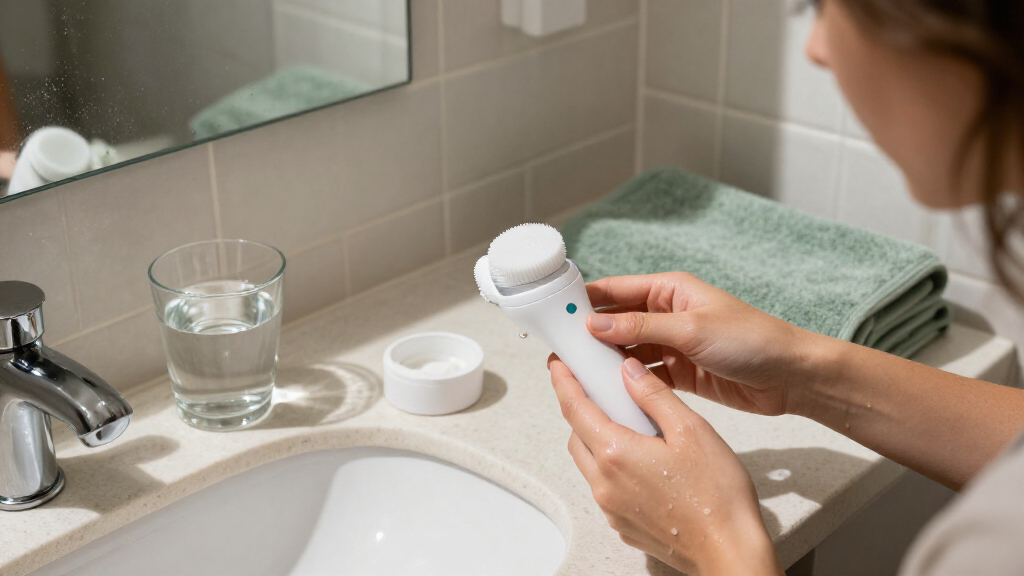
A luxury facial cleansing brush is a handheld or powered tool that helps you wash your face with soft bristles or a silicone contact surface. Premium models may add intensity settings, timers, replaceable heads, charging stands, travel cases, or connected-app controls. Those extras describe the experience and design; they do not guarantee healthier skin or more effective cleansing.
For example, if you enjoy a steady, gentle massage while washing away the day’s sunscreen, a timer and comfortable grip could make your evening routine feel more consistent. Someone who prefers a quick rinse may leave the device in a drawer. Clean hands and a suitable cleanser can remove everyday dirt, sunscreen, and makeup without a brush.
That distinction matters when a price tag climbs. Luxury can mean polished materials, thoughtful accessories, or a satisfying ritual, much as a handsome espresso machine can make a kitchen feel special. It does not prove that the device suits your skin or cleans better. Treat claims such as “deep cleansing” as product language, and look for clear specifications and care instructions.
A brush is a cleansing accessory, not an acne treatment. Its value is personal: comfort and convenience count, while a higher price alone says little about results.
Popular right now

Roborock Q7 M5+ Robot Vacuum and Mop with Self-Emptying Dock

Breville Barista Express Espresso Machine, Black Truffle

Vitamix 5200 Blender with 64 oz. Container, Black
As an affiliate, we earn on qualifying purchases.
Compare features that matter after the first week
Luxury facial cleansing brushes are easiest to compare by the contact surface, cleaning routine, replacement parts, and controls you will actually use. A feature earns its place when it makes the tool gentler, easier to maintain, or more practical for your day. A glossy charging stand may look lovely, but a surface that rinses clean can matter more on a busy Tuesday night.
Picture someone comparing a silicone device with a dense bristle head. Silicone is generally easier to rinse because it has no tightly packed bristle bundle; either design still needs regular cleaning and full drying. Neither material is automatically right for everyone, so pay attention to how the surface feels and whether the maker explains its care.
| Feature | Why it may help | What to check |
|---|---|---|
| Soft bristles or flexible silicone | Comfortable contact during washing | Texture, pressure, and cleaning instructions |
| Timer or adjustable intensity | Can help limit duration and pressure | Whether the settings are easy to control |
| Replaceable head | Lets you replace a worn component | Replacement guidance and ongoing cost |
| Water resistance and travel case | May suit a bathroom or a suitcase | Charging method, warranty, and care guidance |
Before buying, check whether the handle feels secure with wet hands, how it charges, and what the warranty covers. If the head requires replacement, include that cost in your budget. A device with fewer features can be the more elegant choice if it fits your sink, your travel bag, and your willingness to maintain it.
Use a brush gently, then watch how your skin responds
Use a cleansing brush with light pressure, follow the maker’s directions, and reduce or stop use if your skin develops persistent redness, stinging, dryness, or irritation. There is no universal schedule that suits everyone. If you are unsure, begin cautiously and let your skin’s response guide what you do next.
- Check your skin first. Skip the device over broken, inflamed, or sunburned skin. If your face feels tender after a windy afternoon or a new product, use clean hands instead.
- Follow the instructions. Use the cleanser and settings recommended for the specific device. Keep pressure light; the tool should not feel like scrubbing a stain from a pan.
- Stop if irritation persists. Redness that lingers, stinging, or dryness are signs to pause. Consider professional advice if symptoms continue.
- Keep it away from eyes unless designed for that area. Never press or scrub near your eyes.
People with sensitive skin, rosacea, eczema, active acne, or a disrupted skin barrier may find mechanical cleansing irritating. A gentle hand cleanse may be a better starting point; if you have concerns or symptoms that persist, ask a dermatologist for guidance. A brush does not treat acne, and more friction is not a shortcut to clearer-looking skin.
Let comfort set the pace. A pleasant massage should not leave your face feeling raw, tight, or hot.
Make upkeep part of the ritual, not an afterthought
A facial cleansing brush needs regular cleaning and thorough drying, whether it costs a little or a lot. Rinse away cleanser and residue after use, clean the device according to its instructions, and let it dry completely. Don’t share it. A beautiful tool that stays damp and coated in product is not ready for another evening at the sink.
Imagine finishing your nighttime routine while the bathroom is still steamy. A quick rinse removes visible foam, but putting a wet brush straight into a closed travel case can trap moisture. Leave it somewhere it can dry fully, and check the care guide for details about the handle, charging base, and any detachable head.
For a bristle model, follow the manufacturer’s directions on cleaning and replacement; replace a head sooner if it becomes damaged, frayed, discolored, or hard to clean. Silicone surfaces may be simpler to rinse, but “antimicrobial” labeling does not remove the need for cleaning. The same goes for app-connected routines: tracking usage does not establish a skin benefit.
- After each use: rinse off residue as directed.
- Before storage: allow the surface to dry fully.
- When parts wear out: follow replacement guidance and check the price before buying.
- When traveling: use the case only as the care instructions allow, especially if the device is damp.
Those small habits can help you decide whether the ongoing effort suits your life. If cleaning the tool feels more involved than cleansing your face, a hand wash may be the simpler, more pleasant option.
Decide whether the price earns a place at your sink
A luxury facial cleansing brush is worth its price only if you value its comfort, useful features, durability, and included accessories enough to keep using it. There is no single “real price range” that applies across brands and current models, and prices and availability change. Before comparing specific devices, verify the exact model’s current price, specifications, replacement-part costs, and warranty at publication time.
For a concrete example, imagine two shoppers. One travels weekly and would use a compact case, reliable charging, and a comfortable grip; those details could justify paying more for a suitable model. Another washes with hands in under a minute and has no interest in extra steps. For that person, the most luxurious choice may be the cleanser that feels good and fits the budget.
Compare the whole ownership cost, not just the checkout price. Ask whether heads or other parts need replacing, what those parts cost, how often the maker recommends a change, and what the warranty covers. If the company does not make care and replacement guidance easy to find, that missing information is part of your shopping decision.
- Choose a brush if you enjoy the sensation and will maintain it.
- Choose a simpler design if you want a comfortable grip or timer without app controls and a bundle of accessories.
- Choose clean hands if your skin prefers less friction or you want the easiest routine.
This approach is more useful than picking a “best” device based on branding alone. The right tool is the one that suits your face, your habits, and the real cost of keeping it in good condition.
Know what to expect from cleansing—and what not to
A cleansing brush can change the feel of washing, but it is not required to remove everyday dirt, sunscreen, or makeup. The cleanser, technique, and your individual skin all play a part. If makeup or sunscreen remains after washing, choose a cleanser suited to your routine rather than scrubbing harder to compensate.
Think of a brush like a soft pastry brush in a kitchen: it can make one task feel controlled and pleasant, but it does not improve every ingredient or suit every surface. A massage sensation may be the feature you enjoy most. Another person may prefer the quieter simplicity of warm water, cleanser, and fingertips.
Silicone models, customizable intensity, smaller travel formats, and app-linked routines appear among product design trends. Brands may also promote antimicrobial materials or exfoliation, but claims vary by model; such labels do not remove cleaning needs or establish clinical benefits. Check what the exact device offers and how the manufacturer explains its intended use.
If your skin is comfortable with a brush, it can be one small part of a consistent routine. If you notice irritation, pause and return to a gentle hand cleanse. The goal is a face that feels clean and comfortable after washing—not a red face that tells you the tool worked hard.
Frequently Asked Questions
Do cleansing brushes clean better than using your hands?
A brush changes the feel of cleansing, but you do not need one to wash effectively. A suitable cleanser, gentle technique, and your skin’s response matter more than the device’s price.
Are cleansing brushes suitable for sensitive or acne-prone skin?
Mechanical contact can irritate some people, especially with frequent use or pressure. A gentle hand cleanse can be a better starting point; ask a dermatologist for guidance if irritation or other concerns persist.
How often should I use a facial cleansing brush?
There is no universal schedule. Follow the exact device instructions, begin cautiously if you are unsure, and reduce or stop use if your skin becomes irritated.
Are silicone brushes more hygienic than bristle brushes?
Silicone is generally easier to rinse and has no dense bristle bundle. Both designs still need regular cleaning and thorough drying, so follow the manufacturer’s care instructions.
Can I use a cleansing brush to remove makeup or sunscreen?
A brush may be part of the washing step, but it does not replace a suitable cleanser or careful removal. If residue remains, adjust your cleanser rather than scrubbing harder.
Is an expensive facial cleansing brush worth it?
It depends on whether comfort, durability, accessories, and practical features matter enough to you. Check the current price for the exact model, replacement-part costs, and warranty; price alone does not prove better results.
Conclusion
Choose a cleansing brush for the way it feels, the care it asks of you, and the features you will genuinely use. Check the exact model’s instructions, parts, and warranty; keep pressure light and stop if irritation persists. A sink-side ritual should leave your skin comfortable—and your evening a little calmer.
If a soft rinse and clean hands already do the job, that can be the most elegant routine of all.