
TL;DR

Get beauty and skincare favorites delivered free — and shop member deals
- Fast, free delivery on millions of items
- Access to Prime Big Deal Days deals on October 6–7
- Prime Video, Amazon Music and more included
London Underground has initiated facial recognition scanning of passengers on certain lines. The move aims to enhance security but raises privacy questions. Details on scope and duration remain unclear.
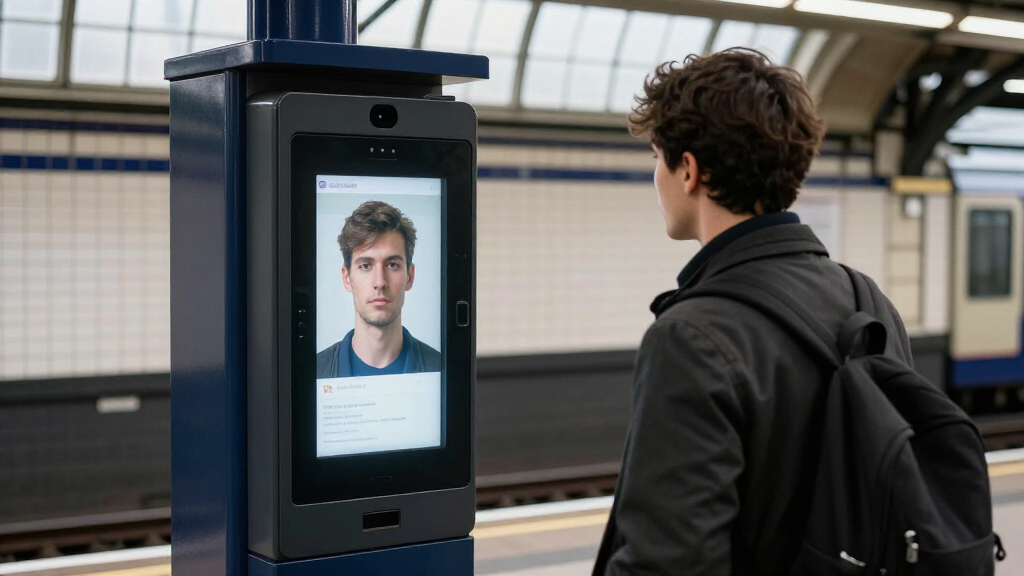
London Underground has begun implementing facial recognition scanning for passengers on select lines as part of a pilot program. The move, confirmed by Transport for London (TfL), aims to improve security and fraud prevention, but has sparked privacy concerns among passengers and advocacy groups. The trial started in late October 2023 and is expected to last several months.
Transport for London (TfL) announced that facial recognition technology is now being used at specific stations on the London Underground network. The system captures images of passengers’ faces to verify their identity against security databases, including for fare evasion and potential threat detection. According to TfL, the trial is designed to assess the technology’s effectiveness and operational impact.
Officials stated that the facial recognition system is only active during designated times and locations, with strict data handling protocols in place. Passengers are informed via signage, and opt-out options are available for those who do not wish to be scanned. The technology has been supplied by a private security firm, and the pilot is expected to run through early 2024.
Potential Impact on Passenger Privacy and Security
This development marks a significant shift in how public transit authorities in London are deploying surveillance technology. If successful, facial recognition could become a standard tool for security and fare enforcement, potentially reducing crime and fare evasion. However, it also raises concerns about passenger privacy, data security, and the potential for misuse or overreach. Privacy advocates have criticized the move, citing risks of data breaches and intrusive monitoring.
facial recognition security camera
As an affiliate, we earn on qualifying purchases.
As an affiliate, we earn on qualifying purchases.
London’s Use of Surveillance Tech in Transit Security
London has previously used CCTV extensively for security, but facial recognition is a newer and more invasive form of surveillance. The city has experimented with such technology before, including pilot programs in public spaces. The recent rollout on the Underground is part of broader efforts to modernize security measures amid rising concerns over terrorism and public safety.
The pilot comes after several other cities worldwide have tested or deployed facial recognition in public transit, often amid legal and ethical debates. The UK government has also considered regulations around facial recognition use, but policies remain unsettled.
“The facial recognition system is a pilot program aimed at enhancing security and reducing fare evasion. We are committed to protecting passenger privacy and ensuring compliance with data protection laws.”
— Transport for London spokesperson
As an affiliate, we earn on qualifying purchases.
Unclear Scope and Future of Facial Recognition on the Underground
It is not yet clear how widespread the facial recognition system will become across the entire London Underground network or whether it will be expanded beyond the pilot locations. Details about data storage, access, and retention policies are still being finalized. Additionally, the legal framework governing biometric data collection in this context remains uncertain, with ongoing debates about regulation and oversight.
face recognition anti-surveillance device
As an affiliate, we earn on qualifying purchases.
As an affiliate, we earn on qualifying purchases.
Next Steps for Facial Recognition Trials and Policy Development
The pilot program is expected to continue through early 2024, with TfL evaluating its effectiveness and public response. Authorities may decide to expand, modify, or halt the program based on these assessments. Stakeholders, including privacy groups and passenger representatives, are likely to continue advocating for transparency and safeguards. Regulatory discussions around biometric data use in public spaces are also ongoing in the UK.
As an affiliate, we earn on qualifying purchases.
Key Questions
Is facial recognition mandatory for passengers on the London Underground?
No, passengers are informed about the system and can opt out where options are available. The technology is currently being tested as part of a pilot program.
How is passenger privacy protected during this facial recognition process?
Transport for London states that data is handled in compliance with data protection laws, with strict protocols on data storage and access. Passengers are notified via signage, and the system is active only during specific times and locations.
Will facial recognition be used for purposes other than security and fare enforcement?
Officially, TfL has stated the system is for security and fare management. Any expansion or different uses would require additional approval and transparency.
What are the privacy groups’ main concerns?
Privacy advocates worry about potential misuse of biometric data, lack of informed consent, and risks of surveillance overreach without clear regulatory safeguards.
Could this technology lead to increased surveillance beyond public transit?
There is concern that facial recognition could be expanded to other public spaces, raising broader privacy and civil liberties issues, though current plans are limited to the pilot locations.
Source: hn
Fall Picks
fall essentials
As an affiliate, we earn on qualifying purchases.