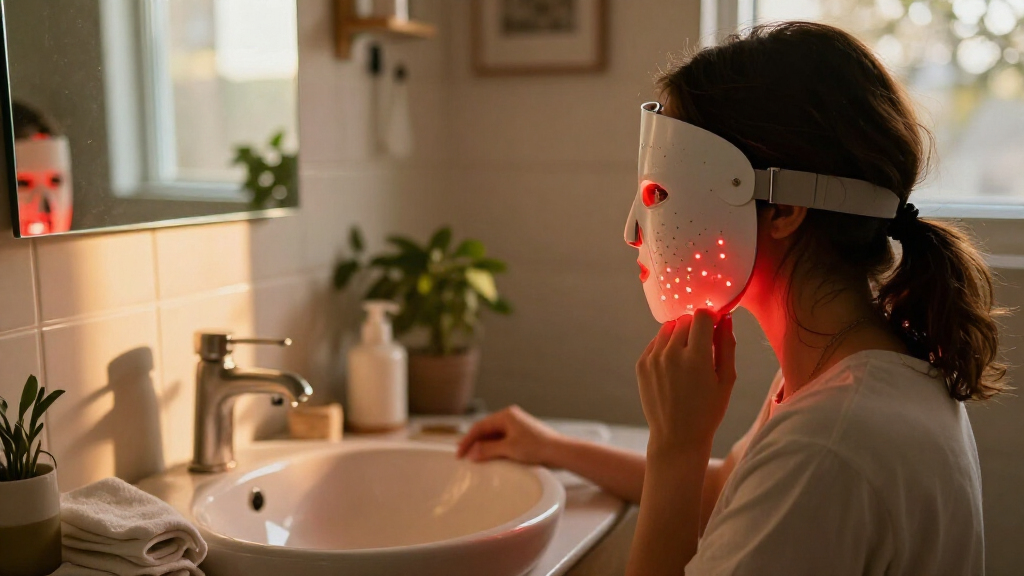
The best red light therapy devices balance treatment area, ease of use, and a form factor that fits your routine. My best overall pick is the BestQool 105W panel, a practical middle ground for people who want red and near-infrared light across more than one body area. The Hooga PRO300 is a stronger fit for buyers prioritizing a panel-based setup, while the Shark CryoGlow mask stands out for face-focused sessions and built-in under-eye cooling. The main tradeoff is coverage versus convenience: panels cover more area but need space and positioning, while masks, pads, and belts focus on specific zones. Read on for the full breakdown and guidance on which device style suits your needs.

Get beauty and skincare favorites delivered free with Prime
- Fast, free delivery on millions of items
- Prime Video, Amazon Music and more included
- Member-only deals all year
Complete the kit



Key Takeaways
- The roundup’s broadest-use recommendation is the BestQool 105W panel; it offers a more versatile format than a face mask, belt, or handheld torch.
- Panel size and output are not the only buying signals: the 50W BestQool, Hooga HG200, HG300, and PRO300 give buyers distinct size and capability tiers.
- Masks and body-worn devices trade broad coverage for convenience: Shark CryoGlow and iRestore are face-focused, while the Lifepro and BestQool belts target body areas.
- The two Viconor lamps share a name and core light specifications, so buyers should verify the exact listing and included stand or accessories before ordering.
- A mat is the most hands-free format in this lineup, but its fixed coverage and larger storage footprint make it less adaptable than a panel or handheld device.
| BestQool Red Light Therapy Panel, 660nm Red and 850nm Near-Infrared, 105W |  | Best Overall Panel | Power: 105W | Wavelengths: 660nm red and 850nm near-infrared | Irradiance: 95.6 mW/cm² at 3 inches | VIEW LATEST PRICE | See Our Full Breakdown |
| LifePro LumiCure Handheld Red Light Therapy Torch |  | Best for Portable, Targeted Sessions | Light type: Red and near-infrared | Wavelength count: 3 | Portability: Lightweight handheld design | VIEW LATEST PRICE | See Our Full Breakdown |
| Shark CryoGlow LED Face Mask with Red, Blue and Infrared Light and Under-Eye Cooling |  | Best for Multi-Mode Facial Skincare | Model: FW312PK | Light types: Red, blue, and deep infrared LED | Treatments: Better Aging, Skin Clearing, Skin Sustain, and Under-Eye Revive | VIEW LATEST PRICE | See Our Full Breakdown |
| Corded Red Light Therapy Pad with Adjustable Strap, 660nm Red and 850nm Near-Infrared Light |  | Best for Hands-Free Body Contact | Wavelengths: 660nm red and 850nm near-infrared | Lamp beads: 105 | Total chips: 315 | VIEW LATEST PRICE | See Our Full Breakdown |
| BestQool Red Light Therapy Panel, 660nm Red and 850nm Near-Infrared, 50W |  | Best Compact Panel | Power consumption: 50W | Wavelengths: 660nm red and 850nm near-infrared | Irradiance: Up to 70 mW/cm² at 3 inches | VIEW LATEST PRICE | See Our Full Breakdown |
| Viconor Red Light Therapy Lamp with Stand, 660 nm Red and 850 nm Infrared LEDs |  | Best Adjustable Lamp | Brand: Viconor | LED count: 120 | Wavelengths: 660 nm red and 850 nm infrared | VIEW LATEST PRICE | See Our Full Breakdown |
| Comfytemp Red Light Therapy Mat, 33 x 17 in, 660 nm and 850 nm |  | Best for Broad Mat Coverage | Dimensions: 33 x 17 in | LED count: 480 | Wavelengths: 660 nm and 850 nm | VIEW LATEST PRICE | See Our Full Breakdown |
| iRestore Red Light Therapy LED Face Mask with 360 LEDs |  | Best for Multi-Wavelength Facial Care | LED count: 360 | Red wavelength: 635 nm | Infrared wavelength: 830 nm | VIEW LATEST PRICE | See Our Full Breakdown |
| Lifepro Allevared Red Light Therapy Belt with 105 Triple Chip LEDs |  | Best for Timed, Targeted Wearable Sessions | LED count: 105 triple-chip LEDs | Wavelengths: 660 nm red and 850 nm near-infrared | Modes: Red, NIR, or Both | VIEW LATEST PRICE | See Our Full Breakdown |
| BestQool Red Light Therapy Belt for Body |  | Best High-Coverage Belt | LED count: 220 | LED type: Tri-chip | Wavelengths: 660 nm red and 850 nm near-infrared | VIEW LATEST PRICE | See Our Full Breakdown |
| Viconor Red Light Therapy Panel, 660nm/850nm Near Infrared Device, 300W, 60 Dual Chip LEDs |  | Best for High-Output Sessions | Wavelengths: 660nm red and 850nm near-infrared | LED configuration: 60 dual-chip LEDs (120 beads total) | Power: 300W | VIEW LATEST PRICE | See Our Full Breakdown |
| Viconor Red Light Therapy Lamp with Stand, 660 nm Red and 850 nm Infrared LEDs |  | Best for Flexible Positioning | Wavelengths: 660nm red and 850nm infrared | LED count: 120 | LED configuration: 1 × 660nm red light and 2 × 850nm infrared lights per LED | VIEW LATEST PRICE | See Our Full Breakdown |
| Hooga PRO300 Red Light Therapy Panel |  | Best for Customizable Panel Sessions | Model: PRO300 | Light source: 60 dual-chip LEDs | Wavelengths: 660nm red and 850nm near-infrared | VIEW LATEST PRICE | See Our Full Breakdown |
| Hooga HG300 Red Light Therapy Panel |  | Best Compact Targeted Panel | Model: HG300 | LED count: 60 | Wavelengths: 660nm red and 850nm near-infrared | VIEW LATEST PRICE | See Our Full Breakdown |
| Hooga HG200 Red and Near-Infrared Light Therapy Panel, 660nm and 850nm, 40 LEDs |  | Best Low-Power Starter Panel | Wavelengths: 660nm red and 850nm near-infrared | LED count: 40 | Power: 48W | VIEW LATEST PRICE | See Our Full Breakdown |
| red light therapy device | Wavelengths | LED count |
|---|---|---|
| BestQool Red Light Therapy Pan | 660nm red and 850nm near-infrared | — |
| LifePro LumiCure Handheld Red | — | — |
| Shark CryoGlow LED Face Mask w | — | — |
| Corded Red Light Therapy Pad w | 660nm red and 850nm near-infrared | — |
| BestQool Red Light Therapy Pan | 660nm red and 850nm near-infrared | — |
| Viconor Red Light Therapy Lamp | 660 nm red and 850 nm infrared | 120 |
| Comfytemp Red Light Therapy Ma | 660 nm and 850 nm | 480 |
| iRestore Red Light Therapy LED | — | 360 |
| Lifepro Allevared Red Light Th | 660 nm red and 850 nm near-infrared | 105 triple-chip LEDs |
| BestQool Red Light Therapy Bel | 660 nm red and 850 nm near-infrared | 220 |
| Viconor Red Light Therapy Pane | 660nm red and 850nm near-infrared | — |
| Viconor Red Light Therapy Lamp | 660nm red and 850nm infrared | 120 |
| Hooga PRO300 Red Light Therapy | 660nm red and 850nm near-infrared | — |
| Hooga HG300 Red Light Therapy | 660nm red and 850nm near-infrared | 60 |
| Hooga HG200 Red and Near-Infra | 660nm red and 850nm near-infrared | 40 |
More Details on Our Top Picks
BestQool Red Light Therapy Panel, 660nm Red and 850nm Near-Infrared, 105W
I’d choose this panel for a home setup that needs more flexibility than a compact, localized device. Its 660nm red and 850nm near-infrared light can run separately or together, giving you control over which mode you use rather than locking you into one setting. The adjustable stand suits tabletop placement, while the included wall-mounting kit offers a more fixed arrangement. Compared with the BestQool 50W panel, this 105W model is the stronger fit for buyers who want a larger-panel format and more positioning options; the 50W version is easier to pack and move. The tradeoff is that a panel still needs to be aimed at the target area, and wall installation takes setup. Its published 95.6 mW/cm² irradiance at 3 inches is distance-specific, so I wouldn’t treat that figure as a measure of output from farther away.
Pros:- Separate red, near-infrared, and combined modes give users more control over the light setup.
- Adjustable stand and included wall-mounting kit allow tabletop or fixed placement.
- Touchscreen controls make mode changes straightforward.
- Cooling system supports steady operation during sessions.
Cons:- Requires deliberate positioning toward the area being targeted.
- Wall mounting requires installing the included hanging kit.
- The irradiance figure is specified at 3 inches and may not describe use at other distances.
Best for: At-home users who want separate red and near-infrared modes, flexible mounting, and a panel rather than a wearable device.
Not ideal for: Travelers or buyers who want hands-free coverage over a body area; this panel requires positioning and aiming.
- Power:105W
- Wavelengths:660nm red and 850nm near-infrared
- Irradiance:95.6 mW/cm² at 3 inches
- Light modes:Red, near-infrared, or both
- Stand:Adjustable U-shaped stand
- Mounting:Wall-mounting kit included
- Controls:Touchscreen
- LEDs:Flicker-free dual-chip LEDs
Our verdict“Choose this if you want a versatile, mountable panel for home use, but pick the BestQool 50W if portability and a smaller footprint matter more.”
LifePro LumiCure Handheld Red Light Therapy Torch
The LumiCure is the most travel-friendly choice in this group: its lightweight handheld format, wrist strap, and zippered case make it easier to carry than either BestQool panel. That portability suits someone who wants to direct a device at a small area rather than set up a panel or strap on a pad. LifePro lists three wavelengths across red and near-infrared light, but the product details don’t identify the exact wavelengths or light output. That missing information makes it harder to compare its specifications with the BestQool 105W panel, whose wavelengths and irradiance are stated. I’d choose the LumiCure for compactness and targeted handling, not for buyers who need clearly documented output or broad coverage. Its handheld design also means the user must hold and aim it during a session.
Pros:- Lightweight handheld format is easier to carry than a panel or body pad.
- Three wavelengths are offered across red and near-infrared light.
- Wrist strap helps keep the device secure while aiming it.
- Zippered case supports storage and travel.
Cons:- Exact wavelengths are not specified in the provided product details.
- Light output is not specified, limiting comparison with panels that publish irradiance.
- Requires holding and aiming the device rather than providing hands-free or broad-area use.
Best for: People who want a compact device for targeted sessions at home or while traveling and value a carrying case.
Not ideal for: Buyers who need published wavelength values or light-output data to compare devices before choosing.
- Light type:Red and near-infrared
- Wavelength count:3
- Portability:Lightweight handheld design
- Included accessories:Wrist strap and zippered case
- Exact wavelengths:Not specified in the provided product details
- Light output:Not specified in the provided product details
Our verdict“Pick the LumiCure for portable, targeted use, but choose a panel such as the BestQool 105W if published wavelength and irradiance details matter to you.”
Shark CryoGlow LED Face Mask with Red, Blue and Infrared Light and Under-Eye Cooling
Unlike the BestQool panels, the Shark CryoGlow is built specifically for facial skincare: it combines red, blue, and deep infrared LEDs with four named treatments for aging concerns, acne, maintenance, and under-eye refresh. That makes it the more tailored pick for someone who wants a face-worn routine rather than a panel aimed at different body areas. The three-level under-eye cooling and included remote add features the panels don’t offer, while treatment durations range from 4 to 15 minutes. The tradeoff is a narrower use case: this is a face mask, not a general-purpose device. Sessions also call for a clean, dry, bare face, and some take up to 15 minutes. I’d favor the BestQool 50W for a compact device that can target face or body; I’d choose Shark for its facial modes and cooling feature.
Pros:- Combines red, blue, and deep infrared LED light in one face mask.
- Four treatments address different skincare goals.
- Three adjustable under-eye cooling levels add a feature absent from the panels in this roundup.
- Adjustable fit is designed for a range of face shapes and sizes.
Cons:- Designed for facial use rather than broad body-area application.
- Treatments require a clean, dry, bare face.
- Some treatment sessions last up to 15 minutes.
Best for: Skincare-focused buyers who want a wearable facial device with multiple light treatments and adjustable under-eye cooling.
Not ideal for: People seeking one device for face and body, or those unwilling to begin sessions with a clean, dry, bare face.
- Model:FW312PK
- Light types:Red, blue, and deep infrared LED
- Treatments:Better Aging, Skin Clearing, Skin Sustain, and Under-Eye Revive
- Treatment times:4–15 minutes, depending on treatment
- Under-eye cooling:Three adjustable chill levels
- Fit:Fully adjustable
- Included:LED mask, clip-on chill pads, remote, and USB-C charging cable
- Listed skin types:Dry, oily, normal, combination, and sensitive
Our verdict“Choose the CryoGlow for a dedicated multi-mode facial routine with under-eye cooling, not as a substitute for a panel or body device.”
Corded Red Light Therapy Pad with Adjustable Strap, 660nm Red and 850nm Near-Infrared Light
This pad is the practical choice for buyers who want to attach a light source to a selected body area instead of aiming a panel. Its 16.1 × 7.9-inch flexible pad fastens with an adjustable elastic strap, making it more suited to close-contact placement than the BestQool 105W panel. The 660nm red and 850nm near-infrared chips are specified, and the 30-minute auto-off timer gives sessions a set endpoint. At 0.44 lb, it is light to position, but its coverage is limited to the pad’s footprint; the larger Comfytemp mat listed elsewhere in this roundup is a better fit for buyers seeking a broader contact surface. This unit is also corded, so placement depends on access to an outlet and the USB controller line.
Pros:- Adjustable elastic strap secures the pad around different body areas.
- Soft pad is designed for comfortable contact with the skin.
- 30-minute auto-off timer provides a defined session endpoint.
- Specified 660nm red and 850nm near-infrared wavelengths make the light types clear.
Cons:- Corded setup requires access to a power outlet.
- The 16.1 × 7.9-inch pad limits coverage at one time.
- The cord and controller line can restrict positioning compared with a cordless wearable.
Best for: Home or office users who want a lightweight pad that straps around one localized body area.
Not ideal for: Buyers who need broad coverage, cordless use, or freedom to move away from a power outlet during a session.
- Wavelengths:660nm red and 850nm near-infrared
- Lamp beads:105
- Total chips:315
- Pulse mode:10Hz
- Timer:30-minute auto-off
- Pad dimensions:16.1 × 7.9 inches
- Weight:0.44 lb
- Power:Corded; USB controller line and adapter included
Our verdict“Choose this pad for strapped, localized use with a timer; choose the larger Comfytemp mat if coverage across a wider area is the priority.”
BestQool Red Light Therapy Panel, 660nm Red and 850nm Near-Infrared, 50W
This is the panel I’d shortlist for localized use or a limited storage space. The 50W output and foldable, angle-adjustable stand make it easier to move and set up than the BestQool 105W panel, while its 660nm red and 850nm near-infrared combination keeps both light types in one compact unit. It can be aimed at the face or body, so it offers more flexibility of use than the Shark CryoGlow facial mask, though it lacks the mask’s skincare programs and under-eye cooling. Its main compromise is coverage: a compact panel is intended for a smaller target area, not broad, hands-free exposure. The listed up to 70 mW/cm² irradiance at 3 inches is measured close to the device, so buyers should not assume the same figure applies at greater distances.
Pros:- Combines 660nm red and 850nm near-infrared light.
- Compact build is easier to store or take on trips than the 105W BestQool panel.
- Foldable stand allows angle adjustment for different target areas.
- Touch controls simplify operation.
Cons:- Compact size is intended for localized application rather than broad coverage.
- The listed irradiance is measured at 3 inches and may differ at other distances.
- Like other panels, it needs to be positioned and aimed at the target area.
Best for: Travelers and home users who want a small, repositionable panel for localized face or body use.
Not ideal for: Buyers seeking broad coverage from one placement or a wearable device that stays secured without being aimed.
- Power consumption:50W
- Wavelengths:660nm red and 850nm near-infrared
- Irradiance:Up to 70 mW/cm² at 3 inches
- EMF:0 EMF at 6 inches
- Controls:Touch control panel
- Stand:Foldable, adjustable-angle stand
Our verdict“Pick the BestQool 50W for a portable, localized panel, and step up to the 105W model if you want a larger home-panel setup.”
Viconor Red Light Therapy Lamp with Stand, 660 nm Red and 850 nm Infrared LEDs
I’d choose this lamp when positioning matters more than treating a large area at once. Its curved 120-LED panel combines visible 660 nm red light with invisible 850 nm infrared light, while the stand adjusts up to 180° to aim the panel from different angles. That gives it more placement flexibility than a wearable wrap such as the Lifepro Allevared Belt, but the smaller panel means you may need to reposition it to cover your back, legs, or other broad areas. The included hook and freestanding option also make it easier to adapt to a home setup than a mat that needs you to sit or lie on it. I’d skip it if you want hands-free coverage of a large body area in one session.
Pros:- Combines 660 nm red and 850 nm infrared wavelengths
- Curved panel is designed to focus light toward a target area
- Can be placed independently or hung
- Stand adjusts up to 180° for flexible positioning
Cons:- Small panel may require repositioning for larger body areas
- 850 nm infrared light is invisible, so it cannot be seen during use
Best for: People who want a portable, repositionable light for targeting different areas at home
Not ideal for: Buyers who want broad, hands-free coverage without moving the device between body areas
- Brand:Viconor
- LED count:120
- Wavelengths:660 nm red and 850 nm infrared
- LED configuration:Each light combines 1 red LED and 2 infrared LEDs
- Stand adjustment:Up to 180°
- Power cord length:1.8 m
- Included accessories:Stand and hook
Our verdict“Choose this lamp for flexible, targeted placement, but pick a mat or belt if you want wider body coverage without repositioning.”
Comfytemp Red Light Therapy Mat, 33 x 17 in, 660 nm and 850 nm
The Comfytemp mat is the lineup’s clearest choice for people who prefer to sit or lie down while treating a wider area. Its 33 x 17-inch surface and 480 LEDs cover more space at once than the small Viconor lamp, so there’s less need to reposition a panel between nearby areas. Four light modes and three adjustable levels offer ways to tailor operation, while the button controls keep setup straightforward after connecting the pad and adapter. That simplicity is a plus beside the more customizable Lifepro Allevared Belt, which adds selectable wavelengths and a timer. The tradeoff is that the Comfytemp needs an adapter connection and the supplied details do not specify a timer or automatic shutoff. I’d favor it for broad, stationary sessions, not for portable treatment while moving around.
Pros:- 33 x 17-inch mat provides broad coverage
- 480 LEDs across a large surface
- Four light modes and three adjustable levels
- Simple button operation after connecting the pad and adapter
Cons:- Requires connection to an adapter
- Product details do not specify a timer or automatic shutoff
Best for: People who want to sit or lie down for sessions covering a larger body area
Not ideal for: Travelers or buyers who need cordless use, a specified timer, or a wearable hands-free format
- Dimensions:33 x 17 in
- LED count:480
- Wavelengths:660 nm and 850 nm
- Light modes:4
- Adjustable levels:3
- Operation:Connect the pad and adapter, then press the button
Our verdict“Pick the Comfytemp for broad seated or lying-down coverage; choose a belt or lamp if portability and flexible positioning matter more.”
iRestore Red Light Therapy LED Face Mask with 360 LEDs
For facial use, I’d choose the iRestore over body-focused options such as the BestQool Red Light Therapy Belt: its mask format targets the face, and its three wavelengths give it a different focus from devices limited to red and near-infrared light. The 635 nm red, 830 nm infrared, and 415 nm blue LEDs are presented for different skincare goals, while 10-minute sessions make the routine easier to schedule than a longer wearable treatment. Its lightweight dual straps and design intended to block direct light from the eyes add practical comfort details. The mask does hover rather than rest directly against the face, which may not suit buyers who want close contact. It also calls for use three to five times per week, so it’s better for someone ready to maintain a routine than for occasional, broad-body use.
Pros:- Combines red, infrared, and blue wavelengths
- Lightweight mask uses dual straps
- Designed to block direct light from the eyes
- 10-minute sessions offer a short routine
Cons:- Suggested use requires a regular schedule of three to five sessions per week
- Mask hovers over the face rather than sitting directly against it
Best for: People seeking a dedicated facial light device with multiple wavelengths and short scheduled sessions
Not ideal for: Buyers seeking body coverage, a face-contacting mask, or a device for occasional use
- LED count:360
- Red wavelength:635 nm
- Infrared wavelength:830 nm
- Blue wavelength:415 nm
- Session length:10 minutes
- Suggested frequency:3–5 times per week
- Design:Lightweight mask with dual straps
Our verdict“Choose the iRestore for a consistent, multi-wavelength facial routine, not for body treatment or close-fitting mask contact.”
Lifepro Allevared Red Light Therapy Belt with 105 Triple Chip LEDs
The Lifepro Allevared is the better fit when a wraparound shape and session controls matter more than broad, stationary coverage. Its 105 triple-chip LEDs combine 660 nm red and 850 nm near-infrared light, and the Red, NIR, or Both modes let buyers select which wavelengths to use. A timer adjustable from one to 30 minutes adds a clear session boundary, unlike the Comfytemp mat, whose listed details do not specify a timer. The belt is designed to contour around the waist, back, or legs, making hands-free targeted use more practical than aiming the Viconor lamp at each area. The tradeoff is reliance on a USB power source and a smaller LED count than the 220-LED BestQool belt. I’d choose it for controlled, localized sessions rather than maximum coverage.
Pros:- Offers Red, NIR, and combined light modes
- Adjustable timer runs from 1 to 30 minutes
- Wraparound design contours to the waist, back, or legs
- USB-powered and portable for hands-free use
Cons:- Requires a USB power source or charged power supply
- Timer is capped at 30 minutes
- Initial setup and use require consulting the manual
Best for: People who want a wearable wrap for targeted waist, back, or leg sessions with selectable modes and a timer
Not ideal for: Buyers who want a larger LED array, fully untethered operation, or a broad panel-style treatment area
- LED count:105 triple-chip LEDs
- Wavelengths:660 nm red and 850 nm near-infrared
- Modes:Red, NIR, or Both
- Timer range:1–30 minutes
- Power source:USB-powered
- Form factor:Wraparound belt
Our verdict“Choose the Lifepro for a wearable, timer-controlled treatment of specific body areas; select the BestQool belt for a larger LED array.”
BestQool Red Light Therapy Belt for Body
Among these two wearable belts, the BestQool is the pick I’d make for buyers who want a larger LED array and more intensity settings. Its 220 tri-chip LEDs outnumber the Lifepro Allevared’s 105 triple-chip LEDs, while five power levels give users more adjustment choices than the Lifepro’s listed Red, NIR, and combined modes. Both belts use 660 nm red and 850 nm near-infrared light, but the BestQool’s stated 43W power consumption and AC 85–265V input make it a powered device rather than a fully wireless option. The product data describes smart controls for customizing sessions, though it does not provide a timer range. I’d choose this over the Lifepro for the larger array and intensity options, but not if a clearly specified timer or cordless use is a priority.
Pros:- 220 tri-chip LEDs provide a larger array than the Lifepro Allevared belt
- Uses both 660 nm red and 850 nm near-infrared wavelengths
- Five intensity levels allow adjustment
- Lightweight belt format is described as portable
Cons:- Requires a power source, limiting completely wireless use
- Product details do not give a timer range
- Consistent use over several weeks is described as necessary to notice results
Best for: People who want a body belt with a larger LED array and several intensity settings for home or travel use near power
Not ideal for: Buyers who need fully wireless operation or a clearly specified timer range
- LED count:220
- LED type:Tri-chip
- Wavelengths:660 nm red and 850 nm near-infrared
- Power consumption:43 W
- Voltage:AC 85–265 V
- Intensity levels:5
- Certification:FSA/HSA eligible
Our verdict“Choose the BestQool belt for its larger LED array and five intensity levels, but pick another option if cordless use or a specified timer is a must.”
Viconor Red Light Therapy Panel, 660nm/850nm Near Infrared Device, 300W, 60 Dual Chip LEDs
I’d put this Viconor panel on the shortlist for buyers who want a fixed, higher-output setup rather than a small lamp for spot treatments. Its 60 dual-chip LEDs deliver 660nm red and 850nm near-infrared light, while the listed irradiance is 140mW/cm² at six inches. That gives it a more performance-focused profile than the compact Hooga HG300, which is specified at 73mW/cm² at the same distance. The tradeoff is a larger, more power-hungry device that may be awkward to store in a tight room. A built-in timer, cooling fan, and tabletop or wall mounting make sessions easier to set up, but eye protection is still required. I’d choose it for broader panel use, not for portability or a small footprint.
Pros:- Combines 660nm red and 850nm near-infrared light in 60 dual-chip LEDs.
- Listed irradiance of 140mW/cm² at six inches is higher than the Hooga HG300’s specified output.
- Tabletop and wall-mount options suit different home setups.
- Timer and cooling fan support hands-free sessions.
Cons:- The larger panel can be difficult to store in a small space.
- Its 300W power rating may draw more electricity than smaller panels.
- Protective eyewear is needed; users should not look directly at the LEDs.
Best for: Home users who want a higher-output panel for regular sessions and have room to mount or store it.
Not ideal for: Apartment dwellers with little storage space or buyers seeking a compact, easy-to-carry device.
- Wavelengths:660nm red and 850nm near-infrared
- LED configuration:60 dual-chip LEDs (120 beads total)
- Power:300W
- Irradiance:140mW/cm² at 6 inches
- Timer:5–30 minutes
- Mounting:Tabletop or wall mount
- Included accessories:Hanging kit, handle, eye protection, user manual
Our verdict“Choose this Viconor if you want a higher-output panel and have space for a mounted or tabletop setup.”
Viconor Red Light Therapy Lamp with Stand, 660 nm Red and 850 nm Infrared LEDs
This Viconor lamp is a practical choice for someone who wants to aim light at different areas without committing to a large panel. Its curved 120-LED design combines one 660nm red light with two 850nm infrared lights per LED, and the stand adjusts through 180 degrees. The included hook adds another placement option, making it easier to adapt a session around a chair or bedside setup than with the tabletop-only Hooga PRO300. That flexibility comes with a coverage limit: the panel is small, so treating several areas means repositioning it. The suggested routine of 15–30 minutes daily also asks for consistent time. I’d favor it over a fixed panel when adjustability and portability matter more than covering a broad area at once.
Pros:- Curved panel offers a different fit and aiming angle from flat tabletop panels.
- Stand adjusts up to 180 degrees for varied positioning.
- Can be used on its stand or hung with the included hook.
- Three-metre power cord allows more placement flexibility near an outlet.
Cons:- Small coverage area may require repeated repositioning.
- Suggested daily sessions of 15–30 minutes require a regular time commitment.
- No irradiance figure is provided in the supplied specifications for comparison.
Best for: People who want a movable home lamp that can be angled on a stand or hung for different treatment positions.
Not ideal for: Buyers seeking broad coverage in one session or a larger panel with independently controlled wavelengths.
- Wavelengths:660nm red and 850nm infrared
- LED count:120
- LED configuration:1 × 660nm red light and 2 × 850nm infrared lights per LED
- Panel design:Curved
- Stand adjustment:Up to 180 degrees
- Power cord:3 metres
- Included accessories:Stand and hook
- Suggested session duration:15–30 minutes daily
Our verdict“Pick this lamp if adaptable positioning matters more to you than treating a large area at once.”
Hooga PRO300 Red Light Therapy Panel
The Hooga PRO300 is the more configurable pick for buyers who want to control which wavelengths they use, rather than simply switching on a combined-light panel. Its independent red and near-infrared controls let you select 660nm, 850nm, or both, a distinction that sets it apart from the Viconor 300W panel, whose listed features emphasize combined output. The PRO300 also has a tabletop stand and a three-year warranty, with a modular design that supports connecting additional panels for a larger setup. That expandability comes with a substantial footprint: at 61.2 inches long, it needs a stable, roomy surface and is less convenient to move than the compact Hooga HG300. I’d choose it for a dedicated home or studio station, not a small desk or frequent travel.
Pros:- Independent controls allow red and near-infrared light to be selected separately.
- Modular design supports connecting additional panels.
- Tabletop stand provides a ready-to-use mounting option.
- Three-year warranty offers a defined coverage period.
Cons:- Its 61.2-inch length requires considerable room and a stable surface.
- At 4.3kg, it is less convenient to move than the Hooga HG300.
- The supplied specifications do not include an irradiance figure for output comparison.
Best for: Home or studio users who want separate wavelength controls and may build a larger connected panel setup.
Not ideal for: People with limited tabletop space or anyone who needs a lightweight, portable panel.
- Model:PRO300
- Light source:60 dual-chip LEDs
- Wavelengths:660nm red and 850nm near-infrared
- Wattage:300W
- Dimensions:61.2 × 15.7 × 3.1 inches
- Weight:4.3kg
- Mounting:Tabletop stand
- Warranty:3 years
Our verdict“Choose the PRO300 if you want wavelength control and expandability and can dedicate space to a large panel.”
Hooga HG300 Red Light Therapy Panel
I’d recommend the Hooga HG300 to buyers who want a compact panel for targeted areas, not a single device to cover most of the body at once. At 12.6 × 4.92 × 2.44 inches, it takes up much less room than the long Hooga PRO300, while still offering 60 LEDs across 660nm red and 850nm near-infrared wavelengths. Its listed 73mW/cm² irradiance at six inches gives shoppers a usable comparison point; the Viconor 300W panel lists a higher 140mW/cm², but is also the bulkier option. Independent wavelength controls let users choose red, near-infrared, or both. The compact size also limits coverage, so larger areas may need several placements. For a starter setup, included eyewear and an adjustable stand reduce the extra gear needed.
Pros:- Compact dimensions make it easier to place and store than the Hooga PRO300.
- Independent controls allow red and near-infrared use separately.
- Includes adjustable stand and protective eyewear.
- Active cooling supports operation during sessions.
Cons:- Small panel is designed for targeted areas, so broader coverage requires repositioning.
- Its listed irradiance is lower than the Viconor 300W panel’s specified 140mW/cm² at six inches.
- Corded operation requires a nearby power outlet.
Best for: People who want a compact tabletop panel for focused sessions on smaller areas and have limited storage space.
Not ideal for: Anyone seeking broad body coverage in one position or a higher listed irradiance than this panel provides.
- Model:HG300
- LED count:60
- Wavelengths:660nm red and 850nm near-infrared
- Irradiance:73mW/cm² at 6 inches
- Wattage:300W
- Dimensions:12.6 × 4.92 × 2.44 inches
- LED lifespan:50,000+ hours
- Warranty:3 years
Our verdict“Choose the HG300 for a compact, targeted setup; look at a larger panel if you need more coverage at once.”
Hooga HG200 Red and Near-Infrared Light Therapy Panel, 660nm and 850nm, 40 LEDs
The Hooga HG200 is the simplest fit here for someone who wants a small tabletop device and does not need the output or footprint of a 300W panel. Its 40 LEDs and 48W power rating make it a smaller-scale alternative to the Hooga HG300, which has 60 LEDs and is specified at 300W. The HG200 still offers 660nm red, 850nm near-infrared, or combined modes, plus a built-in timer and cooling fan for a more self-contained routine. Its 9.8 × 6.3-inch face is easy to place in a small indoor space, but it also means limited coverage; buyers treating larger areas should expect repositioning. This is a corded indoor device, not a wet-area option, and users must avoid looking directly at the LEDs.
Pros:- Small 9.8 × 6.3-inch footprint suits tight indoor spaces.
- Selectable red, near-infrared, or combined modes offer wavelength choice.
- Built-in timer and cooling fan support routine tabletop use.
- Three-year warranty is included.
Cons:- The 40-LED panel offers less coverage than the Hooga HG300’s 60-LED panel.
- Corded indoor use limits placement and portability.
- Not water resistant; it must be kept uncovered and allowed to cool between sessions.
Best for: First-time buyers who want a low-power, compact tabletop panel for focused indoor sessions.
Not ideal for: People seeking a large treatment area, a water-resistant device, or a panel with a published irradiance figure.
- Wavelengths:660nm red and 850nm near-infrared
- LED count:40
- Power:48W
- Power source:Corded electric
- Mounting type:Table mount
- Dimensions:9.8 × 6.3 × 1.2 inches
- Special features:Built-in timer, cooling fan, red/near-infrared mode selection
- Warranty:3 years
Our verdict“Choose the HG200 if you want a compact, lower-power entry panel for focused indoor use rather than broad coverage.”
How We Picked
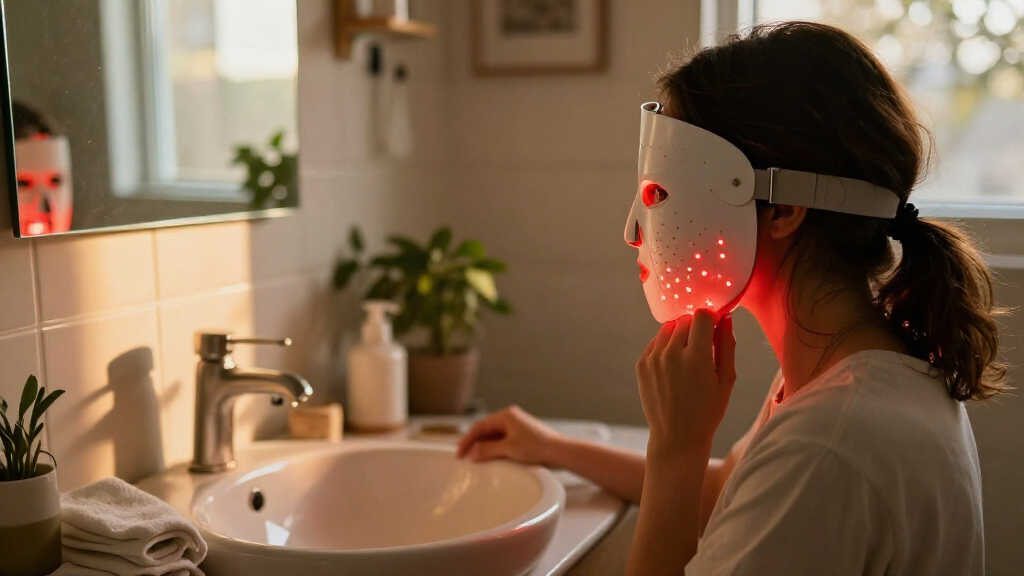
I compared the 15 devices by the choices buyers actually face: treatment format, coverage, usability, and setup demands. Panels were judged for their potential to serve multiple body areas and the practical differences between compact and larger models. Masks, belts, pads, mats, and handheld options were compared on how directly their shape supports targeted use, how much positioning they require, and whether their format is likely to fit a repeatable home routine.
The ranking favors versatility and a clear use case over a long feature list. I also weighed build and accessory details where supplied, the likely space and maintenance demands, and the tradeoff between focused coverage and flexibility. Products with similar names or overlapping specifications are treated as close alternatives rather than assumed to perform differently; buyers should confirm the exact model and included items. These devices are not ranked as medical treatments, and the list does not claim that a particular wavelength or form factor guarantees a health outcome.
Factors to Consider When Choosing Best Red Light Therapy Devices
Choosing among red light therapy devices starts with the shape of the session you will actually do, not the most impressive-looking specification. I would settle the coverage, placement, and routine questions first, then compare device details within the format that suits you.
Match the device shape to the area you want to treat
A panel suits buyers who want flexibility across different body areas, but it asks you to position yourself at a consistent distance and may require a stable place to mount or set it. A mask, belt, pad, or mat makes placement more straightforward for a specific area, though that focus can become limiting if your needs change. Before buying, identify the area you expect to use the device on most often and check whether its dimensions and shape can cover it comfortably. A small face mask is not a substitute for a body panel, and a body belt may not sit securely where you want it. Choosing for the real routine is more useful than choosing the format with the most impressive-sounding coverage claim.
Compare coverage and positioning, not just LED counts
LED count alone does not tell you how much of your target area receives light or how evenly the device covers it. A larger panel can cover more space, while a compact panel may be easier to position and store; neither is automatically the better choice for every household. Check the product’s usable dimensions, recommended distance, and whether the light reaches the area you intend to address without awkward posture. For wearable products, consider whether straps or the device shape keep the light in place during a session. Treat wavelength and output figures as part of the comparison, not a promise of results on their own.
Choose a routine you can repeat
Ease of setup can matter more over time than adding another feature. A face mask or belt may take less positioning than a panel, while a mat can reduce the need to hold or aim a device. On the other hand, wearables can feel restrictive, and a mat takes space even when it is not in use. Think through where the device will live, how you will clean it, and whether a cord, stand, strap, or controller affects access. If a session requires rearranging the room every time, a simpler format may be a better match than a larger unit.
Know when paying more makes sense
A larger or more capable panel may be worthwhile if you want to use one device across several body areas and have room for a consistent setup. For one defined target area, a focused mask, belt, pad, or smaller panel may avoid paying for coverage you will not use. Premium features should solve a real problem for you, such as easier positioning, broader treatment area, or a more convenient routine. Do not assume a higher wattage figure or a larger LED count alone means a better fit. Compare the full setup, including stand, mounting needs, and the space the device occupies.
Verify model details and practical safety information
Some listings use similar names for devices with different sizes or accessory bundles, and this roundup includes two Viconor lamps with matching stated light specifications. Check the exact model, dimensions, included stand, controls, warranty terms, and return policy on the listing before purchasing. Follow the manufacturer’s instructions for distance, session length, cleaning, and eye protection; do not improvise a routine from another device’s directions. If you have a health condition, take photosensitizing medication, or have concerns about eye exposure, ask a qualified clinician whether use is appropriate. A home light device should not replace medical evaluation or prescribed care.
Frequently Asked Questions
Should I choose a panel or a wearable device?
Choose a panel if you want to use one device across different areas and can manage its positioning and storage. A wearable mask, belt, pad, or mat is more direct when you have a defined target area and prefer the device to sit against or near it. Wearables can be easier to fit into a routine, but their shape limits where they can be used. Panels offer more flexibility, though they usually require more deliberate setup. The right choice depends on where you plan to use it most often and whether you will keep up with the session routine.
Is a higher wattage panel automatically the better choice?
No; a wattage label by itself does not establish how well a device suits your needs or what outcome to expect. Compare treatment area, recommended distance, light specifications, controls, and setup requirements alongside the stated wattage. A more powerful or larger unit can make sense for broader coverage, but it may take more room and require more careful positioning. For a small, defined area, a compact panel may be easier to use consistently. Follow the manufacturer’s instructions rather than assuming one panel’s routine applies to another.
When does a face mask make more sense than a panel?
A face mask is a more focused choice if your routine is specifically facial and you want a device shaped for that area. Models such as the Shark CryoGlow and iRestore are not replacements for broader body coverage, so their appeal depends on that narrower purpose. A panel may be more adaptable across face and body areas, but it requires you to position yourself and manage distance. Compare fit, eye-safety directions, session controls, and any added features that matter to you. If your intended use extends beyond the face, a mask may leave you needing another device.
What should I check before buying a device with a similar model name?
Confirm the full model name and product dimensions, since similar listings can refer to different sizes or bundles. Check which accessories are included, especially stands, straps, controllers, or mounting hardware, rather than assuming the product photos show everything in the box. Read the usage and care instructions and review warranty and return terms before purchase. In this lineup, the Viconor lamps have the same stated wavelengths, so the exact listing details matter when distinguishing them. If a specification is missing or unclear, verify it with the manufacturer or seller before relying on it.
Can I use a red light therapy device alongside medical treatment?
That depends on your health circumstances, medication, and the device’s intended use, so do not treat a home device as a substitute for professional care. Ask your clinician before use if you have a medical condition, take medication that may increase light sensitivity, or are unsure about eye exposure. Follow the device maker’s directions for placement, timing, and protective measures. Avoid extending sessions or combining devices based on assumptions that more exposure is better. Seek medical advice for symptoms or conditions that need diagnosis or treatment.
Conclusion
For buyers who want one adaptable starting point, I recommend the BestQool 105W panel as best overall; it makes a stronger all-purpose case than the lineup’s area-specific wearables. The Best value pick is the BestQool 50W panel for those who want a compact panel format without moving up to a larger model. For a more panel-focused setup, consider the Hooga PRO300 as best premium, while the Hooga HG200 is my best-for-beginners choice for a simpler, smaller panel entry point. Choose the Shark CryoGlow or iRestore for face-focused use, a Lifepro or BestQool belt for targeted body placement, the Comfytemp mat for a hands-free surface, or the LifePro torch when portability and precise aiming matter most. If none of those use cases is clear, decide first which area you will treat and where the device will live; that choice narrows this lineup more reliably than a headline specification.