
TL;DR
LED light therapy operates via photobiomodulation, primarily targeting mitochondria to boost cellular energy. Evidence supports modest skin improvements like fine lines and acne, but many claims remain unproven. It’s generally safe if used as directed, with results taking weeks to appear.
Imagine a gentle glow that could boost your skin’s vitality without a needle or chemical. LED light therapy offers just that—an intriguing, non-invasive approach rooted in science but often wrapped in marketing hype.
This guide peels back the layers of claims, exploring what’s actually supported by research, what remains speculative, and what safety precautions you should keep in mind. If you’re curious about whether that red mask really works or if a blue light can clear your skin, read on.
LED light therapy influences cellular activity through cytochrome c oxidase, boosting energy production and gene signaling.
Most evidence supports modest skin improvements—like fine lines and acne—while many other claims lack strong proof.
Safety is high when used correctly, but eye protection and caution with medications or skin conditions are essential.
Device specifications—wavelength, irradiance, and treatment protocol—are critical for effectiveness.
Results take weeks; patience and consistency matter more than aggressive sessions.
How Does LED Light Therapy Actually Work in Your Cells?
LED light therapy’s core is photobiomodulation—a fancy term for how light influences cells. It all starts with cytochrome c oxidase, an enzyme in mitochondria, the cell’s power plants. When this enzyme absorbs red or near-infrared light, it releases nitric oxide, freeing up energy production.
Think of it like waking up a tired workforce: the mitochondria, after absorbing the light, ramp up their production of ATP—the energy currency of cells. This boost in energy can help cells repair damage, fight inflammation, and grow new tissue. For example, in skin healing, this process is akin to giving your skin cells a gentle wake-up call, encouraging them to renew and repair more efficiently.
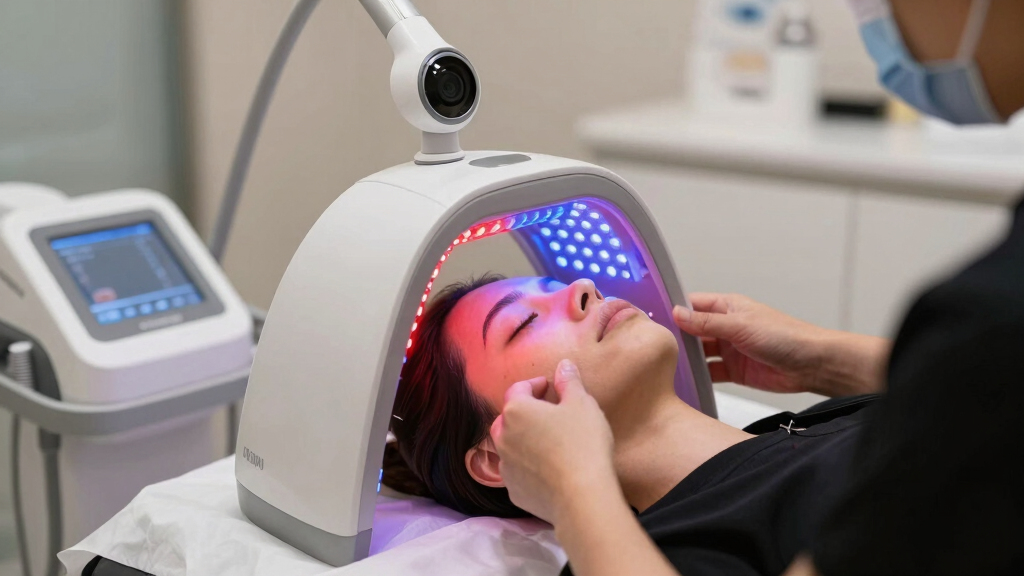
The wavelengths matter because they determine how deep the light penetrates. Blue (~415 nm) mostly stays near the surface, affecting superficial skin layers; red (~630–660 nm) penetrates a few millimeters, impacting the skin’s middle layers; near-infrared (~810–850 nm) reaches deeper tissues like muscles or joints. Imagine shining a flashlight: the color and intensity influence how far the light travels and which tissues it energizes.
However, dose is critical. Too little, and the cells don’t respond; too much, and it can inhibit activity—a biphasic response. This is similar to how some medications can be beneficial in small doses but harmful in larger ones. Therefore, device specifications and treatment protocols are essential to achieve the desired biological effect without overdoing it.
As an affiliate, we earn on qualifying purchases.
What Scientific Evidence Supports LED Therapy for Skin and Hair?
The strongest scientific support for LED therapy exists in treating skin conditions and hair loss. For example, clinical trials have shown that red and near-infrared light can stimulate collagen production, leading to improved skin elasticity and reduction of fine lines—similar to how a gentle facelift might work but without surgery. These effects are usually modest but meaningful for many users. For instance, some individuals report a noticeable glow or smoother skin texture after a few months of consistent treatments.
In acne treatment, blue light specifically targets *C. acnes* bacteria, which are responsible for many breakouts. Think of blue light as a targeted antibacterial treatment that reduces inflammation and bacterial load, leading to clearer skin. Some dermatologists use blue light therapy as part of acne management, especially for mild to moderate cases.
Regarding hair loss, devices like laser caps and combs are FDA-cleared based on evidence that low-level light can stimulate dormant hair follicles. This is akin to waking up a sleeping garden of plants—gentle stimulation encourages growth. Clinical studies have shown that after several months of regular use, some users experience increased hair thickness and new growth.
However, many other claims—such as weight loss, cellulite reduction, or mood enhancement—lack rigorous scientific backing. These are often based on small studies, short durations, or industry-funded research, which can introduce bias. Think of it like trying to prove a new diet works with only a few short-term tests—more research is needed before drawing firm conclusions.
In summary, the evidence suggests some benefits are real but modest, and many popular claims remain unproven. Recognizing where science stands helps set realistic expectations and guides better choices.
red and near-infrared LED light therapy mask
As an affiliate, we earn on qualifying purchases.
As an affiliate, we earn on qualifying purchases.
How Safe Is LED Light Therapy? Know the Risks Before You Try
LED therapy is generally safe when used properly. Because it’s non-invasive and doesn’t emit heat or UV radiation, it’s much safer than tanning beds or laser treatments. Think of it like a gentle, targeted light that energizes cells without burning or damaging the skin. Typical side effects are minor—temporary redness, dryness, or mild irritation—which usually resolve quickly.
However, safety considerations extend beyond minor skin reactions. High-powered near-infrared panels can pose risks to your eyes if not properly shielded. For example, using a powerful NIR device without protective goggles is like looking directly into a bright flashlight—potentially damaging your retinas over time. Always wear appropriate eye protection, especially with intense or high-frequency devices.
People on photosensitizing medications—such as isotretinoin for acne or certain antibiotics—may experience increased sensitivity to light, risking burns or irritation. Similarly, pregnant women or those with active skin cancer should proceed cautiously, as safety data is limited. It’s wise to consult a healthcare professional before starting treatment in these cases.
In darker skin tones, improper use can sometimes cause hyperpigmentation—darkening of certain areas—similar to a bruise that doesn’t fade. Starting with short sessions and monitoring your skin’s response can help prevent adverse effects. Think of it as gradually tuning a delicate instrument—slow, careful adjustments yield the best results.
Overall, safety hinges on following guidelines, using appropriate equipment, and listening to your body’s responses. When in doubt, seek professional advice to ensure your treatment is both safe and effective.
As an affiliate, we earn on qualifying purchases.
Why Device Specs Matter More Than You Think
| Feature | Impact on Effectiveness |
|---|---|
| Wavelength | Red (~630–660 nm) penetrates superficial layers like the skin’s outermost layer, affecting collagen and surface cells; near-infrared (~810–850 nm) reaches deeper tissues such as muscles or joints, promoting pain relief and tissue repair. For example, a device with the right wavelength can target specific skin issues or deeper muscular problems, much like choosing the correct key for a lock. |
| Irradiance | Higher irradiance delivers more energy per second, which can accelerate results but also risks overexposure, leading to skin irritation or reduced effectiveness. For instance, a device with high irradiance is like a powerful flashlight—effective if used correctly, but potentially damaging if misused. Finding the right balance is crucial. |
| Treatment Time | Longer sessions increase total energy delivered, but due to the biphasic response, more isn’t always better. Overexposure can inhibit benefits or cause adverse effects, similar to how too much sun can burn rather than tan. Optimal treatment duration depends on device power and target tissue, emphasizing the importance of following protocols. |
| Device Type | LED panels, masks, and handheld devices vary in power output, coverage area, and ease of use. For example, a large panel covers more skin quickly but may be less precise, while a handheld offers targeted treatment but requires more effort. Choosing the right device depends on your goals and comfort level, much like selecting the right tool for a job. |
When selecting a device, prioritize wavelength and irradiance because these determine how effectively the light interacts with your tissues. Cheaper devices often lack the proper power or precise wavelength control, which can limit their benefits. Investing in quality ensures you get a device that delivers consistent, safe, and effective treatment—think of it as choosing a reliable tool over a cheap, unreliable one.
LED photobiomodulation skin rejuvenation
As an affiliate, we earn on qualifying purchases.
As an affiliate, we earn on qualifying purchases.
How Long Before You See Results? What It Really Takes
Patience is key with LED therapy. Typically, visible improvements take about 4 to 12 weeks of regular use—roughly three to four sessions per week. For example, many users notice a subtle glow or smoother skin texture within the first month, similar to the way a plant slowly blossoms with consistent care.
Hair regrowth or thickening often takes longer—up to six months—since hair follicles need prolonged stimulation to transition from dormancy to active growth. Imagine waking a sleeping garden: it takes time for the buds to sprout after the first gentle nudge.
In acne, some individuals see fewer breakouts within a few weeks, but complete clearing can take several months. It’s important to understand that LED therapy is a gradual process—like tuning a musical instrument over time, not a quick fix.
Set realistic expectations: don’t expect overnight miracles. Think of it as a gentle, consistent routine that encourages your body’s natural renewal processes. Maintenance treatments are often necessary to sustain results, much like regular tune-ups keep a car running smoothly.
What You Can Do to Make LED Therapy Safer and Smarter
- Choose devices with wavelengths and power levels suited to your specific goals—e.g., red light for skin rejuvenation or near-infrared for deeper tissue healing. Think of selecting the right tool for a particular job.
- Start with short sessions—about 5 to 10 minutes—and gradually increase as your skin adapts, much like easing into a new exercise routine.
- Always wear protective goggles, especially when using high-powered near-infrared devices—similar to wearing sunglasses in bright sunlight—to shield your eyes from potential damage.
- Follow manufacturer instructions carefully to prevent overexposure, which can be likened to avoiding overcooking food—less is often more.
- Consult your dermatologist if you’re pregnant, on medications, or have skin concerns—think of this as consulting a specialist before undertaking a new project.
- Monitor your skin’s reaction and stop treatment if irritation or discomfort occurs—like listening to your body’s signals during exercise.
Approach LED therapy as a science-backed supplement to your wellness routine—patience, proper use, and listening to your body will help you maximize benefits while minimizing risks.
Frequently Asked Questions
Does red light therapy really work, or is it just hype?
Red light therapy has a modest body of scientific evidence backing its ability to improve skin texture, fine lines, and acne. However, it’s not a miracle cure. Results depend on consistent use and proper device choice.
Is LED light therapy safe for my eyes?
Generally, yes—if you wear protective goggles, especially with near-infrared devices. High-powered panels can pose risks to retinas if used without eye protection. Always follow safety instructions.
How long before I see results?
Most people notice changes after 4 to 12 weeks of regular use. Skin improvements tend to be subtle at first, while hair growth or acne reduction may take longer—up to several months.
Can I use LED therapy if I’m on medications or pregnant?
Consult your healthcare provider first. Medications like photosensitizing drugs or pregnancy can alter safety profiles. Limited data exists, so caution is wise.
What features should I look for when choosing a device?
Prioritize wavelength (red or near-infrared), irradiance levels, and device coverage. Avoid cheap models lacking clear specs. Proper technology makes all the difference in results and safety.
Conclusion
LED light therapy holds a scientifically plausible promise for supporting skin health and healing, but it’s not a miracle. Real benefits emerge slowly, with safety and proper device choice as your best guides.
Think of it as a gentle, science-backed nudge to your body’s natural processes—nothing more, nothing less. When approached with realistic expectations, it’s a smart addition to your wellness routine, not a shortcut to perfection.