📊 Full opportunity report: Selfie-Based Proof That A Skincare Routine Is Working on IdeaNavigator AI — validation score, market gap, and execution plan.

Get beauty and skincare favorites delivered free with Prime
- Fast, free delivery on millions of items
- Prime Video, Amazon Music and more included
- Member-only deals all year
TL;DR
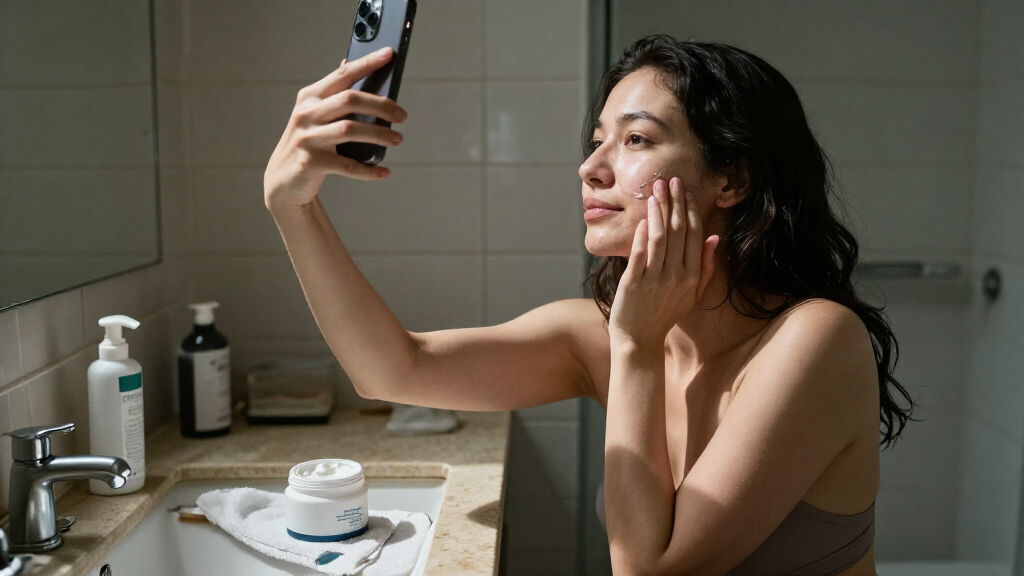
IdeaNavigator AI describes a proposed app that would use guided weekly selfies to track changes in skin texture, tone and blemishes alongside skincare routine changes. The concept has not been validated: its proposed next test is a 12-week study with 500 users and dermatologist assessments for a subset.
IdeaNavigator AI has outlined a proposed skincare app that would use guided weekly selfies to track changes in skin texture, tone evenness and blemishes, giving users a record to compare with routine changes. The proposal includes a 12-week test with 500 users, but no study results or evidence that the app’s measurements are accurate have been reported.
According to IdeaNavigator AI’s proposal, the app is aimed at people who spend money on skincare but are unsure whether their routines are helping. The plan describes spending of $50 to $200 a month as typical for its target user, but does not provide research supporting that range. It argues that judging gradual changes by memory and under different bathroom lighting can make it hard to tell whether a product is working.
For an initial product, IdeaNavigator AI proposes weekly guided photo capture, with instructions intended to keep selfie alignment and lighting consistent. The app would track selected skin measures over time, annotate changes to a user’s routine and show which changes came before measurable movement in those measures. This would record an association over time, not establish that a particular product caused an improvement.
The proposal describes a business model combining subscriptions and affiliate revenue from products associated with improvement among users. To test the idea, it recommends enrolling 500 people for 12 weeks, comparing the app’s measurements with dermatologist assessments of photographs for a subset, and measuring retention. The proposal does not include a launch, recruitment, results, pricing or a named commercial partner.
Testing Skincare Progress With Photos
If developed and validated, consistent photo records could give users a more structured way to review gradual skin changes than relying on memory or a single mirror check. That may help people notice patterns around routine changes and decide what to discuss with a dermatologist. At present, however, this is a proposed use case, not demonstrated consumer benefit.
The proposed comparison with dermatologist photo assessments matters because software-generated scores could be mistaken for clinical judgments. Before users rely on them, testing would need to show how closely the measures correspond with expert assessment, how consistently they perform across different skin tones and lighting conditions, and whether changes in scores are meaningful in everyday use.
The commercial model also creates a potential conflict to examine. If revenue depends partly on affiliate purchases, users would need clear disclosure about how recommendations are generated and whether product links affect what the app presents as helpful. IdeaNavigator AI’s proposal does not explain how it would manage that issue.
Popular right now

TCL QM64L 85-Inch QD-Mini LED 4K Smart Fire TV

Dyson Airwrap i.d. Multi-Styler for Straight and Wavy Hair

Ninja Foodi 10-Qt DualZone Smart XL Air Fryer, 6-in-1, DZ550
As an affiliate, we earn on qualifying purchases.
The Proposed Tracking Method
IdeaNavigator AI’s concept responds to a practical measurement problem: skin can change gradually, while products are often switched or continued based on impressions. A person’s photos can also vary with lighting, camera distance, angle and expression. The proposed guided capture process is meant to reduce some of that variation by standardizing how images are taken.
The proposal names texture, tone evenness and blemish counts as possible measures. It does not specify the model, scoring method, technical performance, privacy safeguards or how the app would account for factors such as temporary irritation, hormonal changes or a new treatment. Its suggested dermatologist comparison and retention tracking are intended as early validation steps, rather than proof that the tool already works.
IdeaNavigator AI frames the idea as a narrow first product for skincare users uncertain about their routines, within the beauty technology and skincare-app market. The proposal says the timing is favorable because guided photo capture and skin-metric models are available, but provides no independent evidence for its market-size or technology-readiness claims.
Accuracy and Study Details Await
No results are available for the cohort proposed by IdeaNavigator AI, and its material does not say whether the study has begun, who would conduct it or how participants would be recruited. The proposal also does not identify a dermatologist, research institution or independent evaluator.
Key methodological details remain unspecified, including how lighting would be normalized, what counts as improvement, how the app would handle varied skin tones and devices, and how dermatologist assessments would be compared with software scores. The proposed 12-week period may capture some short-term changes, but the material does not establish whether it would be long enough to evaluate every type of skincare routine.
The proposal presents no evidence that the app could distinguish a product’s effects from other influences, or that users would keep taking weekly photos. Its suggested affiliate model, data storage practices and protections for sensitive facial images are not described. Until those questions are addressed, the concept should not be treated as a validated way to determine whether a routine works.
A 500-User Validation Test
IdeaNavigator AI proposes a 12-week cohort of 500 users, with app-generated skin measures compared against dermatologist assessments of photos for a subset. The plan also calls for tracking retention, which could indicate whether users continue with weekly capture beyond initial use.
The material provided does not announce a start date, study protocol or results. Any report from a test would be more informative if it described participant characteristics, image-capture conditions, measurement accuracy, differences across skin tones and how the app handled routine changes. Until such evidence is available, the proposal remains an untested product concept rather than proof that selfie analysis can reliably show whether skincare is working.
Source: IdeaNavigator AI proposal
Key Questions
Has a selfie-based skincare tracking app launched?
The IdeaNavigator AI material describes a proposed app concept. It does not confirm a product launch or identify an app available to consumers.
What would the proposed app measure?
According to the proposal, it would use guided weekly selfies to track skin texture, tone evenness and blemish counts, while recording changes to a user’s routine.
Has the app been shown to identify products that work?
No. The proposal reports no validation results. Its suggested study would look at whether app measures align with dermatologist photo assessments; tracking which changes preceded a score change would not by itself prove causation.
How would the concept be tested?
IdeaNavigator AI proposes a 12-week cohort of 500 users, dermatologist photo assessments for a subset and measurement of user retention. The material does not state whether that study has started.
Could affiliate links affect product recommendations?
The proposal’s business model includes affiliate revenue from products associated with user improvement, but it does not explain recommendation rules or disclosures. Those details would matter for judging the independence of product suggestions.
Source: IdeaNavigator AI