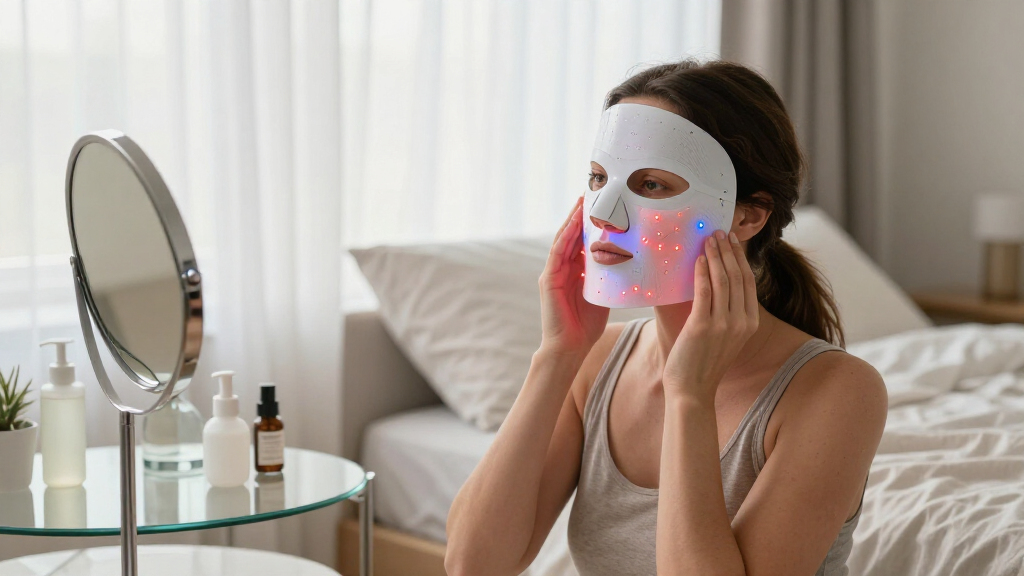
Professional LED facial masks bring clinic-grade red and near-infrared light therapy into your home, but the gap between a genuinely effective device and an overpriced novelty is wide. The CurrentBody Skin LED Face Mask Series 2 earns my best overall pick for its clinically backed light output and medical-grade design, while the INIA GLOW 4D stands out for full face-and-neck coverage with dual NIR wavelengths, and the budget-friendly Wavytalk Glow Time mask proves you don’t need to spend four figures for credible 850nm therapy. The main tradeoff in this category is price versus verifiable specifications: many cheap masks list seven colors but underdeliver on irradiance, while premium models justify their cost with FDA clearance, real LED counts, and consistent power delivery. Comfort, corded versus wireless use, and whether the mask treats your neck alongside your face also separate the field. Keep reading for the full breakdown of all 15 masks, ranked by performance, evidence, and value.
Get ready for Prime Big Deal Days — try Prime free
Exclusive member deals on October 6–7, plus fast free delivery. Cancel anytime.
Start your free trialAs an affiliate, we earn on qualifying purchases.
Complete the kit


Key Takeaways
- FDA clearance became the clearest dividing line in this roundup: only the CurrentBody Series 2, Aphrona Moonlight, and the FDA-cleared silicone mask offer documented regulatory backing, which matters most for anyone treating acne or wrinkles seriously.
- Near-infrared (NIR) at 850nm separates meaningful anti-aging devices from surface-level glow masks — the INIA, Wavytalk, iRestore, and INIA GLOW all include it, while several budget 7-color masks rely on visible red light alone.
- Face-and-neck coverage (IFAE, 4D Contour-Fit, Red Light Therapy Face & Neck wireless, INIA GLOW) costs more but addresses a real gap, since standalone face masks leave the neck untreated — the area where aging often shows first.
- LED density matters more than color mode count: the Aphrona Moonlight’s 450 chips and INIA GLOW’s 320 LEDs deliver noticeably more even coverage than masks with vague or low diode counts, regardless of how many color settings they advertise.
- Unique features only justify premiums when they solve a real problem — the Shark CryoGlow’s under-eye cooling is the only genuinely novel add-on here, while most other ‘7-color’ masks duplicate modes you’ll rarely use after the first week.


More Details on Our Top Picks
INIA Red Light Therapy Mask for Face, 850nm NIR, Red/Blue LED Light 4 Modes
This option stands out for its dual-wavelength approach that pairs visible red light with 850nm near-infrared, reaching deeper skin layers where collagen is actually produced. With 220 LED chips at 105mW/cm², its energy output is well above what the 90-LED salon mask further down this list delivers, and that output gap matters — higher irradiance means shorter, more effective sessions. Compared with the 7-color FDA-cleared silicone mask, the INIA trades spectral variety for depth and intensity, which is the smarter trade if anti-aging rather than acne is the priority. The four modes keep treatment logic simple instead of overwhelming. The honest drawback: results take weeks of consistency, and sessions run up to 30 minutes, so this pick makes the most sense for disciplined users building a routine.
Pros:- 850nm near-infrared reaches deeper skin layers than visible-only masks
- 105mW/cm² output exceeds most masks in this price class
- Four straightforward modes instead of confusing color menus
- Rechargeable controller with 10/20/30-minute timer options
Cons:- Visible improvement requires weeks of committed use
- Up to 30-minute sessions are long for busy schedules
- Limited blue-light focus makes it weaker as a primary acne tool
Best for: Consistent users focused on anti-aging and collagen support who can commit to near-daily sessions
Not ideal for: Anyone expecting fast results or dealing with severe skin conditions — this is a gradual, maintenance-oriented device
- Wavelengths:620nm, 630nm, 460–470nm, 850nm
- LED Chips:220
- Energy Output:105mW/cm²
- Light Modes:4
- Battery Capacity:2600mAh
- Session Timer:10, 20, 30 minutes
- Power Source:Rechargeable controller
Our verdict“The strongest all-around pick for buyers who want clinical-grade depth and power for aging skin, provided they stick with the routine.”
FDA-Cleared LED Light Therapy Mask, 7-Color Red Light Therapy for Face, Anti-Aging, Wrinkle Reduction & Acne, Rechargeable Soft Silicone Home Skincare Device
FDA clearance is rare at this price point, and it changes the calculus: buyers get a device with reviewed safety and efficacy claims rather than marketing copy. The soft silicone construction flexes to hug facial contours, solving the light-leakage and comfort problems common to rigid masks like the Wavytalk. Seven wavelengths and five intensity levels let one device serve multiple concerns — something the INIA’s four-mode system doesn’t attempt. The tradeoff is honest: with only 70 LEDs, its per-session power trails the INIA’s 220-chip array, so results build more gradually. Battery life of 8–12 sessions per charge beats most competitors here. This pick makes the most sense for first-time buyers who want regulatory reassurance and versatility over raw intensity.
Pros:- FDA clearance provides validated safety and efficacy claims
- Flexible silicone fits face shapes that rigid masks miss
- 8–12 sessions per charge reduces charging hassle
- Seven wavelengths and five intensity levels cover multiple concerns
Cons:- 70 LEDs produce lower irradiance than premium rivals
- Results require several weeks of 3–5 weekly sessions
- 10–20 minute sessions add up for busy users
Best for: First-time LED mask buyers who want FDA-cleared safety and one device for wrinkles, acne, and tone
Not ideal for: Power-seekers wanting maximum irradiance — 70 LEDs deliver gentler, slower results than higher-count masks
- FDA Clearance:Yes
- Number of LEDs:70
- Color Wavelengths:7
- Adjustable Intensity Levels:5
- Battery Life:8–12 sessions per charge
- Session Duration:10–20 minutes
- Material:Soft silicone
- Recommended Use:3–5 times weekly
Our verdict“The smartest entry point for cautious buyers who value FDA clearance and all-purpose versatility over headline power numbers.”
Wavytalk Red Light Therapy Mask for Face, Glow Time LED Face Mask 850nm NIR
Where most masks in this roundup cluster around 70–220 LEDs, the Wavytalk brings 456 high-purity chips — the densest array in this batch — which translates to more even light delivery across the entire face with fewer dim spots near the hairline and jaw. Its four-wavelength mix (630nm red, 850nm NIR, 415nm blue, 590nm amber) matches the INIA’s depth while adding an acne-fighting blue channel. The catch is power density: 40mW/cm², meaning that big LED count is spread thin — the INIA concentrates more than double the irradiance. It also ships without a USB-C charger, an odd omission at this tier. This model is better suited to buyers who prioritize coverage and multitasking comfort, while intensity-first shoppers should lean toward the INIA.
Pros:- 456 LEDs deliver the most even full-face coverage in this batch
- Four wavelengths including blue light for acne
- Clinically backed visible improvement claims
- Adjustable, comfortable fit suited to multitasking
Cons:- 40mW/cm² power density trails the INIA by a wide margin
- Charger not included — an extra purchase and delay
- Battery needs frequent recharging with regular use
Best for: Buyers who want maximum facial coverage and even light distribution for combined anti-aging and acne goals
Not ideal for: Irradiance-focused buyers — 40mW/cm² is modest despite the large LED count, and the missing charger is annoying
- Wavelengths:630nm red, 850nm NIR, 415nm blue, 590nm amber
- LED Chips:456 high-purity
- Power Density:40mW/cm²
- Battery:2500mAh
- Charging:USB-C, 5V/1A (charger not included)
- Coverage:Full face
Our verdict“Choose this for blanket coverage and multi-convenience treatment; skip it if raw intensity is your priority.”
7-1 Colors Red Light Therapy Face Mask, LED Facial Skin Care Mask for Home & Salon
Two weeks of sessions — 14 treatments on a single charge — is a claim nothing else in this roundup can touch, and it explains the “home & salon” positioning: practitioners don’t want to charge between clients, and neither do travelers. The seven-color spectrum rivals the FDA-cleared silicone mask’s versatility at what is typically a lower price. But the 90 LED beads sit near the bottom of this batch for output, well behind the Wavytalk’s 456, so treat this as a maintenance and versatility device rather than an intensive corrector. Compared with the budget 7-color portable mask below, it offers the same spectral range with far better endurance. This pick makes the most sense for anyone who charges devices infrequently and wants set-and-forget convenience.
Pros:- 14 sessions per charge is the best endurance here by far
- Seven light colors cover a wide range of skin concerns
- Fully cordless and portable for salon or travel use
- Safe and simple enough for all skin types
Cons:- 90 LEDs produce the weakest intensity among these picks
- Fixed 15-minute sessions offer no timer flexibility
- Effectiveness varies noticeably by skin condition
Best for: Salon professionals, frequent travelers, and forgetful chargers who need weeks of cordless use
Not ideal for: Buyers chasing strong anti-aging results — 90 LEDs deliver the gentlest output in this batch
- Light Colors:Red, Blue, Yellow, Green, Purple, Cyan, White
- LED Beads:90
- Usage Time:2 weeks (14 sessions) per charge
- Session Duration:15 minutes
- Power Source:Cordless, rechargeable
- Skin Types:All skin types
Our verdict“The endurance champion for on-the-go or professional use, as long as gentle output meets your expectations.”
LED Face Mask Light Therapy for Skin Care – 7 Colors, Rechargeable, Portable
As the entry rung of this lineup, this mask trades specs for accessibility: seven light modes including an auto-cycle option that removes guesswork entirely — press once and rotate through treatments. It’s the lightest, most travel-ready option here, and unlike the Wavytalk it charges over standard USB with nothing extra to buy. The compromises are real, though: the listing publishes no wavelength, LED count, or power figures, which makes outcome expectations hard to set compared with the fully specified INIA or the FDA-cleared silicone mask. Think of this as a low-commitment way to test whether LED therapy fits your routine before investing in a serious device. Buyers with defined anti-aging goals should step up a tier rather than start here.
Pros:- Lowest barrier to entry for trying LED therapy
- Auto-cycle mode eliminates mode-selection guesswork
- Lightweight, cordless design works for home and travel
- USB charging with no accessories to buy
Cons:- No published wavelengths, LED count, or power output
- Almost certainly lower intensity than specified rivals
- Requires charging between uses
Best for: Curious beginners and budget-limited buyers testing LED therapy before committing to a premium mask
Not ideal for: Results-driven buyers — the absence of published wavelengths and LED counts makes efficacy impossible to judge
- Light Modes:7 plus auto-cycle
- Power Source:Rechargeable lithium battery
- Charging:USB
- Material:Soft, skin-friendly
- Skin Types:All skin types
- Portability:Cordless, travel-friendly
Our verdict“A reasonable toe-in-the-water purchase for experimentation, not a serious tool for measurable skin goals.”
7 Colors Red Light Therapy Facial Mask, Rechargeable LED Skin Care Mask
For shoppers who want to dabble in LED therapy without a big spend, this mask keeps things simple: seven color modes, a rechargeable battery, and gentle non-thermal output that makes daily use painless. Compared with the IFAE mask’s 396 LEDs, its 88 beads deliver noticeably lower light density, so expectations should be modest — think subtle glow maintenance rather than aggressive anti-aging work. The silicone padding and adjustable headband make it comfortable for 10–15 minute sessions, though the short session ceiling and variable battery life mean it demands more frequent recharges than higher-capacity rivals like the INIA with its 2600mAh battery. This pick makes the most sense for someone testing whether LED masks fit into their routine before committing to a premium device.
Pros:- Seven light modes offer flexibility for different skin concerns
- Rechargeable and portable design suits travel and small bathrooms
- Gentle non-thermal LEDs are safe for daily use
- Comfortable fit with adjustable headband
Cons:- Only 88 LED beads — far less light density than 300+ bead competitors
- Sessions capped at 10–15 minutes with battery life that varies by mode
- No documented clinical claims or improvement guarantees
Best for: Skincare beginners and budget-conscious buyers who want to try LED therapy with minimal financial risk
Not ideal for: Anyone chasing measurable wrinkle or acne results — the low bead count and ≤5mW per-bead output lack the power of premium options
- Number of LED Beads:88
- Light Modes:7 (red, blue, green, yellow, purple, cyan, white)
- Battery Life:Up to 2 hours
- Power per Bead:≤5mW
- Material:Silicone padding
- Session Length:10–15 minutes
Our verdict“A low-commitment entry point for curious beginners, but serious results-seekers should invest in a higher-output mask.”
IFAE Red Light Therapy Mask for Face and Neck with 396 LEDs
This model stands out for treating the face and neck as one zone — something most masks in this roundup, including the CurrentBody Series 2, ignore entirely. With 396 LEDs spanning blue, red, and 850nm near-infrared, it covers the three wavelengths with the most research behind them, and the medical-grade silicone construction feels closer to clinic equipment than the flimsier budget options. The 180-minute battery life beats the 2000mAh face-neck-chest mask from product 9, meaning fewer mid-week recharges. The tradeoffs are real: results demand weeks of consistent sessions, the digital control panel has a learning curve the simpler 7-color mask avoids, and the price sits well above entry-level. Buyers comparing it against the INIA should note IFAE adds neck coverage but lacks INIA’s higher per-chip energy output.
Pros:- 396 LEDs with clinically relevant blue, red, and near-infrared wavelengths
- Extended neck coverage most competing masks lack
- Up to 180 minutes of battery per charge
- Medical-grade silicone with upgraded eye shields for comfort
Cons:- Requires weeks of consistent use before visible results appear
- Digital display and controls add complexity compared to simpler masks
- Priced well above basic seven-color alternatives
Best for: Buyers who want neck and jawline treated alongside the face, with clinic-style multi-wavelength coverage
Not ideal for: Impatient users or first-timers — the complex digital controls and weeks-long commitment curve are overkill for casual experimentation
- LED Colors:460nm blue, 660nm red, 850nm near-infrared
- Number of LEDs:396
- Material:Medical-grade silicone
- Battery Life:Up to 180 minutes per charge
- Design:Adjustable straps, upgraded eye shields
- Timer:Built-in automatic timer
- Coverage:Face and neck
Our verdict“The smart choice if neck lines and jowls are part of your concern — just be prepared for a learning curve and patient commitment.”
INIA Red Light Therapy Mask for Face, 850nm NIR, Red/Blue LED Light 4 Modes
Where most masks in this roundup prioritize LED count, the INIA wins on raw energy delivery: up to 105mW/cm², which places it closer to salon equipment than anything else in this batch. That output matters because light intensity, not just bead quantity, drives how deeply wavelengths like 850nm near-infrared penetrate the skin. Compared with the 7-color budget mask’s ≤5mW per bead, this is a different category of treatment. The 2600mAh battery and flexible 10/20/30-minute timer options give users more session control than the fixed short sessions of cheaper rivals. The flip side: with only 220 chips, coverage per session is narrower than the 680-bead face-neck-chest mask, and results still require four-plus weeks of disciplined use. This is a tool for people who treat skincare as a routine, not a whim.
Pros:- Highest energy output in this batch at up to 105mW/cm²
- Four clinically grounded wavelengths including 850nm near-infrared
- Flexible 10, 20, or 30-minute timer settings
- Large 2600mAh battery supports extended routines
Cons:- Visible results take over four weeks of consistent sessions
- 220 LED chips cover less area than 396–680 bead competitors
- Premium pricing relative to basic masks
Best for: Results-driven users who want maximum energy intensity and prioritize anti-aging power over gimmick color modes
Not ideal for: Buyers wanting full neck and chest coverage — the face-only design and 220 chips cover less surface area than larger masks
- Wavelengths:620nm, 630nm, 460–470nm, 850nm
- LED Chips:220
- Energy Output:Up to 105mW/cm²
- Battery Capacity:2600mAh
- Session Timer Options:10, 20, 30 minutes
- Light Modes:4
Our verdict“The strongest pick for intensity-focused anti-aging, as long as you accept face-only coverage and a patient timeline.”
Red Light Therapy Mask for Face & Neck, Wireless LED Face Mask, 4 Modes
This mask splits the difference between the IFAE’s premium neck coverage and budget models’ limited scope: 680+ beads across face, neck, and chest at a friendlier price point. That three-zone coverage is genuinely rare — even the CurrentBody Series 2, which costs considerably more, treats only the face. The four modes (red, blue, amber, and near-infrared) hit the wavelengths that matter, and the amber 605nm option adds a redness-soothing channel that pure red/blue masks skip. Tradeoffs include the modest 2000mAh battery, which trails the INIA’s 2600mAh and needs Type-C top-ups to sustain a weekly routine, and capped session times that frustrate users wanting longer treatments. It’s also not a substitute for professional intervention on severe acne or deep scarring — think maintenance and prevention rather than correction.
Pros:- 680+ light beads covering face, neck, and chest in one session
- Amber 605nm mode for redness and sensitivity alongside standard wavelengths
- Wireless Type-C rechargeable design works for travel
- Soft silicone build suits all skin types
Cons:- 2000mAh battery requires frequent charging for a consistent routine
- 20-minute session cap limits treatment flexibility
- Output too gentle for severe skin concerns
Best for: Value-conscious buyers who want face, neck, and décolletage treated in one device without paying premium prices
Not ideal for: Anyone with severe acne or advanced skin damage — this is a maintenance device, not a professional-grade treatment substitute
- Light Beads:680+
- Light Modes:Red (630nm), Blue (460nm), Amber (605nm), Near-Infrared (850nm)
- Battery Capacity:2000mAh
- Charging:Type-C
- Usage Time:120 minutes per week
- Session Duration:10–30 minutes
- Coverage:Face, neck, and chest
Our verdict“The most coverage per dollar in this batch — ideal for all-over maintenance, provided your concerns are mild to moderate.”
CurrentBody Skin Red Light Therapy LED Face Mask Series 2
CurrentBody has become the reference brand in at-home LED, and the Series 2 earns its premium slot through thoughtful engineering rather than headline specs. Its three wavelengths — including the less common 1072nm deep near-infrared — target collagen at multiple skin depths, while the flexible liquid silicone conforms to facial contours in a way rigid masks like the Aphrona Moonlight cannot. The NFC card personalization is a genuine differentiator, adapting treatment programs instead of offering one-size-fits-all modes like the 680-bead wireless mask. That said, buyers should be clear-eyed: 236 LEDs is fewer than several cheaper rivals, coverage stops at the face, and contraindications need reviewing before first use. You’re paying for wavelength sophistication and fit quality, not raw bead counts — and for aging-focused users, that’s usually the right trade.
Pros:- Unique 1072nm deep near-infrared wavelength reaches deeper skin layers
- Flexible liquid silicone contours to individual face shapes
- NFC technology tailors programs to the user
- Established brand with strong track record in LED skincare
Cons:- Only 236 LEDs — fewer than several cheaper masks in this roundup
- Face-only coverage excludes the neck and chest
- Contraindications require careful review, and price is among the highest here
Best for: Anti-aging-focused buyers willing to pay a premium for multi-depth wavelengths, superior fit, and a trusted brand
Not ideal for: Budget buyers or those wanting neck coverage — it’s face-only and priced well above equally powerful alternatives
- Wavelengths:Red (633nm), Near-infrared (830nm), Deep near-infrared (1072nm)
- LED Bulbs:236
- Material:Liquid silicone
- Features:NFC card for personalized results
- Coverage:Face
- Design:Flexible contoured silicone
Our verdict“The premium pick for fine-line and collagen-focused buyers who value wavelength science and fit over LED count — skip it if you need neck coverage on a budget.”
Shark CryoGlow LED Face Mask, Red Light Therapy, Under-Eye Cooling
No other mask in this lineup does what the CryoGlow does: it pairs red, blue, and infrared light with temp-controlled under-eye cooling via clip-on Chill Pads. That combination makes it the only option here that treats puffiness and dark circles in the same session as fine lines and breakouts. Compared with the Aphrona Moonlight, which limits you to red and blue light, the CryoGlow’s four distinct treatment modes give it far more range for someone juggling multiple skin concerns. The tradeoff is customization — cooling intensity and session structure are more fixed than I’d like, and the price sits above simpler masks like the 4D Contour-Fit. Results also demand patience; weeks of consistent use before changes show. Still, for a one-device routine, this stands out for its breadth.
Pros:- FDA-cleared and clinically tested for safety and effectiveness
- Unique under-eye cooling tackles puffiness no other mask here addresses
- Four distinct treatment modes cover aging, acne, and maintenance
- Adjustable fit works across a range of face shapes
Cons:- Cooling intensity and treatment duration are not fully customizable
- Priced well above basic single-color masks
- Visible results require weeks of committed use
Best for: Buyers dealing with multiple concerns at once — aging, acne, and under-eye puffiness — who want one device instead of three
Not ideal for: Budget shoppers or anyone wanting granular control over cooling levels and session length, since customization is limited
- Light Colors:Red, Blue, Infrared
- Cooling Technology:Temp-controlled under-eye Chill Pads
- Treatment Duration:6 to 15 minutes
- Treatment Modes:Better Aging, Skin Clearing, Skin Sustain, Under-Eye Revive
- Power Source:USB-C charging cable
- Included Accessories:Clip-On Chill Pads, remote
- Clearance:FDA-cleared, clinically tested
Our verdict“Buy the CryoGlow if under-eye puffiness and multi-concern treatment justify a premium — skip it if you only need straightforward red light therapy.”
4D Contour-Fit LED Light Therapy Mask for Face & Neck, Red Light Therapy Mask with 7 Colors & NIR Light, Rechargeable Cordless Facial Mask
Most masks in this roundup stop at the jawline — the 4D Contour-Fit doesn’t. With 272 face LEDs plus 128 dedicated neck LEDs, it treats the area where aging often shows first, something the iRestore and Shark CryoGlow simply can’t reach. The soft silicone construction and cordless design make longer sessions more comfortable than rigid masks, and the 4000mAh battery means you’re not tethered to an outlet like you are with the Aphrona Moonlight. The catch: seven color modes sound generous, but many buyers will realistically use two or three, and the flexible silicone delivers lower irradiance than hard-shell masks with concentrated chips. Sessions also run longer than the iRestore’s brisk 10 minutes. This pick makes the most sense for neck-line-focused routines rather than maximum power per session.
Pros:- Neck panel covers an area most masks ignore entirely
- Fully cordless with a large 4000mAh rechargeable battery
- 7 color modes plus NIR allow a tailored routine
- Soft silicone conforms to facial contours for comfort
Cons:- Longer treatment sessions than compact 10-minute rivals
- Premium price for a silicone-build device
- Requires regular charging and battery maintenance
Best for: Users whose concerns extend below the jawline — tech neck, chest-area fine lines — who want cordless flexibility
Not ideal for: Anyone chasing the highest light output per session, since flexible silicone spreads intensity across a larger treatment area
- LED Count (Face):272
- LED Count (Neck):128
- Color Modes:7
- Light Types:Red, NIR
- Battery:4000mAh rechargeable
- Material:Soft silicone
- Adjustable Straps:Yes
Our verdict“Choose the 4D Contour-Fit if neck coverage matters to you; if you only treat your face, a more concentrated mask delivers more power for the money.”
iRestore LED Face Mask for Youthful Skin, Red Light Therapy for Face, Red, Blue & Infrared Therapy
The iRestore wins on efficiency: 360 LEDs across three wavelengths packed into 10-minute sessions, three to five times a week. That’s the shortest commitment in this batch — the Aphrona Moonlight can stretch to 50 minutes, and the 4D Contour-Fit’s larger treatment area takes longer too. The triple-wavelength approach (635nm red, 830nm infrared, 415nm blue) covers collagen stimulation and breakout control without needing seven color modes you’ll never scroll through. The lightweight build lets you answer emails or make coffee mid-session, which is exactly why this model suits people who won’t sit still for a 30-minute routine. Drawbacks exist: very sensitive skin types should patch-test first, and unlike some competitors, no serums or accessories come in the box. Consistency remains non-negotiable for results.
Pros:- Quick 10-minute sessions — the shortest in this lineup
- 360 LEDs with triple-wavelength coverage of aging and acne
- Lightweight enough to multitask during treatment
- Suitable for all skin types with gradual use
Cons:- Results only appear with consistent multi-week use
- No serums or skincare products included
- Blue light may irritate very sensitive skin without testing
Best for: Time-pressed professionals who want a science-backed routine that fits into a coffee break
Not ideal for: Very sensitive skin without patch testing, or buyers expecting bundled skincare products with the device
- LED Count:360
- Wavelengths:Red (635nm), Infrared (830nm), Blue (415nm)
- Session Time:10 minutes
- Recommended Use:3-5 times per week
- Design:Lightweight, hands-free
- Skin Compatibility:All skin types (patch test sensitive skin)
Our verdict“If your skincare routine lives between meetings, the iRestore’s fast, no-fuss sessions make it the easiest pick to actually stick with.”
Aphrona FDA Cleared Moonlight LED Facial Mask for Skin Care, Red and Blue Light Therapy, 450 LED Chips
If raw light output per dollar is your metric, the Aphrona Moonlight leads this batch. Its 450 high-purity narrow-spectrum LED chips and 30-80mW/cm² energy output out-spec the iRestore’s 360 LEDs, and the FDA 510(k) clearance gives it credibility that unverified seven-color budget masks lack. The flexible 5-to-50-minute session range is genuinely useful — short maintenance bursts or longer intensive treatments, your call — whereas the Shark CryoGlow caps you at 15 minutes. The limitations are real, though: only red and blue light means no infrared collagen targeting, and the corded design restricts movement compared with the wireless INIA GLOW. It’s also positioned as a home device, not a salon-grade tool, so severe acne or deep wrinkles will outrun what it can do. For moderate concerns on a sensible budget, it earns its place.
Pros:- 450 LEDs — the highest chip count in this batch
- FDA 510(k) cleared for safety and effectiveness
- Wide 5-50 minute session range for flexible routines
- Hands-free, non-invasive design
Cons:- No infrared wavelength limits collagen-targeting depth
- Corded design restricts movement during use
- Underpowered for severe or clinical-level skin issues
Best for: Value-focused buyers who want FDA-cleared, high-density light therapy without premium-brand pricing
Not ideal for: Anyone with severe acne or deep wrinkles needing professional-grade intervention, or those wanting infrared wavelengths
- LED Chips:450 high-purity (99%) narrow-spectrum LEDs
- Wavelengths:630nm±5nm red, 415nm±5nm blue
- Energy Output:30 to 80mW/cm²
- Treatment Duration:5 to 50 minutes
- FDA Clearance:Yes, FDA 510(k) cleared
- Design:Hands-free, non-invasive
- Distribution:USA-distributed
Our verdict“The Moonlight is the smart buy for moderate anti-aging and acne goals when you want proven clearance and dense LED output without overspending.”
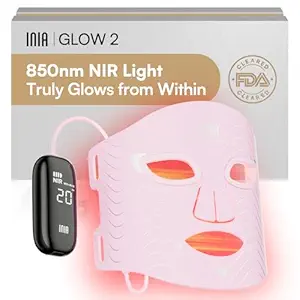
INIA GLOW 4D Wireless Red Light Therapy Mask for Face, Dual NIR, 320 LEDs
The INIA GLOW 4D sits at the premium end of this batch, and it earns it through versatility: dual near-infrared channels, four light modes including amber, a magnetic cooling gel pad, and full wireless freedom in medical-grade flexible silicone. Compared with the 4D Contour-Fit, it trades the neck panel for a more focused face treatment with a wider wavelength palette; compared with the Shark CryoGlow, its cooling is a soothing gel pad rather than a temp-controlled system, which some skin types will actually prefer. The 320 LEDs trail the Aphrona’s 450, but the dual NIR setup arguably delivers deeper, more targeted collagen work. The cost is real — this is one of the pricier options here — and like everything in this category, results take weeks of disciplined use. For buyers building a serious at-home routine, the flexibility justifies the spend.
Pros:- Dual NIR channels deliver deeper collagen-targeting than single-mode masks
- Four light modes including amber for tone and redness
- Magnetic cooling pad soothes skin post-treatment
- Medical-grade flexible silicone with fully wireless use
Cons:- One of the most expensive options in this lineup
- Cooling is a gel pad, not adjustable active cooling like the CryoGlow
- Requires several weeks of consistent use for visible change
Best for: Skincare enthusiasts building a long-term routine who want infrared depth, cooling comfort, and wireless freedom in one device
Not ideal for: First-time LED users unwilling to commit to weeks of sessions, or anyone on a tight budget
- LED Count:320 LEDs
- Light Modes:Red, Blue, Amber, Combo
- Technology:Dual NIR
- Material:Medical-grade flexible silicone
- Cooling:Magnetic cooling gel pad
- Wireless:Yes
- Coverage:Full face
Our verdict“The INIA GLOW 4D is the pick for committed users who want the widest treatment toolkit in a wireless mask — provided the premium price fits the budget.”

How We Picked
I ranked these 15 masks by weighing the factors that actually determine whether LED therapy works: light specification and output (wavelength accuracy, NIR inclusion, LED count and irradiance), regulatory clearance, coverage area (face-only versus face-and-neck), and build and usability including wireless operation, weight, and eye comfort. Devices with published specifications and clinical or FDA backing ranked above those with vague marketing claims, because an undocumented mask at any price is a gamble. I also factored in warranty and brand track record, since LED masks are an investment you’ll use for years.
The ranking logic follows a simple hierarchy: proven efficacy first, then coverage versatility, then comfort and convenience, and finally price-to-performance value. That’s why the CurrentBody Series 2 and INIA GLOW sit near the top despite their cost, while budget options like the Wavytalk and portable 7-color masks earn their places by delivering credible core therapy — 850nm NIR and rechargeable convenience — at a fraction of the price. Masks that trailed did so because of thin specifications, low diode density, or comfort problems that undermine consistent long-term use, which is the single biggest predictor of results with any light therapy device.
Factors to Consider When Choosing Professional LED Facial Masks
Before you commit to a mask, it helps to understand what actually drives results with LED therapy — and where buyers most often go wrong. These are the factors I weighed across all 15 products, explained in more depth than any single review allows.Wavelength and Light Output: The Only Specs That Matter
The single most common mistake buyers make is chasing color mode count instead of wavelength quality. Red light around 630–660nm targets surface concerns like fine lines and texture, while near-infrared at 850nm penetrates deeper to support collagen production — and it’s invisible, so a mask can claim NIR while showing only red light. Ask for the exact nanometer range and, ideally, irradiance (mW/cm²) figures; brands that publish these, like CurrentBody and INIA, tend to have something to stand behind. Blue light around 415nm is worth having only if acne is a primary concern, since it targets the bacteria behind breakouts. Green, yellow, and purple modes are largely decorative — you’ll stop selecting them within weeks. If anti-aging is your goal, a mask with strong red plus NIR will outperform a seven-color mask with weak output every time.
FDA Clearance Versus Marketing Claims
LED masks occupy a gray zone where any brand can print ‘clinically proven’ on the box, so FDA 510(k) clearance is your best proxy for legitimacy. Clearance means the device went through a regulatory review process for safety and stated claims — it doesn’t guarantee dramatic results, but it filters out devices with no documentation at all. In this roundup, only a handful carry it, and they consistently also published wavelength and output data, which is no coincidence. Be especially skeptical of masks that cite ‘studies’ without naming them, or that copy clinical language from other brands. If you’re treating a specific concern like acne or post-treatment recovery, clearance matters more; if you’re maintaining general skin health, a well-specified non-cleared mask can still be reasonable.
Coverage: Face-Only Versus Face-and-Neck
Most buyers don’t realize until months in that a face-only mask creates a visible treatment boundary at the jawline — the neck ages just as fast and gets zero benefit. Masks with attached or extended neck panels, like the IFAE, 4D Contour-Fit, and INIA GLOW, cost more and are bulkier, but they treat the area where sun damage and crepiness show first. The alternative is buying a separate neck device later, which almost always costs more than buying combined coverage upfront. Rigid masks also fit faces differently: contoured or flexible silicone designs sit closer to the skin, which matters because light intensity drops sharply with distance. If you wear the mask while walking around, prioritize wireless designs; if you’ll lie down for sessions, a corded mask with higher sustained output can be the better trade.
LED Count, Density, and Build Quality
LED chip count is a better quality signal than price — the difference between 100 scattered diodes and 450 densely packed ones (like the Aphrona Moonlight) is coverage evenness and total energy delivered per session. Density also determines treatment time: more diodes at proper output means you hit therapeutic thresholds in 10 minutes rather than 30, which directly affects whether you actually stick with the routine. Build quality shows up in the details: glare around the eye holes, strap comfort at the 10-minute mark, battery degradation over months, and whether the controller unit overheats. Cheaper masks often use lower-grade diodes that dim over time without you noticing — one reason a longer warranty is worth paying for. Read the warranty terms closely; a one-year warranty on a device marketed for daily multi-year use is a mild red flag.
Realistic Expectations and Consistency
LED therapy is a slow, cumulative treatment — most published studies showing improvement in fine lines ran 8 to 12 weeks with 3 to 5 sessions per week, and results plateau rather than transform. The biggest predictor of satisfaction isn’t the mask you buy; it’s whether you’ll actually complete 30-plus sessions. That makes comfort, session length, and routine integration genuine buying criteria, not luxuries. A mask that fits poorly or requires you to sit tethered to a wall for 20 minutes is a mask that ends up in a drawer. Buy the device whose treatment protocol fits your daily schedule, budget for roughly three months of consistent use before judging results, and take baseline photos — changes are gradual enough that you’ll miss them without a comparison point.
Frequently Asked Questions
Are expensive LED masks like the CurrentBody Series 2 actually better than $100 masks?
In most cases, yes — but the gap is narrower than pricing suggests. Premium masks justify their cost through verified irradiance, medical-grade construction, and published clinical data, meaning you know exactly how much light energy reaches your skin per session. A $100 mask with genuine 850nm NIR can deliver real results, but output often degrades faster and specifications are frequently unpublished, so you’re trusting the brand’s word. The honest answer is that expensive masks reduce risk and uncertainty rather than multiplying results. If budget allows, proven devices like CurrentBody or the Aphrona Moonlight are the safer bet; if not, stick to budget masks that at minimum specify their wavelengths and diode counts.
Do I really need near-infrared (850nm), or is red light enough?
For anti-aging goals, NIR is the more important of the two. Visible red light at 630–660nm works on surface-level concerns like texture and mild discoloration, but 850nm near-infrared penetrates several millimeters deeper, where collagen and elastin are actually produced. Most clinical studies on wrinkle reduction used red plus infrared in combination, not red alone. If your concerns are mostly acne-related, blue and red light matter more and NIR is optional. The good news is that most mid-range masks in this roundup include NIR — the INIA, Wavytalk, and iRestore all offer it at accessible prices — so you shouldn’t have to pay premium prices just to get it.
Is a face-and-neck mask worth the extra cost?
Usually yes, if you’re over 35 or concerned about jawline definition and neck texture. The neck is one of the first areas to show sun damage and crepiness, and a face-only mask leaves it completely untreated — creating a results boundary you may eventually notice at the jawline. Face-and-neck masks like the IFAE, 4D Contour-Fit, and INIA GLOW run higher in price and are heavier to wear, which can affect session consistency. A reasonable middle path: start with a quality face-only mask if you’re younger or on a budget, and treat the neck with a handheld or panel device later. If you already see neck aging, combined coverage from day one is the more efficient spend.
How long until I see results from an LED mask, and how often should I use it?
Plan on 8 to 12 weeks of consistent use — typically 3 to 5 sessions per week of 10 to 20 minutes each — before judging results. Most devices preset their session timers to match the duration used in supporting studies, so resist the urge to extend sessions; more light isn’t better past a threshold, and consistency beats intensity. Early changes usually appear as subtle improvements in tone and glow around week 4, with texture and fine-line changes following. Take a baseline photo under the same lighting before you start, because the changes are gradual enough to be invisible day-to-day. If you’ve completed 12 weeks of faithful use with zero change, the issue is likely the device’s output, not your routine.
Are LED face masks safe for eyes and darker skin tones?
Red and near-infrared light at therapeutic intensities is generally considered safe for skin of all tones — unlike lasers or IPL, LED therapy doesn’t rely on melanin-targeting, so there’s no burning risk tied to pigmentation. Eye safety is the more practical concern: even though most masks shield the eyes from direct diode exposure, some leak glare around the eye cutouts, and NIR exposure to eyes over hundreds of sessions isn’t well studied. Wearing opaque eye protection or closing your eyes during sessions is a sensible habit, and masks with built-in eye shielding ranked higher in my comparisons. Anyone with photosensitive conditions, on photosensitizing medications like isotretinoin, or pregnant should clear LED use with a doctor first — these are standard contraindications across the category.
Conclusion
After comparing all 15 masks, the right choice depends less on which device is ‘best’ and more on what kind of buyer you are. For the best overall pick, the CurrentBody Skin LED Face Mask Series 2 offers the strongest combination of verified output, medical-grade design, and brand credibility — this is the mask for anyone who wants clinic-adjacent results with minimal guesswork. For best premium, the INIA GLOW 4D justifies its price with dual NIR wavelengths, 320 LEDs, and full face-and-neck coverage, while the Shark CryoGlow suits buyers who want the under-eye cooling feature as a genuine differentiator rather than a gimmick.
If value is the priority, the Wavytalk Glow Time delivers legitimate 850nm therapy at a fraction of flagship pricing, and the rechargeable 7-color silicone mask is the smartest entry point for beginners — comfortable, forgiving, and inexpensive enough to test whether LED therapy fits your routine. For specific needs: acne sufferers should lean toward the iRestore or Aphrona Moonlight with their red-plus-blue configurations and FDA documentation, neck-focused buyers should choose the IFAE or 4D Contour-Fit, and travelers will appreciate the portable 7-color rechargeable options. Whatever you choose, commit to the full 8-to-12-week protocol — the mask you use consistently will always outperform the one sitting in its box.
Fall Picks
fall essentials
As an affiliate, we earn on qualifying purchases.