
TL;DR
Open a free Amazon Business account
Business pricing, bulk buying and tax-exempt orders.
Create a free accountAs an affiliate, we earn on qualifying purchases.
Red light (620-750 nm) affects superficial skin layers, while near-infrared (750-1400 nm) penetrates deeper into tissues. Both are generally safe and used for skin health, pain relief, and cellular support, with NIR offering deeper reach and more complex applications.
Imagine a gentle, warm glow on your skin that can do more than just brighten your complexion. It turns out, different wavelengths of light carry distinct powers—some only skin-deep, others reaching deep into your tissues. Knowing the difference between red and near-infrared light isn’t just technical trivia; it’s the key to understanding how these therapies support your health and beauty routines.
In this guide, you’ll learn exactly what sets these two types of light apart—how they penetrate, what they do biologically, and which might be right for your goals. Whether you’re curious about anti-aging skin treatments or deeper tissue healing, this insight can help you make smarter choices about light therapy.
Red light penetrates only a few millimeters, making it ideal for surface skin treatments like anti-aging and acne.
Near-infrared light reaches several centimeters into tissues, supporting deeper healing, pain relief, and cellular repair.
Both red and NIR lights are generally safe when used according to instructions, with minimal side effects.
Home-use devices are widely available, but proper adherence to guidelines maximizes safety and results.
Emerging research suggests NIR may have broader applications, including nerve health, but more evidence is needed.
What Exactly Is Red Light and How Does It Affect Your Skin?
Red light, ranging from about 620 to 750 nanometers, is primarily used for surface-level skin benefits. It’s absorbed by skin cells to stimulate collagen, improve circulation, and promote healing. Think of it as a gentle boost for your skin’s surface—like a warm hug that encourages renewal.
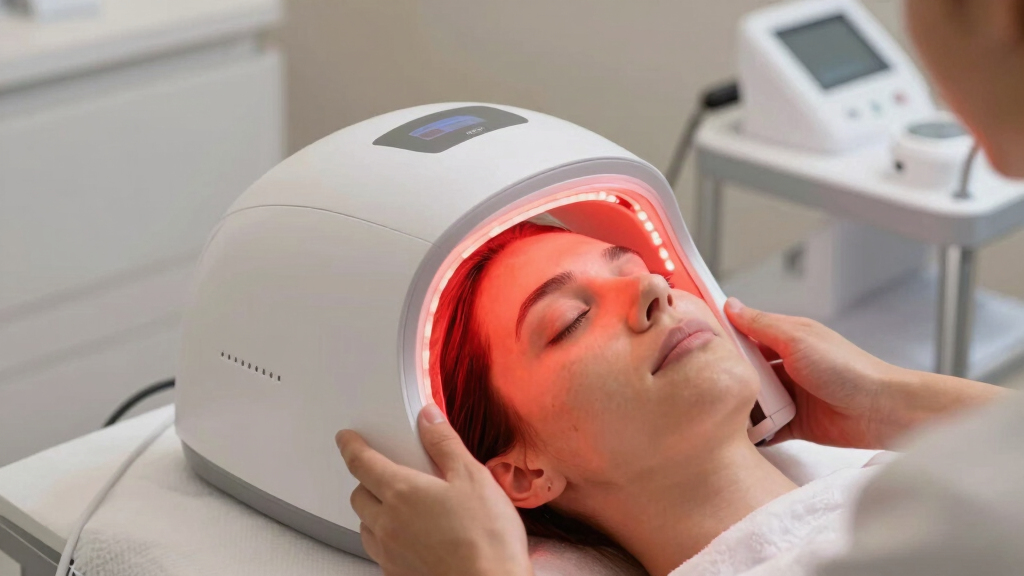
For example, many people use red LED masks for acne scars or fine lines. The light penetrates just a few millimeters—enough to reach the upper dermis where collagen production kicks in. It’s safe, non-invasive, and often feels like a soft glow that’s both soothing and effective.
However, red light’s limited depth means it’s best suited for superficial concerns rather than deeper tissues or internal inflammation. This limitation is a tradeoff: while it’s safer and easier to use, it can’t address issues that originate deeper within the body. Recognizing this helps users set realistic expectations and choose appropriate treatments for their specific needs, whether skin rejuvenation or targeting superficial scars.
Practical takeaway: Use red light therapy for skin issues like fine lines, scars, or surface inflammation. For deeper problems such as joint pain or internal inflammation, consider near-infrared options. Always follow device instructions to avoid overexposure and maximize benefits.
As an affiliate, we earn on qualifying purchases.
Near-Infrared Light: The Deep-Traveling Healer
Near-infrared (NIR) light, spanning from around 750 to 1400 nanometers, is the deep diver in light therapy. It can penetrate several centimeters into your tissues—think of it like a flashlight that reaches under the skin to target muscles, joints, and even internal organs.
Imagine a runner with sore knees using a NIR device. The light travels beyond the surface, reaching deep into swollen, inflamed tissues, helping to reduce pain and support cellular repair. This deep penetration isn’t just about reaching more tissue—it allows for targeted treatment of underlying issues that surface therapies cannot access. For example, chronic pain conditions or deep tissue injuries often involve inflammation or damage that’s hidden beneath the skin’s surface, making NIR an effective tool for addressing these root causes.
Because of its deeper reach, NIR therapy often involves more sophisticated devices, but it’s also proving promising in regenerating tissues and enhancing cellular energy production. The ability to stimulate cellular activity deep within tissues can facilitate faster healing and improved function, which is especially valuable in sports medicine and neurological therapies. Understanding this capacity for deep intervention helps in appreciating why NIR is increasingly integrated into comprehensive treatment plans, despite its higher complexity and cost.
Practical takeaway: Use near-infrared therapy for deeper issues like joint pain, muscle recovery, or internal inflammation. Consult a healthcare professional to determine the appropriate device and treatment plan, especially for chronic or complex conditions. Proper application can significantly accelerate healing and improve tissue function.
near-infrared light pain relief lamp
As an affiliate, we earn on qualifying purchases.
As an affiliate, we earn on qualifying purchases.
How Deep Do These Lights Actually Penetrate?
| Type of Light | Typical Penetration Depth |
|---|---|
| Red Light | Up to 2 millimeters — just beneath the skin surface |
| Near-Infrared Light | Several centimeters — reaching muscles and deeper tissues |
Picture applying red light to your cheek — it mainly stimulates surface cells, which can improve skin texture and tone. Switch to NIR, and it’s like shining a light into the depths of your muscles or even your brain, depending on the device. This difference in depth isn’t just a technical detail; it shapes the entire scope of what each therapy can achieve. Red light’s limited penetration makes it ideal for cosmetic and superficial healing, but it cannot influence internal structures or systemic health directly. Conversely, NIR’s ability to reach deeper tissues opens possibilities for treating complex conditions like joint pain, nerve damage, or even brain health, though with increased complexity and need for precise application. Recognizing these implications helps users and practitioners tailor treatments to their specific health goals, balancing safety, depth, and effectiveness.
Practical takeaway: When choosing a device, consider your target area. For superficial skin improvements, red light is suitable. For deeper tissue issues, NIR is more appropriate but should be used under professional guidance to ensure safety and efficacy.
red and near-infrared LED therapy mask
As an affiliate, we earn on qualifying purchases.
As an affiliate, we earn on qualifying purchases.
Are Red and Near-Infrared Light Safe? What Should You Know?
Both red and near-infrared light are considered safe when used correctly. They are non-ionizing, meaning they don’t carry the risks associated with ultraviolet or X-ray radiation. Think of them as gentle, therapeutic wavelengths that won’t burn or damage your skin when following recommended guidelines.
However, overuse or improper exposure can cause minor side effects like redness or eye strain. That’s why eye protection is recommended during treatments, and adherence to device instructions is key.
Understanding safety also involves recognizing that while these therapies are generally safe, they are not risk-free if misused. For instance, excessive exposure can lead to skin irritation or discomfort, and improper eye protection can risk retinal damage, especially with high-intensity devices. Practical advice: Always follow manufacturer instructions, limit treatment duration, and wear protective eyewear when recommended. If you have sensitive skin, eye conditions, or are pregnant, consult a healthcare professional before starting therapy. Proper use minimizes risks and ensures you get the most benefit from your treatments.
As an affiliate, we earn on qualifying purchases.
Frequently Asked Questions
Can I combine red and near-infrared light therapies?
Yes, some devices combine both wavelengths to target surface and deep tissues simultaneously. Always follow manufacturer guidance and consult a professional if unsure about combining treatments.How often should I use red or NIR light therapy?
Typically, 3-5 sessions per week are recommended, lasting around 10-20 minutes each. Consistency over several weeks yields the best results, but check device instructions.Are there any risks for people with skin conditions or sensitivities?
Red and NIR lights are generally safe, but those with photosensitive skin or conditions should consult a healthcare provider before starting therapy to avoid adverse reactions.Can I use these lights if I’m pregnant?
While generally safe, pregnant women should seek medical advice before using light therapy devices, especially those targeting deep tissues or involving higher intensities.Conclusion
Understanding the difference between red and near-infrared light helps you pick the right tool for your needs—whether it’s smoothing skin or soothing deep tissues. Both are safe, accessible, and backed by science, but they serve different purposes based on how deep their reach.
The next time you see a light therapy device, imagine the hidden depths it’s reaching into—your skin, your muscles, even your brain. Choosing wisely means respecting that power, and using it thoughtfully to support your well-being.
Fall yard work Picks
leaf blowers
As an affiliate, we earn on qualifying purchases.