
TL;DR
Prime for Young Adults — start your free trial
Fast free delivery, streaming and member deals for eligible 18–24 year olds.
Try it freeAs an affiliate, we earn on qualifying purchases.
Home microcurrent devices can support skin tone and comfort, but their effectiveness is limited by lower power, inconsistent use, and limited scientific validation. Safety is generally good if used correctly; however, results vary widely. Know the facts before investing.
Imagine a device small enough to sit comfortably on your bathroom counter that promises to lift, smooth, and rejuvenate your skin. It sounds tempting—yet, the reality is more complex. While these gadgets are appealing, understanding their true capabilities can save you from unmet expectations and potential pitfalls.
In this guide, you’ll learn what home microcurrent devices can realistically do, their limitations, safety considerations, and how to approach them with a clear eye. Getting the facts straight helps you decide if they fit your skincare routine—or if you should look elsewhere for more targeted solutions.
Most home microcurrent devices deliver less than 1 mA, limiting their ability to deeply stimulate muscles or change skin structure.
Scientific evidence supports only minor, superficial improvements, not dramatic or long-lasting results.
Proper technique, routine, and patience matter more than the device’s brand or features.
Always check device certifications and contraindications before use to avoid safety risks.
Set realistic expectations—home devices support, but do not replace, professional treatments.
Understanding the Limitations of Home Use Microcurrent Devices
Home microcurrent devices may support subtle skin tone and comfort, but low power, variable technique, inconsistent use, and limited scientific validation restrict what they can realistically achieve. They are supportive tools—not substitutes for professional treatment.
What microcurrent can—and cannot—do
Low-level electrical current may interact with superficial skin and muscle tissue. At-home convenience comes with a clear tradeoff: less power, less precision, and less predictable outcomes.
Temporary visible tone
Consistent use may create mild smoothing or a subtly lifted appearance for some users. Results can fade when the routine stops.
Limited tissue depth
Lower output and preset controls reduce the ability to stimulate deeper muscles with the precision available in a clinical setting.
Structural transformation
Home devices should not be expected to produce dramatic tightening, permanently erase wrinkles, or replicate a professional procedure.
Power and control spectrum
Illustrative comparison of the typical operating ranges described for home and professional equipment.
<1 mA
up to 10+ mA
Home convenience versus clinical control
The distinction is not merely device strength. Professional treatment also adds tailored settings, consistent technique, supervision, and the ability to respond to individual skin or health factors.
| Comparison point | Home microcurrent | Professional equipment | What it means |
|---|---|---|---|
| Power output | ~ Less than 1 mA | Up to 10 mA or more | Home devices are less able to reach deeper targets. |
| Control precision | ✗ Limited presets | ✓ Highly adjustable | Tailored protocols are easier in supervised settings. |
| User technique | ~ Variable | ✓ Trained application | Placement, contact, pressure, and timing affect results. |
| Expected outcome | Minor smoothing or toning | More targeted muscle and skin treatment | Neither route guarantees dramatic or permanent results. |
| Accessibility | ✓ High | ✗ Appointment-based | Convenience is the home device’s strongest advantage. |
| Scientific transferability | ~ Limited evidence | ~ Better studied | Clinical findings do not automatically prove home efficacy. |
Important: Regulatory clearance or certification can add safety reassurance, but it should not be interpreted as proof of dramatic effectiveness.
Why promising science becomes uncertain at home
Research interest in microcurrent is real, but much of the supportive evidence comes from professional-grade devices and controlled conditions. Home use introduces variables that weaken direct comparisons.
The benefit chain is only as strong as its weakest step
With minimal device power, execution matters. Skipped sessions or poor contact can reduce an already modest effect.
Clean the skin, inspect it for irritation, and use the recommended conductive medium.
Follow the prescribed direction, pressure, contact, and session duration.
Maintain the instructed schedule instead of using the device sporadically.
Look for subtle changes over weeks and stop if irritation or discomfort develops.
Generally safe does not mean risk-free
Most problems are avoidable when instructions and contraindications are taken seriously. Health conditions and electronic implants deserve special caution.
Pause and seek guidance
- Pregnancy or uncertainty about use during pregnancy
- Pacemaker or another implanted electronic device
- Heart condition or other relevant medical concern
- Broken, inflamed, infected, or highly irritated skin
- Unexpected pain, persistent tingling, or worsening redness
Safer-use habits
- Read the manufacturer’s contraindications before the first session
- Start with the lowest recommended setting
- Use the specified conductive gel or medium
- Keep contact surfaces clean and avoid excessive pressure
- Stop use and seek professional advice if symptoms develop
A five-point device trust check
Are outcomes specific and realistic?
Is regulatory status clearly stated?
Are presets and shut-off features included?
Are output, instructions, and risks disclosed?
Does it match your goals and routine?
Know the tradeoff before investing
Home microcurrent is best viewed as a low-intensity, routine-dependent skincare aid with variable results.
Power is limited. Most home devices deliver less than 1 mA and cannot deeply stimulate tissue.
Evidence is modest. Expect possible superficial improvements, not dramatic or permanent change.
Routine matters. Technique, frequency, and patience may matter more than extra features.
Safety needs attention. Check certifications, instructions, contraindications, and device condition.
Support, not replacement. Home devices do not offer the control or targeting of professional care.
Frequently asked questions
The short version: mild benefits are possible, individual results vary, and correct use determines both safety and the chance of success.
Do home devices really work?
They may provide minor, superficial improvements in tone or firmness, but home-specific evidence is limited and results vary widely.
Are they safe?
Generally, when used as directed. Contraindications, broken skin, device misuse, or malfunction can increase risk.
How quickly will I see results?
Some users report subtle changes after several weeks of regular use. Others may notice little or no visible difference.
Can they replace professional care?
Usually not. Professional equipment offers more power, precision, supervision, and individualized protocols.
What should I look for?
Clear certifications, transparent output information, realistic claims, safety features, instructions, support, and credible reviews.
How do I maximize effectiveness?
Follow instructions, use proper conductive medium, apply evenly, keep a consistent schedule, and maintain realistic expectations.
What Microcurrent Devices Really Do—and What They Can’t
Microcurrent devices are designed to deliver gentle electrical currents—typically less than 1 milliampere—that interact with the skin and underlying tissues. Many claim to boost skin elasticity, reduce fine lines, or ease muscle tension. But here’s the truth: home devices usually lack the power to deeply stimulate muscles or significantly alter skin structure.
For example, a popular device like the NuFACE Trinity, priced around $300, offers a modest 0.5 mA of current. While users report some visible smoothing after weeks of consistent use, the scientific evidence remains limited, especially for home-grade models. Think of it like giving your skin a gentle workout—enough to feel some tone but unlikely to replace professional treatments. This limitation matters because it underscores the importance of setting realistic expectations. If you’re hoping for dramatic lifting or tightening, these devices are more supportive than transformative, and understanding that tradeoff can prevent disappointment.
As an affiliate, we earn on qualifying purchases.
The Science That Supports and Limits Home Microcurrent Use
Research shows microcurrent therapy might help with superficial skin improvements and muscle tone, but evidence is mixed. Most scientific studies involve professional-grade equipment used in clinical settings, where precise control over current intensity and application time allows for more effective results. When it comes to home devices, the low power output and user variability mean that the effects are often superficial and temporary.
For instance, a 2018 study indicated that microcurrent treatments could improve facial muscle tone, but only when administered with professional tools and supervision. This highlights a crucial point: the scientific evidence supports the idea that microcurrent can stimulate muscles and improve skin, but only under optimal conditions. When these conditions are not met—like inconsistent use, lower power, or improper technique—the potential benefits diminish significantly. The tradeoff is clear: home devices are more accessible and safer but come with limited efficacy, especially for those seeking dramatic or lasting results. Recognizing this gap helps you make informed choices and avoid overestimating what these devices can deliver.
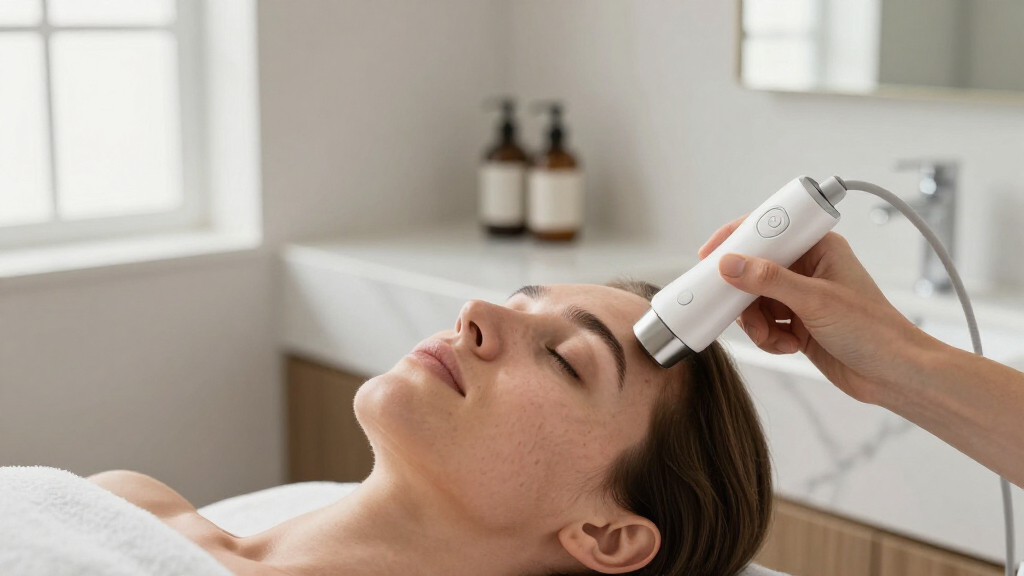
microcurrent skin rejuvenation device
As an affiliate, we earn on qualifying purchases.
As an affiliate, we earn on qualifying purchases.
Why Your Technique and Routine Matter More Than You Think
Using a microcurrent device incorrectly can turn a promising tool into a frustrating experience. Many users don’t realize that consistent, proper application is key to seeing even subtle results. For example, a woman who uses her device for five minutes every morning, following the instructions carefully, might notice a slight lift after 4-6 weeks. But this requires patience, discipline, and attention to detail—factors that determine whether the device’s minimal power can do its job effectively.
On the other hand, someone who rushes sessions, skips days, or applies the device unevenly reduces the likelihood of seeing any benefit. Think of it like regular exercise: the benefits depend not just on showing up but on technique, consistency, and realistic expectations. The tradeoff here is that users must accept that results are incremental and depend heavily on routine. This understanding helps prevent disappointment and encourages a more mindful approach, emphasizing that the device is a tool that supports, rather than replaces, consistent skincare habits.
professional microcurrent facial machine
As an affiliate, we earn on qualifying purchases.
As an affiliate, we earn on qualifying purchases.
Safety First: What Home Users Must Watch Out For
When used properly, microcurrent devices are generally safe. However, misunderstandings or misuse can lead to skin irritation or discomfort. For example, using the device over broken skin or in the presence of electronic implants like pacemakers can be risky.
Always check contraindications. If you’re pregnant, have a heart condition, or use a pacemaker, consult a healthcare professional before starting microcurrent treatments. Also, keep the device clean and avoid excessive pressure during application to prevent skin irritation.
Remember: No device is entirely risk-free. Staying informed and cautious protects your skin and peace of mind. The tradeoff here is that while safety protocols mitigate many risks, they also require users to be vigilant and responsible, especially when dealing with sensitive skin or underlying health conditions. Being cautious ensures that you enjoy the benefits without unintended side effects, emphasizing that safety is a critical part of any skincare routine involving electrical devices.
As an affiliate, we earn on qualifying purchases.
How to Choose a Home Microcurrent Device You Can Trust
Picking a safe, effective device starts with a few key points. Look for certifications and clear manufacturer claims. A device with FDA-clearance, like the NuFACE Trinity, has undergone some regulatory review, adding a layer of reassurance. This matters because certifications indicate that the device has met certain safety standards, which can reduce the risk of poor manufacturing or false claims.
Compare features carefully. For example:
| Feature | Basic Home Device | Professional Device |
|---|---|---|
| Power Output | Less than 1 mA | Up to 10 mA or more |
| Control Precision | Limited, often preset | Highly adjustable and precise |
| Intended Use | Skin smoothing, minor toning | Muscle lifting, skin tightening |
Additionally, consider user reviews, safety features like automatic shut-off, and the availability of customer support. The goal is to select a device that aligns with your safety concerns and expectations. Recognizing the tradeoffs—such as lower power for increased safety—helps you choose a device that balances efficacy with safety, making your investment more worthwhile and reducing the risk of misuse or disappointment.
Frequently Asked Questions
Do home microcurrent devices really work?
They can provide some minor, superficial improvements in skin tone and firmness, but their effects are limited compared to professional treatments. Results vary based on device quality and consistent use.Are home microcurrent devices safe?
Yes, when used according to instructions and with attention to contraindications. Avoid overuse or use over broken skin or electronic implants to prevent issues.How long before I see results?
Some users notice subtle changes after 4-6 weeks of regular use, but improvements are often mild and gradual. Patience and consistency are key.Can I replace professional treatments with a home device?
Generally no. Professional treatments use higher power and tailored protocols, resulting in more noticeable and lasting effects.What should I look for when choosing a device?
Check for certifications like FDA-clearance, safety features, clear manufacturer claims, and positive user reviews. Be wary of overhyped promises.Conclusion
Microcurrent devices can be a gentle, supportive addition to your skincare routine—if you understand their limits. They won’t turn back the clock overnight, but with realistic expectations and careful use, they can enhance your skin’s natural glow.
Remember: science shows their power is modest, and safety depends on responsible application. Invest your time in consistent technique, not just in the latest gadget.
NFL season / tailgating Picks
team gear
As an affiliate, we earn on qualifying purchases.