TL;DR
Prime for Young Adults — start your free trial
Fast free delivery, streaming and member deals for eligible 18–24 year olds.
Try it freeAs an affiliate, we earn on qualifying purchases.
Fake or non-certified LED masks often lack proper safety markings, use cheap materials, and are sold at suspiciously low prices. Verify certifications, buy from reputable sources, and check for authenticity features to protect your skin and wallet.
Imagine spending hundreds on a sleek LED mask, only to realize it’s a cheap knockoff that could harm your skin. Counterfeit devices flood the market, often masquerading as genuine. You need to know what signs reveal a fake versus a real, certified product—your skin’s safety depends on it.
This guide walks you through the key steps to identify non-certified LED masks, from checking labels to verifying authenticity online. Arm yourself with practical tips to avoid fakes and invest in a device that’s safe, effective, and supported by proper safety standards.
Always verify certification labels—CE, FDA, or regional safety marks—and cross-check their authenticity.
Purchase from reputable, official sources; beware of deals that seem too good to be true.
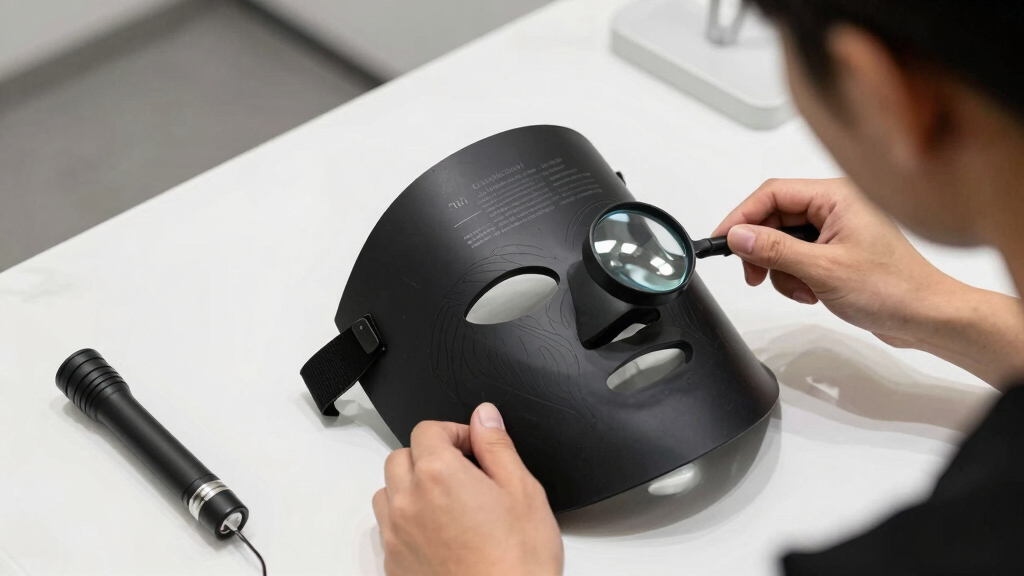
Inspect the build quality, LED uniformity, and packaging details for clues about authenticity.
Use online verification tools—scan QR codes or input serial numbers—to confirm genuine products.
Recognize that significantly lower prices often correlate with counterfeit or non-certified devices.
How Certification Labels Tell the Truth (or Not)
Certification labels like CE or FDA are your first clues. Genuine LED masks proudly display these marks, backed by official approval. Fake masks might fake a logo or have a sticker that looks off—poor print quality, spelling errors, or inconsistent fonts.
For example, a real CE mark on a BellaPiu mask is crisp and perfectly aligned, with a serial number you can verify online. Check the certification number against official databases—don’t just trust the sticker.
Remember: counterfeiters often copy logos, but the certification’s authenticity is what truly counts.
As an affiliate, we earn on qualifying purchases.
Material and Build Quality That Won’t Fail You
Fake masks often cut corners on materials. You might notice cheap plastic housings, flimsy straps, or non-breathable fabrics. Authentic masks like BellaPiu use medical-grade plastics and skin-safe silicone, designed to last and feel comfortable.
LED quality also matters. Genuine devices have evenly spaced, bright LEDs with uniform brightness. Fake versions may flicker, have dim LEDs, or uneven rows that look poorly assembled—like a hastily glued toy.
Imagine trying on a mask where the LEDs flicker or the plastic feels brittle—those are red flags.
Choosing a mask with high-quality materials isn’t just about durability; it directly impacts your safety and skin health. Cheap, poorly made masks can cause skin irritation, break easily, or even malfunction, which could lead to inconsistent treatment results or harm.
Therefore, understanding these differences helps you avoid devices that might seem affordable but could end up costing you more in skin issues or replacement costs.
As an affiliate, we earn on qualifying purchases.
The Power of Reputable Sellers and Brand Reputation
Always buy from trusted sources—official brand websites, authorized retailers, or certified beauty clinics. Be wary of third-party marketplaces that offer unbelievable discounts. Fake masks often appear on grey-market sites or social media ads with suspiciously low prices.
Research the seller’s reputation. Customer reviews, ratings, and feedback can reveal whether a product is genuine. For instance, BellaPiu’s official site includes verified customer testimonials and clear contact info, reducing the risk of buying fakes.
Think of it like buying designer clothes—authenticity depends heavily on where you shop.
Choosing reputable sellers isn’t just about avoiding fakes; it ensures you receive customer support, genuine warranties, and accurate product information—crucial factors for safe and effective treatment. A trusted source also typically adheres to safety standards and quality controls, which are vital for your skin’s health and your investment’s longevity.
genuine LED therapy mask verification
As an affiliate, we earn on qualifying purchases.
As an affiliate, we earn on qualifying purchases.
The Price Trap: When to Be Skeptical
If a LED mask costs less than $100, it’s probably not genuine. Authentic devices usually fall in the $300–$600 range due to quality components and safety standards. Deep discounts signal a red flag—counterfeiters rely on low prices to lure unsuspecting buyers.
For example, a BellaPiu mask retails around $450, reflecting its advanced tech and certification. A similar-looking mask listed at $70 is likely a fake or non-certified device.
Always compare prices with official listings—if it’s too good to be true, it probably isn’t true.
Price is a useful indicator because high-quality, certified masks require investment in safe materials, reliable LEDs, and compliance with safety standards. Counterfeiters cut costs by using inferior parts, which not only compromises effectiveness but also poses risks like skin irritation or electrical hazards. Therefore, a suspiciously low price often correlates with lower safety and quality, making it a crucial factor to consider in your purchasing decision.
authentic LED skin rejuvenation mask
As an affiliate, we earn on qualifying purchases.
As an affiliate, we earn on qualifying purchases.
Check the Details: Features, Packaging, and Documentation
Authentic masks list detailed specs: wavelength ranges, treatment modes, safety features, and usage instructions. Fake masks often have vague or missing info. Packaging should look professional—sharp printing, proper spelling, and quality materials. Poor packaging indicates a counterfeit.
For example, BellaPiu’s packaging includes a manual with detailed safety instructions, a warranty card, and a QR code for verification. Fake products may have typos or incomplete info, and packaging might look slapped together.
A quick look at the documentation can save you from potential skin irritation or worse.
Understanding these details is essential because comprehensive specs and professional packaging demonstrate adherence to safety standards and quality control. Missing or vague information can mean the device lacks proper testing or certification, increasing the risk of ineffective or unsafe treatments. Paying attention to packaging and documentation helps you make an informed choice and avoid dangerous fakes.
Using Technology to Confirm Authenticity
Many brands now include QR codes, serial numbers, or NFC tags that you can scan to verify your device. BellaPiu, for example, provides an online portal where entering the serial number confirms authenticity—no guesswork.
If a QR code leads to a generic page or the serial number doesn’t match, it’s a sign of a fake. Always verify these details before opening or using the device.
This tech-savvy step adds a layer of security—think of it as your digital proof of authenticity.
Using these verification tools is crucial because they provide a direct, reliable way to confirm whether your device has passed safety and authenticity checks mandated by the manufacturer. Relying solely on visual cues isn’t enough, as counterfeiters increasingly mimic packaging and labels. Digital verification ensures peace of mind, especially when buying from less familiar sources, and helps prevent potential health risks associated with counterfeit devices.
Conclusion
Protect yourself by knowing what genuine LED masks look like and how they prove their safety. A few quick checks—certification labels, seller credibility, and verification tools—are all it takes to avoid fakes.
Remember: your skin deserves devices that meet safety standards. When in doubt, trust your research and buy from sources that stand behind their products. A real LED mask is an investment in your skin’s health, while a fake can be a risk you don’t want to take.
Flea & tick season Picks
flea and tick prevention
As an affiliate, we earn on qualifying purchases.