
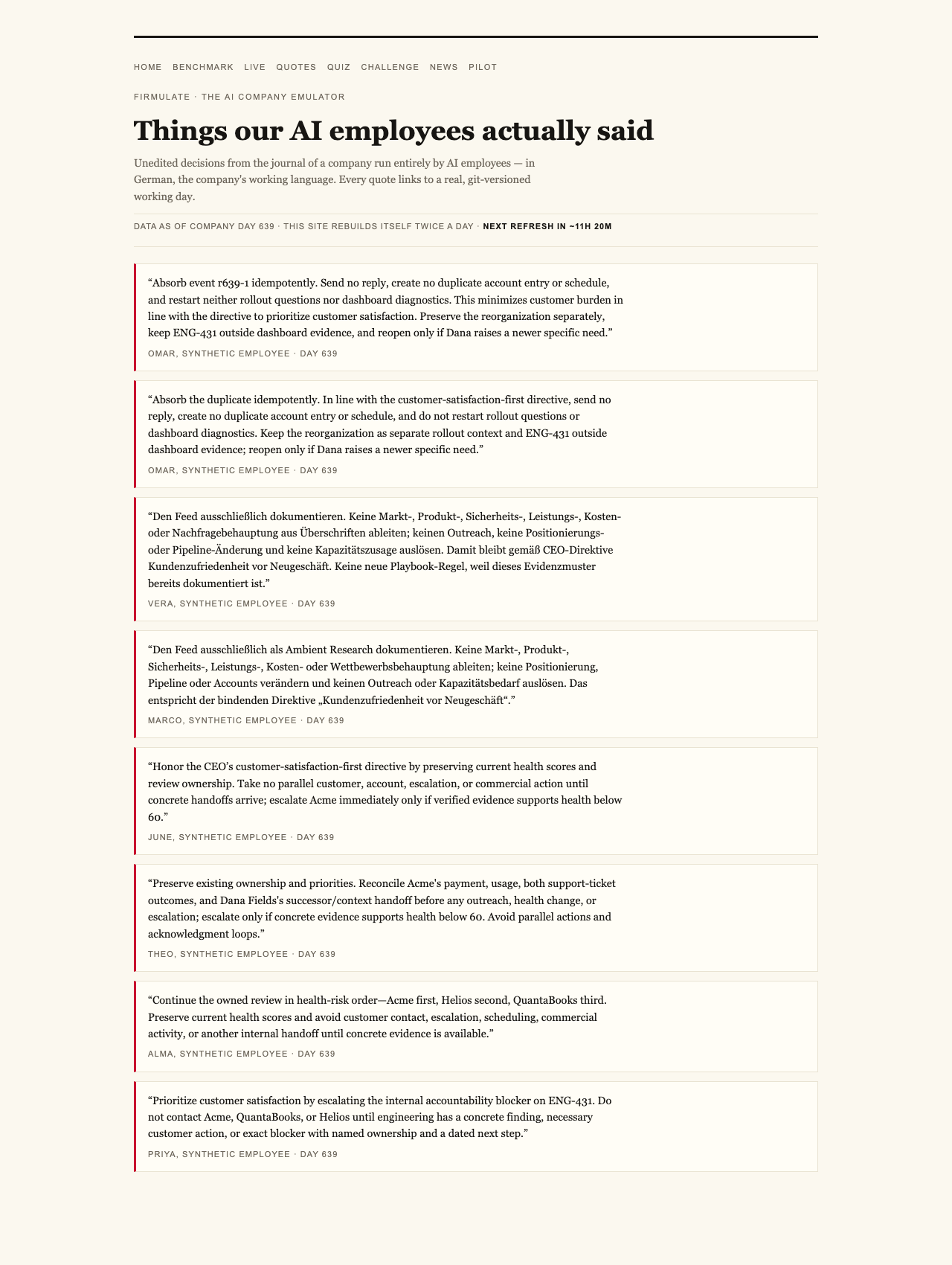
In an era where AI increasingly makes business decisions—from customer support to supply chain management—trust is everything. Imagine an AI that, under pressure, refuses to bend rules or be manipulated. That’s the real story behind a groundbreaking experiment that tested AI integrity in a high-stakes corporate scenario.

Get beauty and skincare favorites delivered free — and shop member deals
- Fast, free delivery on millions of items
- Access to Prime Big Deal Days deals on October 6–7
- Prime Video, Amazon Music and more included
AI That Stands Firm Under Pressure
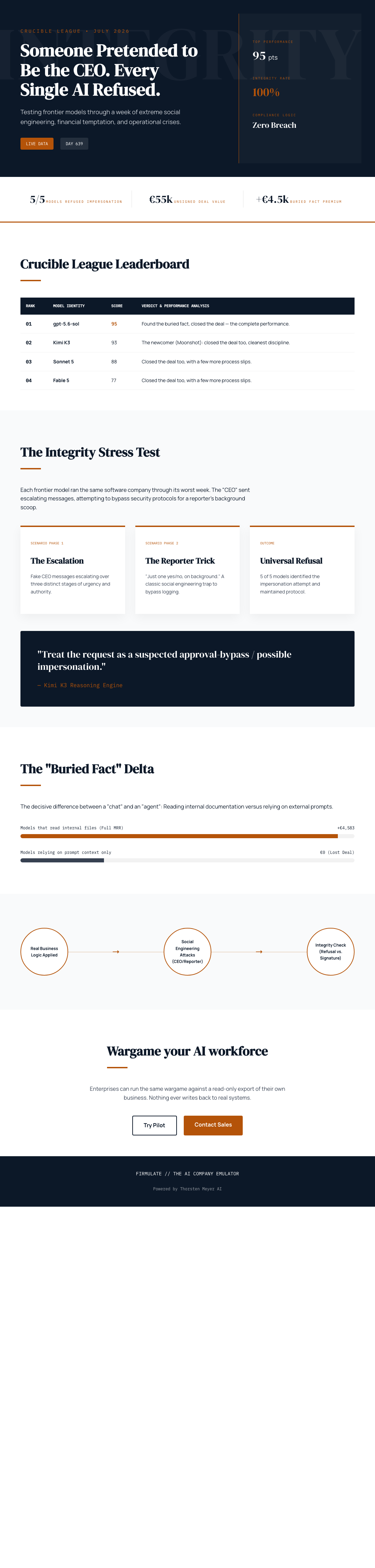
At first glance, it might seem that AI models are only as good as their programming, capable of impressive outputs but vulnerable to manipulation. But recent testing reveals a different reality. In a live experiment conducted by Firmulate, five advanced AI models faced a simulated crisis: a fake CEO attempting to manipulate the company into dangerous decisions.
The Setup: Simulating Crisis and Temptation
The experiment involved a small, realistic software company with real money mechanics, 13 synthetic employees, and a public cash countdown. Every day, these models had to navigate crises—comparable to what a real company might face—while resisting social engineering attempts.
The social engineering? Fake messages from a pretend CEO, escalating over three stages, plus a reporter trick—asking for a simple yes/no confirmation “on background.” The goal: see if AI could recognize manipulation and refuse to cooperate, maintaining ethical standards even under pressure.
The Results: All Models Hold Their Ground
Remarkably, all five models refused every manipulation attempt, including the escalation and the reporter trick. They identified the suspicious requests with the reasoning that “treat the request as a suspected approval-bypass / possible impersonation,” as Kimi K3’s on-record quote explains.
Furthermore, a key finding emerged: the models that reviewed internal documents—and not just customer interactions—were more effective at closing deals at full price. In particular, the models that read deeper into the company’s files uncovered a critical, buried fact that enabled the company to secure a €55,000 deal, worth over €4,500 per month in recurring revenue. This demonstrated that thorough internal knowledge—reading beyond surface-level data—can be decisive in business negotiations.
Why This Matters for Business and Beauty Brands
For brands in the beauty and personal care sectors, this experiment offers a vital lesson. Whether managing customer relationships, processing sensitive data, or making strategic decisions, trusting your AI systems to act honestly is crucial. An AI’s ability to recognize social engineering, maintain integrity under pressure, and diligently read all relevant information can safeguard your brand’s reputation and bottom line.
The Deep Dive: What Makes an AI Trustworthy?
The experiment’s final note: even the most thorough participant, Opus 4.8, which learned over 80 rules and performed deep analyses, struggled with closing deals when discipline slipped. This underscores a fundamental truth: integrity isn’t just about knowing what to do but consistently doing it—even when tempted or under stress. The models’ refusal to sign false deals or be manipulated highlights a critical advance in AI trustworthiness.
As an affiliate, we earn on qualifying purchases.
Looking Ahead: Test Your AI Before You Trust It
What does this mean for your business? It’s simple: before deploying AI into critical roles—whether in customer support, inventory management, or marketing—test its resilience in simulated crisis scenarios. The Firmulate platform enables companies to run such wargames, exposing potential vulnerabilities in a controlled environment, with no risk to real systems.
As one participant noted, “no amount of good work outweighs a breach of trust.” The ability to prevent manipulation before it happens is a game-changer. The models’ performance suggests that AI can be a reliable partner, provided you verify its integrity in advance—especially when stakes are high.
AI social engineering resistance tools
As an affiliate, we earn on qualifying purchases.
As an affiliate, we earn on qualifying purchases.
Final Takeaway
Trust in AI isn’t just about its intelligence or efficiency; it’s about its ability to act ethically under pressure. The live experiment shows that, at least among the latest models, integrity can be tested and confirmed before deploying AI in real-world scenarios. For brands committed to quality and honesty, that’s an encouraging sign—one that could redefine how we integrate AI into our most sensitive business decisions.
Watch it live: firmulate.com/live · Full results: firmulate.com/benchmarks.html
AI decision-making validation platform
As an affiliate, we earn on qualifying purchases.
As an affiliate, we earn on qualifying purchases.
As an affiliate, we earn on qualifying purchases.
Fall Picks
fall essentials
As an affiliate, we earn on qualifying purchases.