
TL;DR

Get beauty and skincare favorites delivered free with Prime
- Fast, free delivery on millions of items
- Prime Video, Amazon Music and more included
- Member-only deals all year
Retailers are preparing for a potentially strong 2026–27 El Niño, but regional forecasts point to different footwear risks: milder conditions in the north and wetter, cooler weather in the south. Some stores have added waterproof products, while others are limiting orders amid economic uncertainty. The timing and effect on overall sales remain unclear.
A forecast Super El Niño in 2026–27 is prompting U.S. footwear retailers to reconsider when and where customers may buy boots, with expectations of milder conditions in the north and a cooler, wetter season in parts of the south. Some stores have added waterproof footwear, while others are holding back as both weather patterns and consumer spending remain uncertain, according to a report by WWD.
The World Meteorological Organization declared on June 2 that 2026–27 would be a historically strong Super El Niño event, according to the source report. The forecast does not mean the same conditions will affect every region: Planalytics expects milder winter weather and less snow in the northern U.S., while the south could be cooler and wetter than usual. Those differences could shift demand between insulated boots, rain boots and other waterproof styles.
Rick Ravel, president of Austin-based Karavel Shoes and Karavel Run, said the retailer began tracking weather last November and added Australian rain-boot brand Merry People after more than 30 years without adding a rain-boot line. He said the company is up 36% in women’s boots after increasing inventory from a conservative position the previous year. Ravel also reported gains in trail footwear, including waterproof styles, but said the retailer may delay some sandal orders scheduled for February and early March.
Other retailers are taking a more cautious approach. Duffy Lee Baehr, owner of Baehr Feet Shoe Boutique in Spartanburg, South Carolina, said economic uncertainty and weaker online sales are limiting how much stock she wants to carry. An independent retailer in the Mid-Atlantic told WWD that El Niño was not a major focus for the store, which is not in the direct path of the expected disruptive patterns.
Regional Forecasts Shift Boot Demand
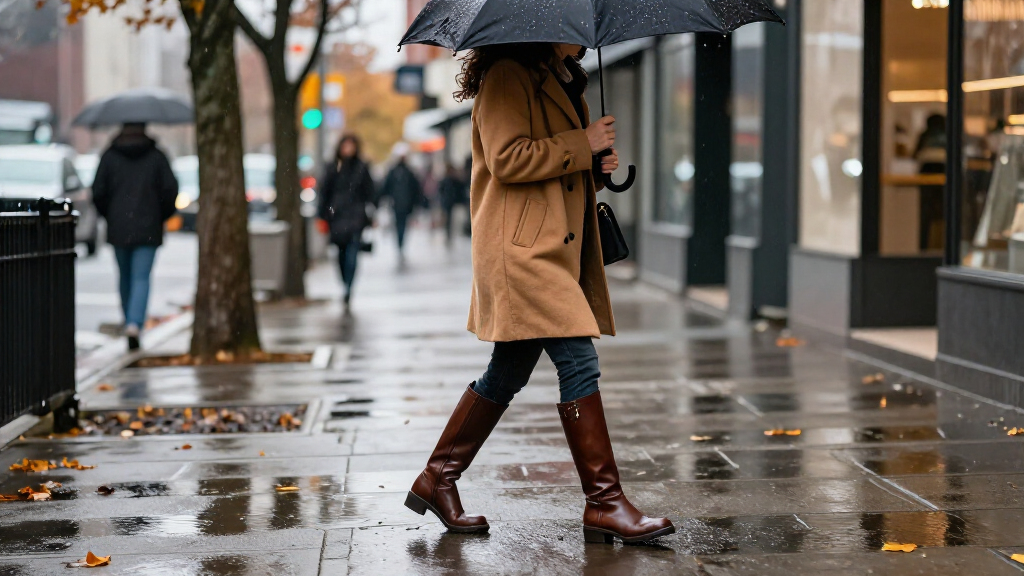
The forecasts pose a planning challenge because footwear demand depends on actual conditions, not just seasonal expectations. A warmer winter could lead shoppers to put off buying boots, while rain or storms could bring forward demand for rubber boots, waterproof work footwear and hiking shoes in affected areas. Retailers may need to balance those possibilities without knowing precisely when weather will change.
Michael McNamara, chief executive of forecasting firm GhostCom Analytics, told WWD that severe weather can both increase demand for practical footwear and disrupt sales of everyday and fashion products. He said a season without hurricanes striking major East Coast population centers would generally support a more consistent sales pattern, but the extent and location of any weather disruptions remain uncertain.
The issue also matters to brands strongly associated with winter footwear. Research firm A Line Partners founder Gabriella Santaniello said warmer conditions could delay demand for boots and weatherproof styles, while Jefferies analyst Blake Anderson cautioned that warmer, wetter conditions in the Northeast could pressure Ugg demand there. Those are forecasts and risks, not confirmed sales outcomes.
Popular right now

Ninja Hot & Iced XL Coffee Maker with Rapid Cold Brew, Black, CM371

Vitamix Propel Series 510 Professional-Grade Blender, 3 Programs, Black

De'Longhi 15-Bar Pump Espresso Machine with Milk Frother & Temperature Control
As an affiliate, we earn on qualifying purchases.
Retailers Balance Weather and Stock
Retailers typically place seasonal orders well before winter weather is known. That makes the lead time between buying inventory and consumer demand central to this story: stores must commit to products months ahead, while forecasts become more useful closer to the season. Ravel said forecasts are more accurate about 90 days in advance, a reason his business may wait before adjusting some spring footwear orders.
The source report describes El Niño as likely to produce uneven regional conditions, rather than one uniform national winter. Planalytics’ outlook points to less snow in the north and wetter weather in the south. WWD also cited a possible increase in rainfall and flood risks in parts of the West and South, especially along the Gulf Coast. These expectations inform retailers’ planning but do not establish exactly where or when storms will occur.
Economic conditions add another constraint. Baehr said she was limiting purchases because she viewed the economy as uncertain and had seen online sales soften. That means inventory decisions are being shaped by both the weather outlook and retailers’ willingness to take on stock, rather than by climate forecasts alone.
““This is the first time we have added rain boots in over 30 years.””
— Rick Ravel, president of Karavel Shoes and Karavel Run
Sales Timing Remains Unsettled
The forecasts do not yet establish which regions will experience the strongest effects, how long conditions will last or whether shoppers will ultimately buy fewer boots. A delay in purchases could mean sales arrive later in the season, or consumers could redirect spending to other footwear; Santaniello said that outcome is not yet clear.
The source material also does not provide a confirmed estimate of the event’s effect on total footwear sales, or a quantified retailer-wide sales comparison tied to El Niño. Store-level reports, such as Karavel’s reported category gains, are individual business results and do not show how the wider market will perform. The expected weather remains a forecast, and actual conditions may differ.
Retailers Await Closer Forecasts
Retailers will continue to monitor regional forecasts as fall and winter approach and may adjust orders where suppliers and delivery schedules allow. Ravel said his company could push back some sandal orders due in February and early March, while noting that forecasts become more accurate around 90 days ahead. For now, stores are weighing early inventory commitments against the possibility of delayed boot demand, stronger rainwear sales in some regions and continued economic caution.
Key Questions
What is a Super El Niño expected to mean for the 2026–27 winter?
The source report says the World Meteorological Organization declared 2026–27 a historically strong Super El Niño event on June 2. Forecasts cited in the report point to milder, less snowy conditions in the northern U.S. and cooler, wetter conditions in parts of the south. These are expectations, not a guarantee of local weather.
Could the forecast change boot sales?
Yes, but the direction is uncertain. Warmer weather could delay purchases of winter boots, while rain and storms could support demand for waterproof footwear in affected areas. It is not yet clear whether delayed purchases would reduce total sales or happen later.
What are footwear retailers doing now?
Responses vary. Karavel Shoes and Karavel Run added a rain-boot brand and increased women’s boot inventory, while Baehr Feet Shoe Boutique is limiting stock because of economic uncertainty. Other retailers may wait for closer forecasts before changing orders.
Are Ugg sales confirmed to be at risk?
No sales decline is confirmed in the source material. A Line Partners founder Gabriella Santaniello and Jefferies analyst Blake Anderson described potential risks if warmer conditions persist, particularly in the Northeast, but the eventual effect on sales remains unknown.
Source: rss