
TL;DR

Get beauty and skincare favorites delivered free — and shop member deals
- Fast, free delivery on millions of items
- Access to Prime Big Deal Days deals on October 6–7
- Prime Video, Amazon Music and more included
Nike and Zellerfeld have introduced a 3D-printed sneaker prototype named Air Works. This development highlights advances in sustainable manufacturing and innovative design in footwear. The project is still in early stages, with further testing and development planned.
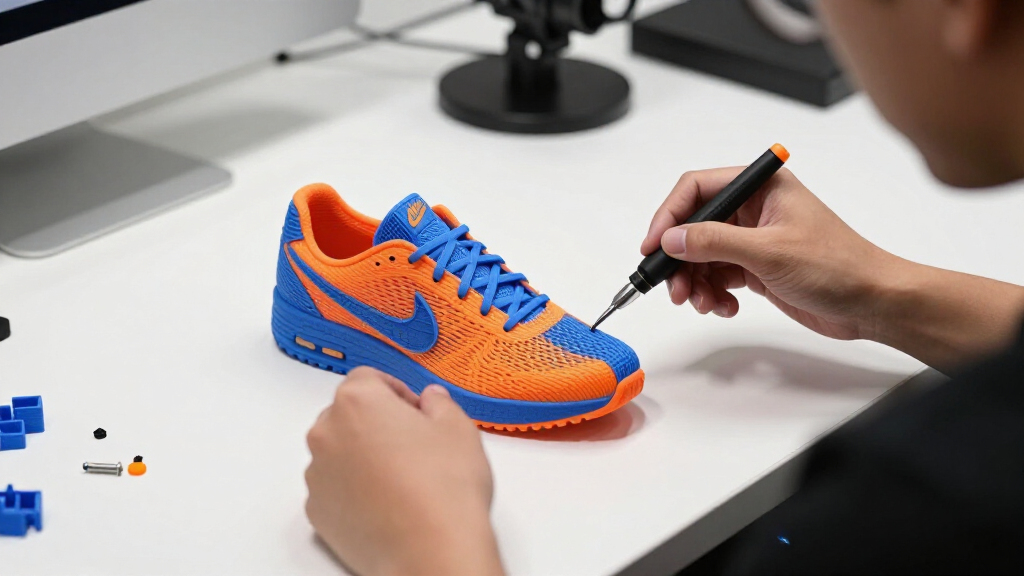
Nike and Zellerfeld have unveiled their first 3D-printed sneaker prototype, Air Works, signaling a notable advance in sustainable footwear technology. The collaboration aims to explore new manufacturing methods that could reduce waste and production costs, making this a significant development for the industry. The prototype was revealed during a joint presentation, with both companies emphasizing its innovative design and environmental potential.
The Air Works prototype is produced using Zellerfeld’s proprietary 3D-printing technology, which employs recycled materials to create lightweight, durable sneaker components. Nike’s involvement focuses on integrating this technology into its broader sustainability goals. According to Zellerfeld CEO David Pugh, the prototype demonstrates the feasibility of producing fully 3D-printed footwear at scale, though it remains in the early testing phase.
While Nike has not disclosed specific performance metrics, the prototype features a custom-designed sole and upper that are entirely 3D-printed, reducing material waste compared to traditional manufacturing. Both companies have indicated that the project is still in development, with plans to refine the design and test durability and comfort before commercial production. The unveiling was accompanied by statements emphasizing the potential for faster, more sustainable shoe manufacturing processes.
Potential Impact on Sustainable Footwear Production
This collaboration and prototype highlight a shift toward more sustainable manufacturing practices in the footwear industry. 3D printing allows for precise material use, reducing waste, and could lower costs and production times. If further developed, this technology could significantly influence how sneakers are designed, produced, and distributed, aligning with increasing consumer demand for environmentally friendly products. Industry analysts see this as a step toward broader adoption of additive manufacturing in mass-market footwear, though challenges remain in scaling and ensuring durability.
As an affiliate, we earn on qualifying purchases.
Industry Trends Toward 3D Printing and Sustainability
Over the past few years, major brands like Nike have invested in 3D printing as part of their sustainability strategies. Nike’s Flyprint material, for example, has been used in limited editions, but full 3D-printed shoes remain experimental. Zellerfeld, a startup specializing in 3D-printed consumer products, has gained attention for its innovative approach to sustainable manufacturing. The Air Works prototype represents a convergence of these trends, with both companies aiming to push the boundaries of what’s possible in footwear design and production.
Previous efforts by Nike included 3D-printed midsoles and prototypes, but the Air Works project appears to be a more comprehensive application, involving the entire shoe structure. The development aligns with broader industry shifts toward reducing environmental impact and exploring new manufacturing techniques.
“This prototype shows that fully 3D-printed footwear is not just feasible but can be durable and lightweight, opening new avenues for sustainable production.”
— David Pugh, CEO of Zellerfeld
As an affiliate, we earn on qualifying purchases.
Uncertainties About Commercial Viability and Durability
It is not yet clear how the Air Works prototype will perform in long-term durability tests or how soon it could reach commercial production. Both companies have indicated ongoing testing, but specific timelines or performance benchmarks have not been publicly disclosed. Additionally, scaling 3D printing for mass-market footwear presents technical and logistical challenges that remain unaddressed.
As an affiliate, we earn on qualifying purchases.
Next Steps in Testing and Development Phases
Both Nike and Zellerfeld plan to continue testing the Air Works prototype, focusing on durability, comfort, and manufacturing scalability. Expect further updates over the coming months as they refine the design and conduct real-world wear tests. Industry watchers will be monitoring whether the technology can be integrated into Nike’s mainstream product lines within the next few years.
eco-friendly 3D printed running shoes
As an affiliate, we earn on qualifying purchases.
As an affiliate, we earn on qualifying purchases.
Key Questions
When could 3D-printed Nike shoes become commercially available?
It is not yet clear; the companies are still in testing phases, and commercial release will depend on durability, cost, and scalability assessments.
How does 3D printing reduce environmental impact?
3D printing can minimize material waste by precisely depositing only the needed material, potentially lowering the environmental footprint of manufacturing processes.
Will 3D-printed shoes be as comfortable as traditional shoes?
Comfort testing is ongoing; the prototypes are still in early stages, and future iterations will aim to optimize fit and comfort for consumers.
What materials are used in the 3D-printed Air Works prototype?
The prototype employs recycled materials designed for lightweight durability, though specific material details have not been fully disclosed.
Source: rss
Fall Picks
fall essentials
As an affiliate, we earn on qualifying purchases.