TL;DR
Most multi-stylers operate between 1,000–1,700 watts, affecting airflow and heat. Higher wattage means faster drying and styling, but not necessarily more heat. Understanding these settings helps you style effectively while minimizing damage.
Ever wonder why some styling tools seem to work faster but leave your hair feeling brittle? It all comes down to power settings—how wattage, heat, and airflow come together to shape your style and protect your hair.
In this guide, you’ll learn what these settings actually mean, how they impact your hair’s health, and how to choose the right combination for your hair type. Because in the world of multi-stylers, understanding power isn’t just technical—it’s personal.
Wattage influences airflow strength and speed, not just heat, and higher wattage isn’t always better for hair health.
Separate heat and airflow controls allow tailored styling—use low heat with high airflow for gentle drying and styling on delicate hair.
Keeping temperatures below 150°C (300°F) minimizes damage; tools with intelligent heat control help achieve this.
Match attachments and settings to your hair type for optimal results—fine hair needs gentler settings, thick hair can handle more heat.
Regular maintenance, like cleaning filters, preserves power and prevents overheating or damage.
The Power Behind the Style: Wattage, Heat & Airflow Explained
TL;DR — Most multi-stylers operate between 1,000–1,700 watts, and that number shapes airflow strength and heat-up speed — not necessarily how hot your hair gets. Knowing how the dials interact lets you style faster, finish better, and minimize long-term damage. Because in the world of multi-stylers, power isn’t just technical — it’s personal.
Dialing in the right combination of heat and airflow makes all the difference — style smart, and your hair will thank you.
Five Things Worth Remembering
Sustained exposure above 150°C (300°F) significantly raises damage risk — intelligent heat control is the feature that matters most.
Wattage drives airflow strength and speed — not just heat. Higher wattage isn’t automatically better for hair health.
Heat and airflow are separate controls. Low heat + high airflow styles gently; high heat + low airflow concentrates thermal stress.
Match settings to your hair type: fine hair needs gentler combinations, thick hair can handle — and may need — more.
Finish every style with a cool shot. The rapid temperature drop locks in the hydrogen bonds that hold your shape.
Clean the filter regularly. A clogged filter chokes airflow, makes the motor run hotter, and mimics a “weak” device.
What Wattage Actually Means for Your Styling Power
Wattage measures the energy a device consumes — but in a multi-styler, its real-world meaning is how forcefully air moves and how fast the tool reaches temperature. Design and airflow engineering matter as much as the raw number.
Airflow Strength
Higher wattage powers a stronger motor and a more forceful airstream. A 1,400W tool dries noticeably faster than a 1,000W model — speed, not scorch.
Heat-Up Speed
More watts means the tool reaches styling temperature quicker. But peak heat depends on regulation — both low- and high-wattage tools can run cool or hot.
Voltage Compatibility
High-wattage US models run at 120V and are often single-voltage — overseas use on 220–240V requires a true converter, not just a plug adapter.
Heat × Airflow: How the Dials Shape Style and Hair Health
Multi-stylers typically offer 2–4 heat levels plus 2–3 airflow speeds — and a dedicated cold-shot button. Think of the combination as a dance: airflow does the work, heat sets the shape.
| Setting Combination | Best For | Damage Risk | What It Does |
|---|---|---|---|
| Low Heat + High Airflow | Fine, fragile or damaged hair | ✓ Low | Dries and styles quickly with minimal thermal stress — the gentle default. |
| Medium Heat + Medium Airflow | Normal / medium hair, daily styling | ~ Moderate | A balanced everyday pairing; effective without pushing into the risk zone. |
| High Heat + Low Airflow | Avoid prolonged use on any hair type | ✗ High | Concentrates heat on one spot — the fastest route to weakened keratin. |
| High Heat + High Airflow | Thick, coarse or coily hair (drying) | ~ Moderate | Maximum speed for dense hair — keep sessions short and sections moving. |
| Cool Shot (finish) | Every hair type, every style | ✓ None | Rapidly drops strand temperature, locking hydrogen bonds and setting the cuticle. |
Rough-Dry
High airflow, medium heat. Remove 70–80% of moisture with the concentrator before styling.
Section & Shape
Moderate heat, high airflow. Let the Coanda airflow wrap hair around the barrel — not extreme heat.
Hold & Set
Brief dwell time. Even heat distribution and short passes beat long, hot ones.
Cool Shot
Temperature drops fast. Bonds reset, cuticle seals, and the style actually lasts.
The Science of Hair Damage — What Power Does to a Strand
Keratin begins to denature around 230°C (450°F), but the everyday story is quieter: repeated exposure above ~150°C (300°F) cracks the cuticle, drains moisture and dulls color over time. The tradeoff is always speed versus integrity.
Intelligent heat control — sampling air temperature dozens of times per second — keeps airflow under 150°C, applying heat only as long as necessary. Air does the shaping; heat just assists.
“Your hair is a delicate silk scarf.”
High heat is pressing it with a scorching iron — fast, but risky. Low heat with high airflow is gently steaming the fabric — slower, safer, and repeatable without brittleness or dullness setting in.
Match the Settings — and the Attachment — to Your Hair
The right combination is personal. Always start at the lowest effective setting and adjust upward only if the style isn’t taking.
| Hair Type | Heat | Airflow | Cool Shot | Pro Note |
|---|---|---|---|---|
| Fine / Damaged | Low | Med–High | ✓ Always | Gentlest pairing; reduces heat-induced breakage. |
| Medium / Normal | Medium | Adjustable | ✓ Always | Flexible — tune airflow to the attachment in use. |
| Thick / Coarse / Coily | High (drying) | High | ✓ Always | Moderate heat + longer tension passes for smoothing. |
| High Porosity | Low–Med | Medium | ✓ Always | ~ Loses moisture fast — extra heat-vulnerable. |
Concentrator / Rough-Dry
Tolerates the highest heat and speed — built for fast moisture removal.
Curling Barrels
Moderate heat + high airflow. The Coanda effect wraps hair with air, not scorching contact.
Smoothing Brushes
Moderate heat, controlled airflow — too much air frizzes, too little heat won’t set.
Diffuser
Low speed + low-to-medium heat to preserve natural curl pattern and definition.
The Power Chain: How a Setting Becomes a Style
Frequently Asked Questions
What heat setting should I use for my hair type?
Fine or damaged hair: low heat + high airflow. Thick or coarse hair: higher heat with moderate airflow. Always begin at the lowest effective setting and adjust from there.
Is higher wattage better — does it mean hotter?
Higher wattage means stronger airflow and faster heat-up, not necessarily hotter hair. Design and heat regulation decide actual exposure — a well-controlled 1,400W tool can be gentler than a crude 1,000W one.
Why does my curl fall out within hours?
The style likely wasn’t set: heat too low for your hair type, or no cool shot at the finish. Use heat protectant and lock the shape with a burst of cool air.
Can I use my multi-styler abroad — is it dual voltage?
Many premium models are single-voltage (120V). Check the spec plate before travel and use a proper voltage converter — it protects both the device and its longevity.
What Does Wattage Actually Mean for Your Styling Power?
Wattage measures the energy a device consumes, but in multi-stylers, it’s more about the airflow strength and heat-up speed. Most models hover between 1,000 and 1,700 watts. For example, Dyson Airwrap sits around 1,300W, while Shark FlexStyle pushes toward 1,400W.
Higher wattage generally means a more forceful airflow and quicker heat-up. But it doesn’t mean hotter hair—design and airflow engineering matter just as much. A 1,400W Shark can deliver faster drying than a 1,000W model, but both can be set to low or high heat depending on your needs.
Wattage also influences voltage compatibility. Many high-wattage US models operate at 120V, making overseas use tricky without a proper converter. So, wattage isn’t just about power—it affects usability and safety as well.
Understanding the implications of wattage helps you choose a device that balances performance with safety and convenience. A higher wattage device can save you time, but it may also generate more heat or require careful handling to avoid accidental damage or overheating. Conversely, lower wattage models might be gentler but may take longer to achieve your desired style, requiring patience and technique.

HITTIONA High-Speed Hair Dryer Brush – Hot Air Styler Multi Hair Styler
- Versatile 5-in-1 Styling Set: Dry, curl, volumize, straighten, smooth
- Fast Drying Performance: High-speed airflow and brushless motor
- Salon-Quality Results at Home: Effortless styling with professional results
As an affiliate, we earn on qualifying purchases.
As an affiliate, we earn on qualifying purchases.
How Heat and Airflow Settings Shape Your Style and Hair Health
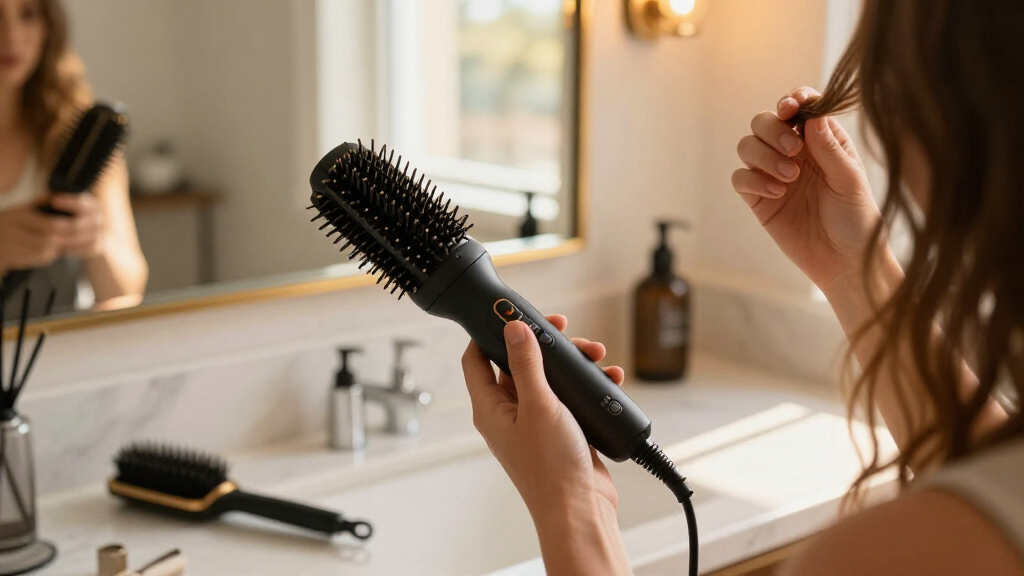
Multi-stylers often have separate controls for heat and airflow, and understanding their interaction is key. For instance, you might have 3 heat levels—cool, medium, high—and 3 airflow speeds. Using low heat with high airflow dries your hair faster with less thermal stress.
Think of it like a dance: high heat with low airflow concentrates heat on your hair, risking damage. Cool shots, which rapidly drop temperature, lock in styles by setting the cuticle and bonds. It’s a delicate balance—too much heat, and you risk weakening keratin; too little, and your style may fall apart quickly.
Choosing the right combination depends on your hair type and styling goals. For example, fine or damaged hair benefits from the cooler, gentler settings, reducing the risk of heat-induced breakage. Thick or coarse hair might require higher heat and airflow to effectively dry and style, but overuse of high heat can still cause damage over time. Therefore, understanding how to balance these settings allows you to achieve professional results without compromising hair health.

slopehill Professional Ionic Hair Dryer, Powerful 1800W Fast Drying Low Noise Blow Dryer with 2 Concentrator Nozzle 1 Diffuser Attachments for Home Salon Travel (Black)
- Powerful Motor for Fast Drying: Up to 21,000 rpm airflow
- Lightweight and Portable Design: Compact and easy to carry
- Protects Hair from Damage: Low radiation and even drying
As an affiliate, we earn on qualifying purchases.
As an affiliate, we earn on qualifying purchases.
The Science of Hair Damage — What Power Settings Do to Your Hair
Hair begins to suffer damage around 230°C (450°F), but most damage happens at lower temperatures with repeated exposure. Research shows that sustained heat above 150°C (300°F) can weaken the cuticle and cause moisture loss, leading to brittleness and dullness over time.
Modern tools like Dyson’s Airwrap keep the airflow below 150°C by measuring the air temperature dozens of times per second, significantly reducing heat damage. This precise regulation ensures that heat is applied only as long as necessary, preventing excessive thermal stress. The use of airflow instead of extreme heat is a deliberate design choice that prioritizes hair health while still delivering effective styling.
Imagine your hair like a delicate silk scarf: applying high heat is akin to pressing with a scorching iron—fast but risky. Using lower heat with high airflow is like gently steaming the fabric—slower but safer, especially if repeated regularly. The tradeoff here is between speed and safety; a faster style may come at the cost of long-term damage if not carefully managed. Therefore, selecting tools with smart heat regulation is essential for maintaining hair integrity over time.

5 in 1 Multi Hair Styler Blow Dryer Brush Hair Dryer Hot Magic Air Styler Set Hair Brushes for Women, Hair Styling Appliances with Curl Straighten Wavy Smooth, All Hair Type/Length Black Gold
- 5-in-1 Hair Styling Functions: Curlers, straightening, drying, volumizing
- Negative Ions & Intelligent Airflow: Reduces static, minimizes heat damage
- Versatile Curling Brush: Creates natural curls and volume
As an affiliate, we earn on qualifying purchases.
As an affiliate, we earn on qualifying purchases.
Frequently Asked Questions
What heat setting should I use for my hair type?
Fine or damaged hair benefits from low heat and high airflow, while thick or coarse hair may need higher heat with moderate airflow. Always start with the lowest effective setting and adjust as needed.Will a multi-styler damage my hair less than a curling iron or flat iron?
Typically, yes—especially models with intelligent heat regulation that keep temperatures below damaging levels. They also distribute heat more evenly and reduce dwell time, lowering cumulative damage.Is higher wattage better? Does it mean hotter?
Higher wattage delivers stronger airflow and faster heat-up but doesn’t necessarily mean hotter hair. Design and airflow control play critical roles in actual heat exposure, so higher wattage doesn’t automatically equate to increased damage if the device manages heat properly.Why does my curl fall out within hours?
Often because the style wasn’t properly set with a cool shot or the heat was too low for your hair type. Using heat protectant and finishing with a cool shot helps lock the style in place and prolongs its hold.Can I use my multi-styler abroad / is it dual voltage?
Many premium models are single-voltage and require a converter. Check your device’s specifications before traveling to avoid damage or malfunction. Using a proper voltage converter ensures safe operation and preserves your device’s longevity.
6 in 1 Air Hair Styler, 1400W High Speed Ionic Hair Dryer with Wrap Curlers, Blow Dryer Brush & Frizz-Free Hot Air Brush, No Heat Damage Hair Tools for Fast Drying, Curling, Smoothing & Volume
- Multi-Function Hair Styler: Dry, curl, straighten, and volumize
- Fast, Ionic Drying: Dry hair in 2-5 minutes with frizz control
- Two-Way Automatic Curling: Create curls with innovative airflow technology
As an affiliate, we earn on qualifying purchases.
As an affiliate, we earn on qualifying purchases.
Conclusion
Understanding your multi-styler’s power settings transforms how you style. It’s not just about speed—it’s about protecting your hair while achieving your look.
Think of your styling tool as a finely tuned instrument: dialing in the right combination of heat and airflow makes all the difference. Style smart, and your hair will thank you for it.