TL;DR

Get beauty and skincare favorites delivered free with Prime
- Fast, free delivery on millions of items
- Prime Video, Amazon Music and more included
- Member-only deals all year
Glamour UK published a 2026 guide titled “9 Best Contour Sticks of 2026, Tested & Reviewed With Video.” The supplied source excerpt gives detailed information about HAUS Labs’ Precision Sculpt Contour Stick and expert guidance on contouring, but does not provide the other eight picks or the video’s testing methods.
Glamour UK has published a 2026 guide to nine contour sticks, presented as tested and reviewed with video. The supplied report excerpt names HAUS Labs’ Precision Sculpt Contour Stick as a beauty commerce writer’s favourite and explains how contour differs from bronzer, but it does not include the full product list, video or details of a standardized test.
Glamour’s Shani Cohen describes the HAUS Labs stick as a product she reaches for when she wants added definition. The report points to its slim tip, creamy texture and blendability, and says it is available in nine shades with a mix of undertones. It also lists grape extract, tea rose stem cells and suberin extract among the formula’s ingredients, describing them as ingredients that help soften and smooth the look of skin. Those descriptions are product and reviewer claims, not independent clinical findings.
In her first-person review, Cohen says the stick is comfortable and non-drying for her and that she uses it on areas including her cheekbones and nose. Her comments describe her personal experience; the excerpt does not state how many people tested the product, how long it was worn, or whether the nine products were compared under the same conditions.
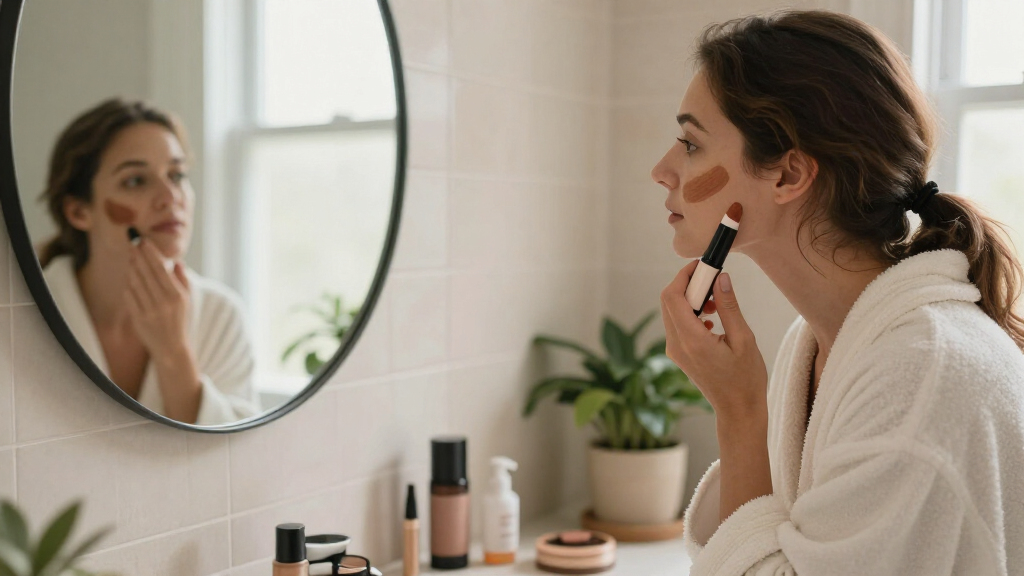
The guide also gives practical placement advice from makeup artists, alongside recommendations in this guide to makeup contour sticks. Fenty Beauty global makeup artist Priscilla Ono distinguishes contour from bronzer by undertone and purpose: contour products are typically cooler to mimic shadows, while bronzers tend to be warmer and create a sun-kissed effect. The source says contour is commonly applied to cheek hollows, the jawline, forehead edges and sides of the nose, while bronzer is placed where sunlight would naturally hit.
How the Guide Frames Contour Choices
The roundup is useful to readers comparing a popular makeup category because it pairs product recommendations with guidance on shade, placement and finish. Its description of the HAUS Labs stick, including the nine-shade range and precision tip, gives shoppers specific features to consider rather than treating all contour products as interchangeable.
The advice also clarifies a common point of confusion: contour and bronzer serve different visual purposes, even though both can add dimension. Readers can use the distinction when choosing a cooler-toned product for shadow-like definition, or a warmer product for a bronzed look. The article’s own caveat is that contour is optional; makeup artists quoted in the report describe it as a way to add dimension, not a requirement.
Popular right now

Ninja CREAMi 7-in-1 Ice Cream Maker, NC299AMZ

Shark Clean & Empty Cordless Stick Vacuum with Auto-Empty System, BU3521

Ninja NC501 CREAMi XL Deluxe 11-in-1 Ice Cream and Frozen Treat Maker with Two XL Containers
As an affiliate, we earn on qualifying purchases.
Contour Versus Bronzer
The source presents contour as makeup that imitates natural shadows, rather than as a substitute for bronzer or blush. Celebrity makeup artist Harold James advises choosing a matte product a few shades darker than the wearer’s natural skin tone and applying it where shadows would fall. He recommends blending carefully to avoid visible lines. The exact shade and placement will vary with a person’s complexion and facial features.
Application order is presented as a matter of preferred finish. Some artists quoted by Glamour apply contour before foundation, a technique known as underpainting, then blend foundation over it to soften the result. Cream and liquid formulas can be blended with fingers or a sponge, according to the source; powder formulas are generally applied with a brush. The report says the choice between cream and powder depends on personal preference and the finish sought.
““I love how creamy and blendable it is while still giving my cheekbones, nose and anywhere else I want to define that lovely sculpted look.””
— Shani Cohen, Glamour beauty commerce writer
Details Missing From the Excerpt
The supplied source does not identify eight of the nine products named in the guide’s title, nor does it provide the linked video. It is consequently not possible from this material to summarize the complete ranking, compare prices or formulas across the full selection, or verify what testing was conducted. The title says the products were tested and reviewed, but the excerpt provides no test protocol, evaluation criteria or results beyond Cohen’s account of the HAUS Labs stick.
The source also does not specify a publication day, the products’ current availability or whether the listed shade options are sold in every market. Ingredient descriptions and performance impressions are attributed to the report and its reviewer; no independent evidence for skincare effects or long-term wear is included in the supplied material.
Check the Full Product Roundup
Readers seeking the complete nine-product selection, the accompanying video and any product-by-product testing details will need to consult Glamour UK’s original guide. The supplied material gives no scheduled follow-up, new test results or update date. Product availability and shade ranges may change, so shoppers should check current retailer and brand listings before buying.
Key Questions
Which contour stick is singled out in the supplied report?
HAUS Labs’ Precision Sculpt Contour Stick is described by Glamour beauty commerce writer Shani Cohen as one of her favourites. The excerpt does not provide the complete list of nine products.
How does the report distinguish contour from bronzer?
Fenty Beauty artist Priscilla Ono says contour products typically have cooler undertones to imitate shadows, while bronzers are generally warmer and create a sun-kissed look.
Where does the source recommend applying contour?
The guide identifies the hollows of the cheeks, jawline, forehead edges and sides of the nose as common contour areas. Placement depends on the look a person wants.
Does the supplied material explain how the products were tested?
No. The title describes the guide as tested and reviewed, but the provided excerpt does not give a testing method, comparison criteria or full results.
Source: rss