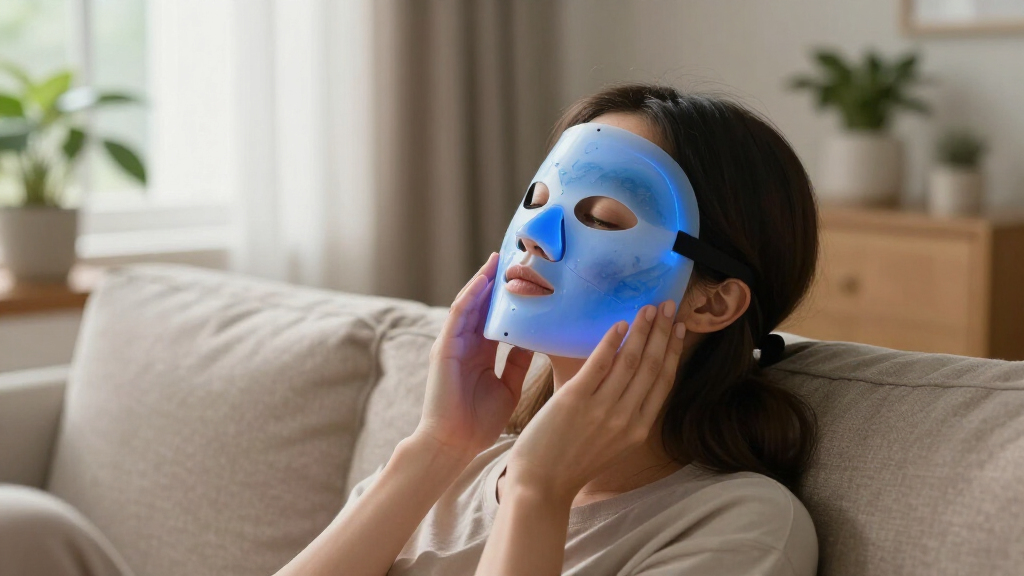
At-home LED facial masks promise clinic-grade light therapy without the per-session cost, but the gap between a $60 mask and a $400 one is wider than most buyers expect. After comparing 15 popular models, the iRestore LED Face Mask stands out as the best overall pick thanks to its clinically backed red, blue, and infrared combination and reputation for durability. Budget shoppers should look at the Red Light Therapy Mask for Face & Neck with 396 LEDs, which delivers near-identical wavelength coverage at a fraction of the price, while travelers may prefer the cordless ONLUKY USB-C Rechargeable Mask. The core tradeoff in this category comes down to LED density and near-infrared depth versus portability and price — and whether a mask covers just the face or extends to the neck. Keep reading for the full breakdown of which mask fits your skin goals, budget, and routine.
Complete the kit


Key Takeaways
- Masks that combine 660nm red light with 850nm near-infrared dominated the top of the ranking — single-wavelength or color-mode-only masks consistently delivered weaker results for anti-aging goals.
- LED count mattered less than placement and coverage: the 309-LED face-and-neck mask outperformed higher-count rivals because chip distribution across the neck area eliminated the patchy results common to face-only masks.
- Cordless designs (ONLUKY, the 426-LED Cordless NIR mask, and #14) cost $20–60 more than wired equivalents, which only makes sense if you’ll actually use the mask while moving around rather than lying down.
- The 7-color mode masks (#4, #6, #7, #10) are best treated as entry-level devices — most buyers end up using only red and blue, so paying extra for seven modes rarely pays off.
- iRestore earned the best overall slot not on features but on consistency: build quality, warranty support, and documented irradiance specs beat cheaper masks that omit power output data entirely.




| at-home LED facial mask | Design |
|---|---|
| Red Light Therapy Mask for Fac | — |
| Red Light Therapy Mask for Fac | — |
| ONLUKY Red Light Therapy Mask | Cordless with neck attachment and adjustable straps |
| Red Light Face Mask with 7 Col | — |
| INIA Red Light Therapy Mask fo | — |
| Wireless 7-Color LED Facial Ma | Hard-shell, dual-strap, eye protection |
| Beuwe Red-Light Therapy Mask | Reusable, portable |
| Red Light Therapy Mask for Fac | — |
| iRestore LED Face Mask for You | Comfortable, lightweight |
| 7-1 Colors Red Light Therapy F | Cordless, portable |
| LED Face Mask | Cordless, lightweight, foldable |
| NEWKEY 4D LED Red and Blue Lig | 4D ergonomic contour |
| LED Face Mask for Wrinkles | Cordless, rechargeable, ergonomic hard shell |
| Red Light Therapy Mask for Fac | — |
| 4D Contour-Fit LED Light Thera | — |
More Details on Our Top Picks
Red Light Therapy Mask for Face & Neck, 850nm NIR & 660nm Red LED, 4 Modes
With 680 LEDs and coverage spanning the face, neck, and upper chest, this mask delivers the most complete treatment area of this batch, which is why it earns the top slot. The four light modes span 660nm red, 850nm near-infrared, amber, and blue, so it handles both anti-aging and breakout concerns without needing a second device. Compared with the 90-LED portable mask from the same roundup, the density here means more light energy reaches the skin per session, which matters if you’re committing to a multi-week routine. The tradeoff: all those LEDs drain the 2000mAh battery faster than lighter models, and you’ll want to read the manual to match modes to your skin goals rather than guessing. It lacks the 7-mode flexibility of the ONLUKY, but for most buyers four well-chosen modes beat seven vague ones.
Pros:- Highest LED count in this batch for stronger light output
- Covers face, neck, and chest in a single session
- Four wavelengths including blue light for acne
- Wireless, rechargeable design with adjustable timers up to 30 minutes
Cons:- Battery drains faster than smaller LED masks
- Mode selection requires reading the manual to use correctly
Best for: Buyers who want salon-style face, neck, and chest coverage in one wireless device
Not ideal for: Anyone wanting a quick, casual introduction to LED therapy — the size, modes, and battery demands suit committed users more
- Wavelengths:660nm red, 850nm NIR, 600nm amber, 460nm blue
- LED Count:680
- Battery:2000mAh rechargeable
- Charging:USB Type-C
- Modes:4 light modes
- Timer Options:10/15/20/25/30 minutes
- Material:Flexible silicone
- Coverage:Face, neck, upper chest
Our verdict“If you want one device that treats the most skin surface with the most light options, this is the pick to build your routine around.”
Red Light Therapy Mask for Face and Neck with 396 LEDs
What separates this mask is its stated irradiance of up to 108mW/cm² — the highest energy output in this batch, and meaningfully above the INIA’s 105mW/cm². For buyers who’ve read up on red light therapy, irradiance matters more than raw LED count, because it determines how much energy actually reaches deeper skin layers during a session. The 396 LEDs across face and neck keep coverage respectable, and food-grade silicone makes long 20-minute sessions comfortable. The seven light modes give it more flexibility than the 680-LED mask, though fewer diodes per area. The honest tradeoff is patience: like every LED mask here, results take weeks of consistent use, and the higher price stings if you’re not sure you’ll stick with the routine.
Pros:- Highest irradiance in this batch at up to 108mW/cm²
- Seven light modes for tailored treatment plans
- Comfortable food-grade silicone with adjustable straps
- Face and neck coverage in one device
Cons:- Priced higher than most masks in this roundup
- Visible results require weeks of disciplined use
Best for: Skincare enthusiasts who understand irradiance and want clinic-level intensity at home
Not ideal for: Beginners or casual users — the price and weeks-long commitment make it a risky first LED purchase
- LED Count:396
- Light Modes:7
- Wavelengths:660nm red, 850nm NIR
- Irradiance:Up to 108mW/cm²
- Material:Food-grade silicone
- Session Timers:5/10/15/20 minutes
- Power Source:Rechargeable
Our verdict“This makes the most sense for buyers who prioritize light intensity above all else and will actually maintain the routine.”
ONLUKY Red Light Therapy Mask USB-C Rechargeable LED Face Mask
The ONLUKY carves out its niche with seven distinct color modes — red, blue, green, cyan, yellow, purple, and white — each mapped to a different skin concern, from wrinkles to acne to dullness. Compared with the four-mode INIA, this model suits buyers who like to rotate treatments rather than follow one fixed protocol, and the included neck attachment extends coverage without the bulk of the 680-LED full chest mask. Being cordless and USB-C rechargeable, it works as well in a hotel room as at home. The flip side is that its wavelengths (630nm, 460nm, 520nm) lack the 850nm near-infrared found in the 396-LED mask, so buyers chasing deeper collagen stimulation may find the color modes more novelty than therapy. Documentation on session length is also thin.
Pros:- Seven color modes covering a wide range of skin concerns
- Includes neck attachment for extended coverage
- Cordless and USB-C rechargeable for travel use
- Adjustable straps for a secure, comfortable fit
Cons:- Lacks 850nm near-infrared wavelength for deeper penetration
- Vague guidance on recommended treatment duration
Best for: Users who want to experiment with multiple color treatments and treat different skin concerns week to week
Not ideal for: Buyers focused purely on anti-aging results — no 850nm near-infrared means less deep-tissue benefit than rivals
- Light Modes:Red, Blue, Green, Cyan, Yellow, Purple, White
- Wavelengths:630nm, 460nm, 520nm
- Power:Rechargeable, USB-C
- Coverage:Face and neck
- Design:Cordless with neck attachment and adjustable straps
Our verdict“Pick this if variety and portability matter more to you than maximum near-infrared power.”
Red Light Face Mask with 7 Color Modes, Portable and Rechargeable
At under half a pound and just 0.59 inches thin, this is the easiest mask in the batch to stash in a drawer or travel bag — and almost certainly the cheapest entry point into LED therapy here. The 90 LEDs can’t match the density of the 396- or 680-LED masks, but for someone curious whether red light therapy fits their routine at all, that’s an acceptable compromise. The 15-minute auto shut-off removes any guesswork about session length, which the ONLUKY doesn’t offer clearly. Drawbacks are real though: it cannot be used while charging, requires a 5V/2A charger that isn’t included, and needs a two-hour charge before first use. Treat this as a low-risk trial device rather than a long-term workhorse.
Pros:- Ultra-light 0.47 lb design that travels easily
- Eight light modes including a cycling option
- Auto shut-off after 15 minutes for foolproof sessions
- Cordless USB-C charging with tangle-free use
Cons:- Only 90 LEDs — noticeably less light output than rivals
- Cannot be used while charging and charger is not included
Best for: First-timers and budget-conscious buyers testing whether LED therapy works for them
Not ideal for: Serious skincare devotees — the 90-LED output falls well short of the 396- and 680-LED alternatives for visible anti-aging results
- Light Beads:90
- Light Modes:8 (7 customizable + cycling)
- Size:6.1 x 9.1 x 0.59 inches
- Weight:0.47 lb
- Charging Time:2 hours
- Power:Rechargeable, USB-C (5V/2A required)
- Auto Timer:15 minutes with auto shut-off
Our verdict“A sensible, low-cost way to sample red light therapy before committing to a more powerful mask.”
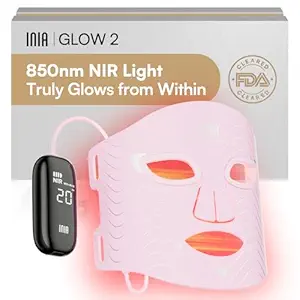
INIA Red Light Therapy Mask for Face, 850nm NIR, Red/Blue LED Light, 4 Modes
The INIA takes a focused approach: four wavelengths (620nm, 630nm, 460–470nm, and 850nm near-infrared) working through 220 high-efficiency LED chips at up to 105mW/cm². Unlike the seven-color ONLUKY, it skips the decorative greens and purples in favor of the wavelengths with the most research behind them, which makes it a smarter choice for buyers who want evidence-based treatment rather than mode variety. The 2600mAh battery is the largest in this batch, outlasting the 680-LED mask’s 2000mAh cell on back-to-back sessions. Its limitation is scope — face only, no neck piece — so anyone wanting the neck-and-chest coverage of the 680-LED mask will need to look elsewhere. Those with reactive skin should also start with shorter sessions, as near-infrared output can feel warm on first use.
Pros:- Dual red plus 850nm near-infrared for collagen support
- Highest battery capacity in this batch at 2600mAh
- High irradiance up to 105mW/cm² from efficient LED chips
- Adjustable 10/20/30-minute timers for gradual routines
Cons:- Face-only coverage with no neck attachment
- Priced above basic entry-level masks
Best for: Buyers who want a science-first, research-backed wavelength set and longer battery runtimes
Not ideal for: Anyone wanting neck or chest coverage — this mask treats the face only
- Wavelengths:620nm, 630nm, 460–470nm, 850nm NIR
- LED Chips:220
- Energy Output:Up to 105mW/cm²
- Battery:2600mAh rechargeable controller
- Session Timers:10/20/30 minutes
- Modes:4 customizable modes
Our verdict“The right pick if you want proven wavelengths and strong battery life and can live without neck coverage.”
Wireless 7-Color LED Facial Mask with Near-Infrared Light
This mask earns its spot primarily through true cordless freedom — no controller dangling from a wire, no outlet required. That matters more than it sounds: compared with the Beuwe Red-Light Therapy Mask, which ties you to longer plugged-in sessions, this one lets you fold laundry or sit on a plane mid-treatment. The near-infrared option is a genuine differentiator at this price, since NIR wavelengths penetrate deeper than visible colors alone. The tradeoff is the hard-shell construction: unlike flexible silicone models such as the Face & Neck mask with 309 LEDs, it won contour to your face, and some buyers find rigid plastic less comfortable over a 15-minute session. It also demands daily consistency, which is a bigger commitment than the two-to-three-times-per-week schedules of rivals.
Pros:- Fully wireless and rechargeable for use anywhere
- Near-infrared light penetrates deeper than color-only masks
- Built-in eye protection and easy-to-clean surface
- Works across all skin types
Cons:- Hard-shell design is less comfortable than flexible silicone alternatives
- Requires daily 15-minute sessions for best results
- Little published data on long-term durability
Best for: Frequent travelers and busy users who want a grab-and-go treatment without cords or outlets
Not ideal for: People who dislike rigid plastic against the skin or can’t commit to a daily 15-minute routine
- Light Colors:7 including red and near-infrared
- Battery:Rechargeable built-in battery
- Material:Hard engineering plastic
- Design:Hard-shell, dual-strap, eye protection
- Usage Time:15 minutes daily
- Power:Cordless / wireless
Our verdict“Choose this if portability is your top priority and a rigid shell doesn’t bother you.”
Beuwe Red-Light Therapy Mask, LED Face Mask with 7 Colors for Skin Care
The Beuwe’s appeal is simple: it’s the lowest-commitment way to try LED therapy without betting big money on a premium device. Where the iRestore LED Face Mask focuses three clinically studied wavelengths into 10-minute sessions, Beuwe spreads seven colors across longer 20–40 minute treatments — slower, but the multi-area flexibility (face, neck, hands, body) is something most face-only masks in this roundup can’t match. That said, the scheduling math matters: three sessions a week at up to 40 minutes each is a real time investment, and buyers who want efficiency should look at the 10–15 minute timers on rivals. Results also vary by skin type, so treat this as an affordable experiment rather than a guaranteed fix.
Pros:- Seven color options for customized treatments
- Works on face, neck, hands, and body — more versatile than face-only masks
- Reusable and portable design
- Low-cost way to sample LED therapy before upgrading
Cons:- Sessions run 20-40 minutes, far longer than 10-15 minute rivals
- Results depend heavily on individual skin type and consistency
- No published LED count or wavelength details to verify power
Best for: First-time LED buyers and value shoppers who want to trial light therapy on face and body without a big spend
Not ideal for: Impatient users — 20-40 minute sessions, 2-3 times weekly, is a serious time commitment for gradual results
- Light Colors:7
- Usage Duration:20-40 minutes
- Frequency:2-3 times per week
- Application Areas:Face, neck, hands, body
- Design:Reusable, portable
Our verdict“A sensible, low-risk starting point for curious beginners — just budget the time.”
Red Light Therapy Mask for Face & Neck with 7 Colors, 309 LED Chips, Rechargeable Controller
Most masks in this roundup stop at the jawline, which is why this model stands out: 309 LEDs covering both face and neck means you’re treating the area where aging often shows first. The flexible silicone-neoprene build also solves a comfort problem the Wireless 7-Color Hard-Shell Mask creates — it conforms to your contours instead of pressing rigid plastic against your skin. Practical touches like five brightness levels and a 10-minute auto timer make sessions easy to fit into a day. The compromise is battery management: roughly 1.5 hours per charge sounds generous until you remember the controller needs recharging regularly, and the neck extension makes it bulkier to pack than compact cordless rivals. It’s also a wellness device, not a treatment for serious skin conditions.
Pros:- Full face and neck coverage — rare in this price class
- 309 LED chips deliver dense light output
- Flexible silicone-neoprene fits facial contours comfortably
- 5 brightness levels and 10-minute auto timer for simple sessions
Cons:- About 1.5 hours of use per charge requires frequent recharging
- Neck piece adds bulk compared with compact face-only masks
- Not powerful enough for severe or clinical skin concerns
Best for: Users focused on necklines and jawline firming who want full lower-face coverage in a comfortable flexible mask
Not ideal for: Travelers minimizing pack weight, and anyone expecting clinical-grade results for severe skin issues
- LED Chips:309
- Light Modes:7 (red, blue, green, purple, yellow, cyan, white)
- Brightness Levels:5
- Battery Capacity:1200mAh rechargeable controller
- Usage Time:Approximately 1.5 hours per charge
- Auto Timer:10 minutes
- Material:Flexible silicone-neoprene
Our verdict“The pick for anyone whose skincare concerns extend below the jawline.”
iRestore LED Face Mask for Youthful Skin, Red Light Therapy for Face
The iRestore is the most spec-driven option in this batch: 360 LEDs and triple-wavelength technology (635nm red, 830nm infrared, 415nm blue) mirror the dosing approach of professional devices, and publishing exact wavelengths puts it ahead of vague rivals like the Beuwe mask, which lists colors but not nanometers. The payoff for buyers is efficiency — 10-minute sessions, three to five times weekly, versus the 20–40 minute commitments of budget masks. It’s also gentle enough for sensitive skin, which many aggressive masks can’t claim. The honest tradeoffs: it’s a bare device with no included serums or skincare extras, results take weeks of consistency, and those with active skin conditions should clear it with a dermatologist first. You’re paying for light quality, not accessories.
Pros:- 360 LEDs and triple-wavelength output (635nm/830nm/415nm) with published specs
- Quick 10-minute sessions fit easily into daily routines
- Lightweight design formulated for sensitive, dry, and oily skin
- Targets collagen production and skin tone with professional-grade dosing logic
Cons:- Premium price with no included serums or skincare products
- Visible results require weeks of consistent 3-5x weekly use
- Not appropriate for certain pre-existing skin conditions
Best for: Results-oriented buyers, including sensitive-skin users, willing to invest more for clinically specified wavelengths and short sessions
Not ideal for: Bargain hunters and anyone with active skin conditions who hasn’t consulted a dermatologist
- LED Count:360
- Wavelengths:Red 635nm, Infrared 830nm, Blue 415nm
- Session Time:10 minutes
- Recommended Use:3-5 times per week
- Designed For:Sensitive, dry, or oily skin
- Design:Comfortable, lightweight
Our verdict“The strongest choice for buyers who want specified wavelengths and efficient sessions over a lower sticker price.”
7-1 Colors Red Light Therapy Face Mask, LED Facial Skin Care Mask, Salon or Home Use, White
Battery anxiety is a real annoyance with rechargeable masks — the 309-LED Face & Neck mask needs recharging after roughly a week of typical use — and that’s exactly where this model wins: two weeks of sessions (14 uses) on a single charge. It’s the set-it-and-forget-it option in this lineup. The catch is density: 90 LED beads is a fraction of the iRestore’s 360 or the 309-LED mask’s output, so light coverage per session is lighter and results may arrive more slowly. For buyers treating mild concerns or maintaining results between salon visits, that’s an acceptable trade for the civilized charging schedule and fully cordless portability. For anyone chasing faster anti-aging outcomes, the lower LED count is a real limitation worth weighing.
Pros:- Two weeks of use (14 sessions) on a single charge
- Fully cordless and genuinely pocket-friendly for travel
- All 7 light colors with gentle operation for all skin types
- Simple enough for salon-style or home use
Cons:- Only 90 LED beads — far less coverage than 300+ LED rivals
- Best results still require regular, repeated sessions
- Battery life can fall short with heavier-than-recommended use
Best for: Low-maintenance users and travelers who hate recharging and want a light, maintenance-style treatment device
Not ideal for: Buyers seeking maximum light output for faster wrinkle results — 90 LEDs is well below the leaders here
- Colors:7 (Red, Blue, Yellow, Green, Purple, Cyan, White)
- LED Beads:90
- Battery Life:2 weeks (14 uses) per full charge
- Usage Time:15 minutes per session
- Design:Cordless, portable
- Settings:Salon or home use
Our verdict“Pick this for hassle-free charging and portability; skip it if raw LED power is your priority.”
LED Face Mask – Cordless Facial Light Mask with 7 Custom Light Modes
For anyone dipping a toe into light therapy, this mask keeps things refreshingly simple: one-button control, seven preset modes, and a cordless build you can wear while making coffee. Compared with the NEWKEY 4D mask, it trades raw power and clinical wavelength data for ease of use, and that’s a fair swap if you’re still figuring out whether LED therapy fits your routine. The 90 light beads deliver full-face coverage, though that’s well below the 426-LED cordless mask later in this list, so expect gentler, slower results rather than salon-grade intensity. The tradeoff for simplicity is vagueness — battery life and charging details are thin, and there’s no guidance on skin-type suitability. Still, as a low-friction entry point, it beats fussier rivals.
Pros:- Dead-simple one-button operation with zero learning curve
- Cordless, foldable, lightweight design that travels well
- Seven modes covering most common skin concerns
- Full-face coverage despite the compact form
Cons:- Battery life and charging times are not clearly documented
- Only 90 LEDs — noticeably weaker than 400+ LED competitors
- No wavelength or irradiance data to judge treatment quality
Best for: First-time LED users who want a simple, no-fuss cordless mask to test whether light therapy works for them
Not ideal for: Experienced users chasing high irradiance and clinical wavelengths — the 90 LEDs and unspecified output will feel underpowered
- Number of LEDs:90
- Light Modes:7
- Power Source:Rechargeable
- Control:One-button
- Design:Cordless, lightweight, foldable
- Adjustability:Soft, adjustable straps
Our verdict“A sensible first purchase if you want to try LED masks without a steep learning curve or a big commitment.”
NEWKEY 4D LED Red and Blue Light Therapy Face Mask
While most masks in this roundup chase the cordless trend, the NEWKEY 4D doubles down on a wired connection — and that’s its whole argument. A constant power supply means consistent irradiance (75mW/cm²) across every session, something rechargeable models like the cordless 426-LED mask can’t promise as their batteries drain. The 4D contour design hugs facial curves for better light absorption than flat panels, and the auto shut-off removes any guesswork from the 10-minute routine. The cost is portability: you’re tethered to an outlet, and the 10-minute commitment adds up over weeks. Fitting takes some adjustment on first use. For buyers who treat results as the priority and mobility as a bonus, this is one of the more credible options here.
Pros:- Clinical 630nm red and 465nm blue wavelengths with proven targets
- Consistent irradiance thanks to wired power
- 4D ergonomic contour improves light absorption on facial curves
- Auto shut-off keeps sessions safe and timed
Cons:- Corded design restricts movement and portability
- 10-minute sessions demand regular time commitment
- Initial fitting and positioning require patience
Best for: Results-focused users who prioritize consistent power delivery and proven red/blue wavelengths over portability
Not ideal for: Anyone wanting to multitask around the house or travel with their mask — the cord anchors you to an outlet
- Wavelengths:630nm (Red), 465nm (Blue)
- LED Chips:450
- Irradiance:75mW/cm²
- Treatment Time:10 minutes
- Power Source:Wired
- Auto Shut-Off:Yes
- Design:4D ergonomic contour
Our verdict“The pick for buyers who’d rather have dependable, consistent treatments than wireless convenience.”
LED Face Mask for Wrinkles, Cordless NIR Red Light Therapy Mask with 7 Light Modes
This mask earns the top spot by combining the two things most competitors force you to choose between: cordless freedom and serious output. At 108mW/cm² irradiance with 660nm red, 465nm blue, and near-infrared light, it out-punches the NEWKEY 4D on intensity while ditching the cord entirely. The 426 LEDs cover face and neck — territory the beginner-friendly 90-bead cordless mask doesn’t touch — and the 90-minute battery life comfortably handles multiple sessions per charge. Automatic timing keeps sessions consistent without babysitting. Tradeoffs exist: the hard-shell ergonomic design won’t suit every face shape, and like all LED masks, results demand patience over weeks of regular use. But for the buyer who wants near-clinic specs without a wire, this is the strongest all-around package.
Pros:- High 108mW/cm² irradiance — stronger than most rivals in this roundup
- Cordless design with up to 90 minutes of battery life
- 426 LEDs covering both face and neck
- Red, blue, and NIR wavelengths plus 7 modes for versatile treatment
Cons:- Hard-shell fit may not suit all face shapes comfortably
- Visible results require consistent multi-week use
- Battery life can vary depending on mode and intensity used
Best for: Skincare enthusiasts who want clinical-grade irradiance and full face-plus-neck coverage without being tied to an outlet
Not ideal for: Buyers on a tight budget or those unwilling to commit to a multi-week routine before seeing results
- Light Modes:7
- LED Count:426
- Wavelengths:660nm (red), 465nm (blue), NIR
- Irradiance:108 mW/cm²
- Battery Life:Up to 90 minutes
- Design:Cordless, rechargeable, ergonomic hard shell
- Timing:Automatic
Our verdict“If you want one mask that balances power, coverage, and wireless convenience, this is the one to beat.”
Red Light Therapy Mask for Face & Neck, Wireless LED Face Mask, 4 Modes
Most masks here stop at the jawline, but this one extends treatment across the face, neck, and chest with over 680 light beads — the largest coverage zone in this batch. That matters for buyers targeting décolletage lines or neck texture, areas the 426-LED cordless mask only partially addresses. The four modes including amber and near-infrared give it a different flavor than the seven-color rivals: fewer gimmicky colors, more therapy-focused wavelengths. Flexible timer options (10–30 minutes) and a magnetic wireless remote make sessions genuinely convenient. The soft silicone build is comfortable but means less rigidity than hard-shell designs, and the 2000mAh battery needs frequent recharging with a 3–4 session weekly schedule. Instructions for newcomers are thin, so first-timers may want to research protocols themselves.
Pros:- Broadest coverage in this batch: face, neck, and chest
- 680+ light beads with red, blue, amber, and NIR modes
- Flexible 10–30 minute timer options via wireless magnetic remote
- Soft, skin-friendly silicone that’s comfortable for longer sessions
Cons:- 2000mAh battery requires frequent recharging with regular use
- Sparse instructions make onboarding harder for beginners
- Softer construction offers less precise positioning than rigid masks
Best for: Users focused on neck and chest aging who want the largest treatment area available in this roundup
Not ideal for: Anyone with severe acne or advanced skin conditions — the output is tuned for maintenance, not intensive treatment
- Light Beads:680+
- Modes:4 (Red, Blue, Amber, Near-Infrared)
- Battery Capacity:2000mAh
- Control:Wireless magnetic remote
- Timer Options:10, 15, 20, 25, 30 minutes
- Charging Port:Type-C
- Use Frequency:3–4 times per week
Our verdict“The clear choice when your concerns extend below the jawline and you need coverage competitors don’t offer.”
4D Contour-Fit LED Light Therapy Mask for Face & Neck with 7 Colors & NIR Light
Where the face-neck-chest mask wins on coverage area, this one wins on control. Three adjustable energy levels let you dial intensity up or down — a feature almost no rival in this roundup offers — which matters if you have sensitive skin and need to start gentle, or want to increase power as your skin adapts. The dedicated face panel (272 LEDs) plus a separate neck piece (128 LEDs) with 7 colors and infrared gives it an 8-in-1 treatment range, and the 4000mAh battery is the largest here, roughly double the capacity of the magnetic-remote mask. The tradeoff: fewer total LEDs than the 680-bead competitor, so coverage is slightly less dense, and the price of all this adjustability sits at the premium end. Results also demand the same multi-week patience as everything else.
Pros:- Three adjustable energy levels for truly personalized intensity
- Separate face (272 LED) and neck (128 LED) panels for targeted treatment
- Largest battery in this batch at 4000mAh
- 7 color modes plus infrared for a wide treatment range
Cons:- Premium price compared with simpler 4-mode rivals
- Fewer total LEDs than the 680-bead coverage leader
- Long-term effectiveness data is limited, requiring a leap of faith
Best for: Buyers with sensitive or reactive skin who need adjustable intensity, plus anyone who wants separate face and neck treatment panels
Not ideal for: Budget-conscious shoppers — the customization and large battery come at a price point above simpler masks
- LED Count (Face):272
- LED Count (Neck):128
- Color Modes:7
- Infrared Light:Yes
- Adjustable Energy Levels:3
- Battery Capacity:4000mAh
- Rechargeable:Yes
Our verdict“Pick this if adjustable intensity and a big battery matter more to you than raw LED count or a low price.”
How We Picked
My ranking logic starts with light output credibility: which wavelengths a mask emits (630–660nm red, 850nm near-infrared, 415nm blue), whether the manufacturer publishes irradiance figures, and whether the LED count translates into real coverage rather than marketing math. Masks with hidden or vague specs were penalized because buyers can’t verify what they’re paying for. From there, I weighed fit and coverage area — a mask that seals against the skin delivers more consistent dosing than one that sits at an angle — and whether the design extends to the neck, where visible aging often shows first.
Usability and cost of ownership rounded out the criteria. I compared controller design, session timers, battery life versus USB tethering, and eye-safety engineering, since a mask that’s uncomfortable or awkward rarely survives a 10-minute daily routine. Finally, I judged value relative to realistic expectations: LED masks support gradual improvement over 8–12 weeks, not overnight change, so I favored models priced honestly against their output rather than those inflated by color-mode gimmicks. The resulting order reflects who each mask serves best, not just raw specifications.
Factors to Consider When Choosing At-home LED Facial Masks
Before clicking buy on any of the masks above, it helps to understand what actually drives results with LED therapy — and where manufacturers most often cut corners. These are the factors I’d weigh first.Wavelength Coverage Beats LED Count
The single most common mistake buyers make is chasing big LED numbers while ignoring wavelengths. Red light around 630–660nm targets surface concerns like fine lines and texture, while 850nm near-infrared penetrates deeper to support collagen — and a mask without NIR is fundamentally limited for anti-aging. Blue light (around 415nm) addresses acne bacteria, which is why it matters for breakout-prone skin but does little for wrinkles. A 200-LED mask with dual red/NIR wavelengths will typically outperform a 400-LED mask with color modes alone. When a listing doesn’t state wavelengths in nanometers, treat that as a warning sign. Reputable manufacturers publish this data; vague ones rely on photos of glowing lights.
Face-Only Versus Face-and-Neck Coverage
Most masks in this category cover only the face, leaving the neck — often the first place to show photodamage — untreated. Face-and-neck designs like the 850nm Face & Neck mask (#1) and the 4D Contour-Fit mask (#15) solve this, but they cost more and fit differently, sometimes sitting bulkier around the collar. If your concerns are concentrated on the forehead, cheeks, and jawline, a face-only mask is a legitimate way to save $50–100. Buyers with maskne-prone or sensitive skin should also check whether the neck piece is removable, since flexible silicone that touches more skin surface needs more frequent cleaning. Decide based on where your concerns actually are, not on perceived completeness.
Cordless Convenience: Worth It or a Gimmick?
Cordless masks carry a price premium, and for many buyers it’s wasted money. Light therapy requires stationary 10–20 minute sessions with the mask pressed against the skin, which means most people use them lying down anyway — exactly where a wire doesn’t matter. Cordless makes sense for two groups: commuters who want to wear a mask during transit, and anyone who’ll multitask around the house. The tradeoff beyond price is battery degradation; rechargeable controllers lose capacity over 2–3 years of daily use, while wired masks have no battery to fail. Also check charging specs — USB-C (as on the ONLUKY) ages far better than legacy micro-USB ports on older designs.
Irradiance and Treatment Time
Irradiance — the power density delivered to your skin — determines how long each session needs to be effective, yet it’s the spec most often omitted. A low-irradiance mask might require 20-minute sessions to match what a stronger unit achieves in 10, doubling your time commitment across a 12-week protocol. Established brands like iRestore publish output data, while most budget masks simply list ‘modes.’ If you can’t find irradiance figures, look for third-party reviews mentioning warmth or visible brightness as rough proxies. Be skeptical of masks claiming dramatic results in one week regardless of power — the research standard is consistent use over two to three months. Buying a slightly more powerful mask pays off in shorter, more sustainable sessions.
Eye Safety and Comfort Engineering
Your eyes will be inches from these LEDs every session, so safety design separates serious manufacturers from opportunistic ones. Look for integrated eye cutouts with shielding, opaque eye guards, or explicit compliance with safety standards — and never use a mask with exposed high-intensity blue or NIR light directly over closed eyelids. Comfort matters just as much for adherence: rigid plastic shells like the NEWKEY 4D sit farther from the skin (safer but less intense), while flexible silicone molds fit snugly but can trap heat and sweat. Straps deserve attention too — cheap elastic degrades within months, and a mask that slips mid-session delivers uneven dosing. If you wear the mask lying down, weight distribution across the bridge of the nose determines whether 15 minutes feels tolerable.
Realistic Budget Tiers and What They Buy
This category splits into three honest tiers. Under $80, you get functional red/NIR coverage with basic controllers and shorter warranties — genuinely fine for first-timers testing whether they’ll stick with the routine. The $80–200 mid-tier, where most of my top-value picks sit, adds better LED density, neck coverage options, and sturdier construction. Above $200, you’re paying for documented irradiance, clinical validation, and multi-year warranties — worthwhile only if you’ve already committed to the daily habit. A smarter path than buying premium immediately: start with a mid-tier mask for 90 days, then upgrade if you see results and keep the routine. The most expensive mistake isn’t choosing a cheap mask; it’s buying a $400 device that ends up in a drawer by week three.
Frequently Asked Questions
How long before I see results from an at-home LED facial mask?
Expect a realistic timeline of 8 to 12 weeks of near-daily use before judging results, with some users noticing subtle texture improvements around week four. Collagen remodeling — the mechanism behind wrinkle reduction — is a slow biological process that no device can accelerate beyond a point. Masks with higher irradiance, like the iRestore, may produce noticeable change slightly sooner than budget models with weaker output. If a seller promises visible transformation in days, that claim isn’t supported by the research on red and near-infrared light. Consistency matters more than intensity: five sessions a week for three months beats sporadic daily use for two weeks followed by abandonment.
Are 7-color LED masks better than red/NIR-only masks?
Usually not, and in my comparison the color-count marketing often disguised weaker core performance. The research supporting LED therapy centers on red (~660nm), near-infrared (~850nm), and blue (~415nm) wavelengths — the other colors (green, yellow, purple, cyan) have thin evidence at the power levels consumer masks deliver. Most buyers I’d advise end up using only two or three modes anyway, so paying extra for seven is like buying a blender with settings you’ll never touch. A dual or quad-mode mask with strong red/NIR output, such as the INIA or the 850nm Face & Neck model, will serve most skin goals better. Choose a 7-color mask only if you specifically want blue light for acne alongside red for anti-aging in one device.
Can I use an LED mask with retinol, vitamin C, or other actives?
Yes, and light therapy actually stacks well with most skincare routines, but sequencing matters. Apply LED sessions to clean, dry, product-free skin, then follow with your actives afterward — serums applied beforehand can block light penetration and some ingredients may degrade under exposure. Retinol users often find LED therapy reduces the irritation and dryness associated with starting tretinoin or prescription retinoids, making the two genuinely complementary. Avoid photosensitizing ingredients like strong acids or certain acne medications immediately before sessions, and check with a dermatologist if you take doxycycline or isotretinoin, both of which increase light sensitivity. The general rule: light first, products after.
Is a face-and-neck mask worth the extra cost over a face-only mask?
It depends entirely on where your concerns are, and I’d resist the assumption that more coverage automatically means better value. Neck skin shows photodamage early and responds well to red/NIR light, so if you’ve noticed crepiness or horizontal lines there, a combined mask like the 396-LED or 4D Contour-Fit model eliminates the awkward positioning hacks people use to treat the neck with a face-only device. On the other hand, if your goals are forehead lines, crow’s feet territory, or acne on the cheeks, the extra $50–100 buys coverage you won’t use. Face-and-neck masks also tend to be bulkier and heavier, which some users find limits session comfort. My honest advice: buy for the area you’ll actually treat consistently.
Are cheap LED masks under $60 safe and effective, or should I spend more?
The safety record for consumer LED masks is generally good because output levels are far below clinical devices, but cheap masks carry different risks: omitted eye shielding, vague wavelength specs, and controllers that fail within months. Effectiveness is the bigger concern — an under-$60 mask typically delivers lower irradiance, meaning longer sessions for weaker results, and some budget models don’t include near-infrared at all despite implying it. That said, a well-reviewed budget mask with verified 660nm/850nm output can be a sensible way to test whether the routine fits your life before investing more. Where I’d draw the line: avoid any mask without stated wavelengths, and be cautious with no-name brands lacking warranty support. For committed daily users, the mid-tier and premium masks in this roundup deliver measurably better long-term value.
Conclusion
Matching the right mask to your situation matters more than finding a single ‘best’ device. For the best overall pick, I’d point to the iRestore LED Face Mask: its documented red, blue, and infrared output, sturdy build, and warranty support make it the safest long-term investment for serious anti-aging routines. The best value goes to the Red Light Therapy Mask for Face and Neck with 396 LEDs, which covers the two most important wavelengths plus the neck area at a mid-tier price that undercuts comparable feature sets.
Beginners should start with the ONLUKY USB-C Rechargeable Mask or the portable 7-Color Red Light Face Mask (#4) — simple operation and low commitment let you test the habit before spending more. For premium buyers, the NEWKEY 4D Mask offers salon-style rigidity and treatment intensity that flexible masks can’t match. Specific needs: the 426-LED Cordless NIR Mask (#13) suits travelers and multitaskers, the 850nm Face & Neck Mask (#1) fits anyone prioritizing neck coverage, and the INIA works well for acne-plus-aging combination concerns with its red/blue modes. Whatever you choose, commit to the 10-minute sessions for at least eight weeks — the mask you use consistently will always beat the one sitting in its box.