
TL;DR
Get ready for Prime Big Deal Days — try Prime free
Exclusive member deals on October 6–7, plus fast free delivery. Cancel anytime.
Start your free trialAs an affiliate, we earn on qualifying purchases.
FDA clearance indicates a device is substantially equivalent to a legally marketed product, suggesting safety and effectiveness for its intended use. It doesn’t guarantee results or absolute safety, so verifying the status and understanding the process is key for safe beauty device use.
When you see a beauty device proudly marked as FDA-cleared, what does that really mean? Does it guarantee results? Safety? Or is it just marketing hype?
Understanding the difference between FDA clearance and approval can be confusing, but it’s crucial for making smart choices. You need to know what safeguards are in place and what claims you can trust. Today, we’ll unravel the truth behind FDA clearance and what it actually entails for your favorite skin and hair tools.
FDA clearance shows a device is substantially equivalent to a marketed product, not a full safety approval.
Always verify clearance status on the FDA’s official database—don’t rely solely on marketing claims.
Clearance focuses on safety and performance, not guaranteed results or effectiveness.
Many at-home beauty devices are FDA-cleared, but individual results and safety depend on proper use.
Understanding the process helps you choose safer, more reliable devices and avoid false claims.
What Does FDA-Cleared Actually Mean for a Beauty Device?
FDA clearance means a device was reviewed for its intended use and found substantially equivalent to a legally marketed device. It is meaningful regulatory evidence—but it is not a promise of flawless safety, universal results, or FDA approval.
Compliance signal, not a results guarantee.
Clearance supports a device’s lawful marketing for a specific intended use. Your outcome still depends on the device, your skin or hair characteristics, and correct use.
What clearance does—and does not—tell you
The FDA evaluates the device within a defined regulatory context. That context matters: clearance applies to the intended use, labeling, technology, and comparison described in the submission—not every claim a seller might make.
Regulatory review
The manufacturer submitted information for FDA review before legally marketing the device for the cleared indication.
Substantial equivalence
The device was found sufficiently comparable to a legally marketed predicate in intended use and relevant technological characteristics.
Defined performance
Evidence must support safe operation and performance for the specific intended use described in the submission and labeling.
Guaranteed results
Clearance cannot promise that every user will see hair reduction, smoother skin, fewer wrinkles, or another advertised outcome.
Zero risk
Burns, irritation, eye injury, pigment changes, and other problems may still occur through misuse, contraindications, or individual sensitivity.
Approval of every claim
A clearance for one intended use does not automatically validate broader anti-aging, healing, sculpting, or medical claims.
How a typical 510(k) review works
Many non-invasive aesthetic devices reach the market through premarket notification. The core question is whether the new device is substantially equivalent to a suitable predicate—not whether it is identical.
Intended use and user population
A legally marketed predicate
Technology and performance
Safety, testing, and labeling
Market for the stated use
Example: An at-home LED mask may be compared with a previously cleared light-therapy device using similar wavelengths, energy output, treatment duration, controls, and safety protections. Additional testing may be required when differences raise new questions.
Cleared, approved, registered: not interchangeable
Regulatory words describe different actions. A polished logo, facility registration, or product listing is not a substitute for a device-specific clearance record.
| Term | Typical meaning | Predicate comparison | New evidence level | Consumer interpretation |
|---|---|---|---|---|
| FDA-cleared | FDA found the device substantially equivalent for a specified use. | Central | Depends on differences and risk | Meaningful review; verify the exact indication |
| FDA-approved | FDA approved a higher-risk device through a premarket approval pathway. | Not central | Generally more extensive | Different pathway; still not a personal guarantee |
| FDA-registered | A facility has completed a registration requirement. | No | Not established by registration | Does not show the device itself was cleared |
| FDA-listed | A device appears in an establishment’s listing information. | No | Not established by listing | Look for a clearance record when one is required |
| “FDA-compliant” | A broad marketing phrase that may refer to selected requirements. | Unclear | Cannot be assumed | Ask for the precise regulatory basis |
Where clearance is strong—and where it stops
These bars are a conceptual guide, not numerical FDA ratings. They show the relative strength of the conclusions a consumer can reasonably draw from clearance alone.
What the label supports
Confidence is strongest around regulatory status and the cleared use, then declines as claims become more individualized.
What still changes your risk
Clearance cannot replace product-specific instructions or professional advice.
Verify before you trust the badge
Search the FDA’s official device databases and match the record to the actual product. A seller’s claim is only the starting point.
Ask for the clearance number
A 510(k) identifier commonly begins with “K” followed by six digits.
Search the official FDA record
Use the product, applicant, manufacturer, or clearance number—not a retailer’s screenshot.
Match the legal manufacturer and model
Confirm the record belongs to the precise device being sold, not a vaguely similar product.
Read the cleared indication
Check whether the advertised benefit matches the intended use stated in the clearance summary.
Review warnings and instructions
Look for contraindications, skin-tone limits, treatment schedules, eye protection, and adverse-event guidance.
The safer decision chain
Clearance is one link in a responsible buying and treatment decision—not the entire chain.
What Does FDA Clearance Really Mean for Your Beauty Device?
FDA clearance is a formal process that shows a device is similar enough to an existing, legally marketed product. It’s not the same as approval, which involves more extensive testing. Think of it as a safety check that says, “This looks like something we already know is safe and effective.” For beauty devices, this often involves laser hair removal or skin rejuvenation tools.
A clear example: a laser device marketed for at-home hair removal might be FDA-cleared because it’s similar to professional devices already on the market. But this doesn’t mean it’s guaranteed to work for everyone or that it’s risk-free. It’s about meeting a baseline standard, not a guarantee of perfect results.
Understanding this distinction is critical because it affects your expectations and safety precautions. FDA clearance indicates that the device meets certain safety standards based on comparison, but it doesn’t necessarily mean the device will perform equally well for all users or that it’s free from risks. Consumers should see this as a sign of compliance rather than a guarantee of efficacy or safety in every case.
As an affiliate, we earn on qualifying purchases.
The Regulatory Pathway: How Does a Device Get FDA-Cleared?
Most non-invasive beauty devices follow the 510(k) process. Manufacturers submit a detailed comparison showing their device is substantially equivalent to an existing one. The FDA reviews this, checking safety and performance data.
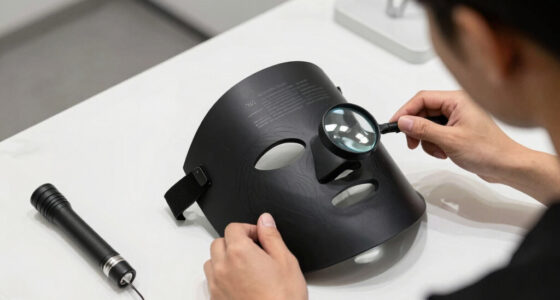
Imagine a new LED light therapy mask entering the market. The company compares it to a previously cleared device, demonstrating similar light wavelengths and treatment protocols. If the FDA agrees, they clear the product for sale. But remember—this process focuses on safety and similarity, not new clinical trials.
This pathway allows companies to bring products to market more quickly, relying on existing safety data rather than conducting lengthy new trials. While this expedites access to innovative devices, it also means that the safety and efficacy claims are based on comparison rather than independent testing. Consumers should be aware that this process prioritizes demonstrating no significant difference from existing products, which can sometimes overlook unique risks associated with new designs or technologies.
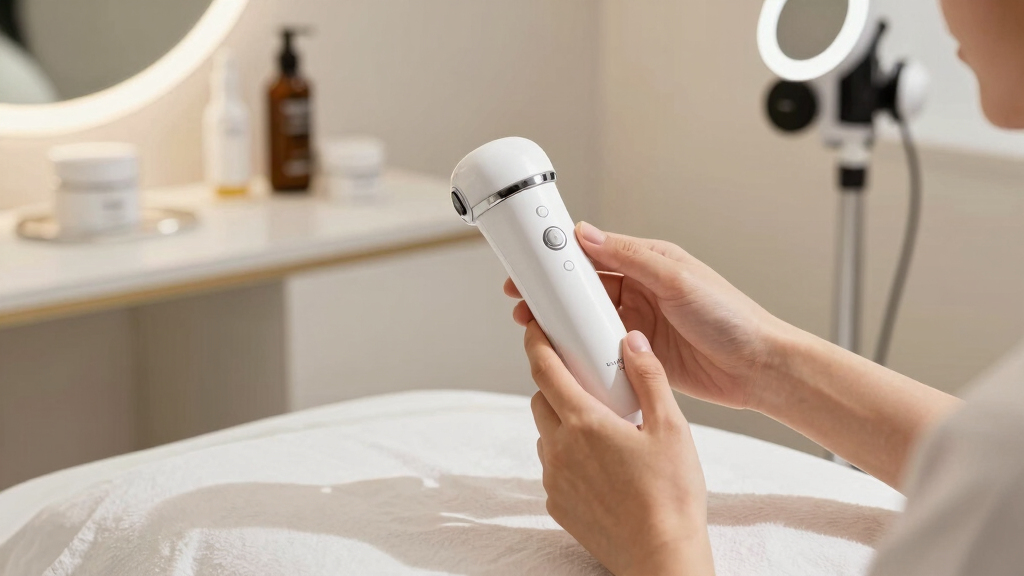
FDA-cleared skin rejuvenation device
As an affiliate, we earn on qualifying purchases.
As an affiliate, we earn on qualifying purchases.
What Are the Limitations of FDA Clearance?
FDA clearance isn’t a blank check for safety or effectiveness. It’s a green light based on existing devices, not new evidence. For example, an at-home laser device might be FDA-cleared, but results vary by person, and misuse can cause burns or eye injury.
It’s also worth noting that not all devices on the market are FDA-cleared. Some companies skip the process altogether, marketing their products with vague claims. This can lead consumers to assume safety or efficacy that isn’t backed by regulatory review. Therefore, relying solely on a clearance label can be misleading. It’s essential to understand that clearance indicates the device meets a standard of safety and performance based on existing products, but it doesn’t guarantee personalized safety or effectiveness. Misuse, individual skin differences, and improper application can all undermine safety, regardless of clearance status.
Furthermore, the absence of FDA clearance doesn’t necessarily mean a product is unsafe—it might be newer, less marketed, or designed for niche uses not requiring clearance. However, consumers should approach unverified products with caution, understanding that the lack of clearance could mean less regulatory oversight. This underscores the importance of thorough research, reading reviews, and consulting professionals when possible. Recognizing these limitations helps prevent misplaced trust and encourages more informed, cautious use of beauty devices.
As an affiliate, we earn on qualifying purchases.
How to Verify If a Device Is Truly FDA-Cleared
Verifying a device’s clearance is simple and vital. Visit the FDA’s official database and search by product name, manufacturer, or registration number. Look for a clear statement of clearance or a 510(k) number.
For example, if a skincare device claims FDA clearance, double-check the number and details. If it’s not listed, or the manufacturer can’t produce proof, proceed with caution.
Always keep an eye out for official markings and verify claims before making a purchase or use decision.
Remember, even if a device is listed as FDA-cleared, it’s wise to review user reviews, safety instructions, and consult professionals when possible. This comprehensive approach ensures you’re making an informed choice beyond just the regulatory label.
Additionally, consider the context: some devices might be listed as cleared but have limited data or reviews. Cross-referencing multiple sources and seeking professional advice can help you better gauge the actual safety and effectiveness of the product you’re considering.
As an affiliate, we earn on qualifying purchases.
What Consumers Should Keep in Mind When Buying FDA-Cleared Devices
FDA clearance is a good starting point, but it’s not the whole story. Look at reviews, real-world results, and safety instructions. Remember, individual reactions vary, and misuse can cause harm.
For instance, a high-end RF device might be FDA-cleared but still cause skin irritation if used incorrectly. Always follow instructions, and consult a professional if you have pre-existing skin issues or concerns.
It’s essential to set realistic expectations. FDA clearance indicates the device has met certain safety and performance standards, but it doesn’t guarantee dramatic or instant results. Many factors—such as skin type, device quality, and proper use—play crucial roles. Recognizing these nuances helps you avoid disappointment and misuse, ensuring safer, more effective use of your beauty tools.
Moreover, understanding that FDA clearance doesn’t equate to guaranteed outcomes can help you approach new devices with a balanced mindset. Combining verified safety with personal research and realistic expectations minimizes risks and enhances satisfaction with your treatments.
Frequently Asked Questions
Does FDA clearance mean the device is completely safe?
Not entirely. FDA clearance indicates the device has met safety and performance standards based on existing products. However, individual reactions and proper use are still critical to avoid risks.Can I trust a device that claims to be FDA-cleared?
Yes, but always verify the claim on the official FDA website. Check the specific clearance number and ensure it matches the product you’re considering.Is FDA clearance the same as FDA approval?
No. Clearance involves proving similarity to existing products, while approval requires extensive new clinical data—usually for high-risk devices like implants.Are all beauty devices FDA-cleared?
No, many are sold without clearance or approval. Be cautious and do your research before trusting claims on unverified products.What’s the best way to confirm a device’s clearance status?
Visit the FDA’s official database and search by product name or manufacturer. Confirm the 510(k) number matches the device you’re considering.Conclusion
Knowing what FDA clearance really means empowers you to make better choices in beauty tech. It’s a safety badge, not a promise of perfect results. When buying, verify claims, follow instructions, and set realistic expectations.
In the end, informed consumers are the safest consumers. Your skin and wallet will thank you for the attention.
NFL season / tailgating Picks
team gear
As an affiliate, we earn on qualifying purchases.